
Vox clamantis in deserto






Robert Glover: In Maine and elsewhere, how to boost voters’ trust in elections
From The Conversation (except for picture above)
ORONO, Maine
Recently, I moderated a national event that had college students speaking with election officials, something I often find myself doing this time of year. This year, a new question kept coming up: “If I’m voting by mail, can I trust my ballot will actually show up?”
For college students, such considerations have urgency. Many are voting in their first major election, often while living away from home. They may be deciding whether to register where they attend college or request an absentee ballot from home. This year, many are weighing whether they trust the process that will bring their vote from the mailbox to the ballot box to be counted.
This uncertainty comes after a monthslong legal fight over the U.S. Postal Service’s role in mail voting, sparked by President Trump’s attempts to dramatically limit mail voting. On Sept. 14, 2026, the Supreme Court barred new Postal Service restrictions on election mail from taking effect.
The court’s decision resolved the immediate question of whether the restrictions would stand. But it did not settle the larger question that now hangs over this election: Can voters trust the machinery of elections in the first place?
I’m a political scientist, and I study elections and voting. For more than a decade, I’ve helped lead nonpartisan student voter engagement efforts at the University of Maine and helped recruit and train student poll workers. I also serve alongside them, administering elections.
That dual role has given me an unusual view of elections – both as a researcher studying public attitudes and as someone who has spent many long days watching the wheels of American democracy turn firsthand.
Maricopa County in Arizona offers public tours of its tabulation and election center. Screenshot, Maricopa County Recorder's Office
Why voters trust elections
Research on confidence in elections points to several factors that play a role in whether voters trust outcomes at the polls.
The most obvious factor is their experience. Voters who encounter problems casting a ballot are likely to have less confidence in the election process.
But the people they encounter matter as well.
Research shows that competent, well-trained poll workers increase voter confidence and that voters’ perceptions of election legitimacy can be affected by whether the people administering the election reflect the racial and ethnic identities represented in the communities they serve.
Familiarity is also critical. If voters are familiar with the processes that translate voter will into outcomes – such as how access to ballots is kept secure and how they are tabulated – they’re likely to have higher confidence in elections. When individuals lack that familiarity, conspiracy theories and misinformation may fill in the gaps.
And then there is one factor that election administrators do not and cannot control: who wins. What political scientists call the “winner-loser” effect can be striking. Pew Research Center reported after the 2024 election, which Trump won, that 93% of Trump voters felt the 2024 elections were administered at least somewhat well, compared with just 21% of Trump’s supporters after the 2020 election, which Trump lost.
So in the face of wavering voter trust – some of it driven by forces outside their control – what can election officials actually do?
‘Come look!’
One response from election officials has been simple: Mundane processes that most voters once had little reason to think about are increasingly being made visible to the public.
In Maricopa County, Arizona, voters can watch livestreams of signature verification, early-ballot processing, ballot tabulation and more. The county opens testing of its voting equipment for public observation and even offers tours of its election center.
In Maine, where I live, the secretary of state’s office uses live feeds to invite viewers into recounts and ranked-choice voting tabulations. The process can run for days. Much of it consists of watching election officials sit quietly at tables until someone approaches the camera to say something like, “We’re going to reconcile the ballots from Sagadahoc County.” Then it’s back to watching people work.
What voters see is almost comically mundane: checklists, sealed containers, bipartisan teams of observers, rigorous procedures to track who has had access to ballots, and individuals doing repetitive administrative work.
And that’s the point. Election officials cannot control whether voters like the outcome, but they can make the processes that produce it visible and comprehensible.
Election officials in Philadelphia demonstrated ballot counting at the Philadelphia Election Warehouse ahead of the 2024 general election. Matthew Hatcher/Getty Images
Democratic inoculation
There is an even more immersive way to make elections understood and thus credible: Invite the public to help run them.
American elections require an extraordinary amount of community labor. Researchers have estimated that a presidential election requires roughly 1.4 million poll workers – a temporary civilian workforce about the size of the active-duty U.S. military.
Yet until recently, researchers have paid surprisingly little attention to what happens when people move from voting in an election to actually administering one.
My colleagues and I have been studying that question in Maine. We surveyed poll workers before and after they served in the 2022 and 2024 elections. After working an election, their concerns about voter fraud and voter or poll worker intimidation declined. And those changes weren’t confined to one political party.
Interestingly, serving didn’t necessarily change what people believed about whether fraud or intimidation happens. Instead, firsthand experience seemed to change how threatening those possibilities felt.
We call this process “democratic inoculation.”
Spending a day checking voters in, accounting for ballots and watching election safeguards operate doesn’t make someone completely immune to doubts about elections. But it may make sweeping claims about a chaotic or easily manipulated system harder to square with what they witnessed with their own eyes.
Maintaining faith
None of this means that transparency or firsthand experience can eliminate distrust in elections.
The harder question is whether seeing how elections actually work can help people maintain faith in the system even when their candidate loses.
With another national election just weeks away, we may soon find out how far that confidence can stretch.
Robert Glover is an associate professor of political science and honors at the University of Maine. He has received funding for election-related research from the Scholars Strategy Network.
]
‘The waters wrecked the sky’
—Unsplash photo by Matt McNulty
The Wind begun to rock the Grass
With threatening Tunes and low —
He threw a Menace at the Earth —
A Menace at the Sky.
The Leaves unhooked themselves from Trees —
And started all abroad
The Dust did scoop itself like Hands
And threw away the Road.
The Wagons quickened on the Streets
The Thunder hurried slow —
The Lightning showed a Yellow Beak
And then a livid Claw.
The Birds put up the Bars to Nests —
The Cattle fled to Barns —
There came one drop of Giant Rain
And then as if the Hands
That held the Dams had parted hold
The Waters Wrecked the Sky,
But overlooked my Father’s House —
Just quartering a Tree —
“The Wind Began to Rock the Grass,’’ by Emily Dickinson (1830-1885)
Chris Powell: In Conn., wrapping racial demagoguery in religious sanctimony
MANCHESTER,Conn.
What is too extreme politically for Connecticut in the era of President Donald Trump and New York Mayor Zohran Mamdani?
According to a television commercial from Gov. Ned Lamont's re-election campaign, the extremism is that of the Republican gubernatorial candidate, Greenwich state Sen. Ryan Fazio, who this year voted against legislation that purported to prohibit federal immigration agents from making arrests at schools, churches, and other supposedly sensitive locations.
The commercial's narrator, the pastor of a church in Norwalk who is Black, accuses immigration agents of arresting people "based on the color of their skin." The pastor continues: "Thankfully, Governor Lamont stepped in. He signed a law barring ICE agents from our churches and our schools. But Ryan Fazio sided with Trump to allow ICE into our schools and our houses of worship. I really can't imagine him being governor. That is too extreme for Connecticut."
But the legislation was and remains a fraud.
Contrary to the pastor's assertion, the law doesn't prevent federal agents from entering schools and churches or any other places, for state law has no authority over federal law-enforcement agents doing their jobs, as the governor and the legislators who voted for the legislation know. The law is unconstitutional and unenforceable as the pastor himself might have noticed from the governor's failure even to try to enforce it, since any enforcement would risk armed confrontation between the federal agents and state police.
How ironic, then, for a Black pastor to take the same sort of "states' rights" position that was made in defense of slavery and racial segregation. Claims of state supremacy over the federal government used to be considered too extreme politically for Connecticut.
But now that illegal immigration is politically correct and being used to alter legislative districting in favor of the political party that has created "sanctuary" states, claims of "states' rights" are in fashion in the very region that courageously stood up against them when the Union and basic human rights were at stake.
Indeed, why isn't the nullification being waged by the Lamont administration -- the facilitation of illegal immigration and the interference with immigration-law enforcement -- also too extreme politically for the state?
This issue deserves more serious treatment than it can get from a campaign commercial wrapping deception and racial demagoguery in religious sanctimony.
DEMAND MORE FROM STUDENTS: Public education officials in Connecticut long have refused to address or even acknowledge the problem of social promotion in the schools even as the few proficiency tests the state administers keep illuminating a vast number of students who never gain proficiency in English and math and thus enter adulthood equipped only for menial work.
Some people outside the education bureaucracy acknowledge the problem but think it is now so overwhelming that nothing can be done about it. After all, if academic proficiency was required for promotion of students, in many schools more students would have to be held back every year than would advance to the next grade.
But somehow a few Southern states lately have made progress with their most disadvantaged students by refusing to advance them past third grade unless until they become good readers. That has gotten the kids' attention and that of their parents. In any case many students won't ever meet academic standards unless their schools demand it on pain of some kind of penalty.
Other incentives for performance are easy to imagine. Participation in school sports and other activities outside the classroom could be made a privilege earned by better grades. High school diplomas could be imprinted with a student's grades for each year of his education. Various kinds of diplomas could be awarded signifying student achievement levels, with the lowest levels signifying mere attendance or the lack of it, and employers could be encouraged to ask young job applicants to present their diplomas for review of their qualifications.
Results in student performance might be demanded from teachers and school administrators as well, adjusted for the disadvantages of the students they receive each year.
Chris Powell has written about Connecticut government and politics for many years (CPowell@cox.net).
What about them?

Spruce trees carried in the boats of Samuel Thompson's militia inspired this naval ensign of Massachusetts.
“Mr. President, shall it be said, that after we have established our own independence and freedom, we make slaves of others?’’
Samuel Johnson (1735-1798), of Massachusetts’s District of Maine (as of 1820 the State of Maine), a Revolutionary War brigadier general, on the question of slavery and enactment of the U.S. Constitution, which he opposed because it allowed slavery to continue.
-
Llewellyn King: Borders are mostly sealed, now forgive many migrants who are here
WEST WARWICK, R.I.
Here is a disturbing game: Try to spot the illegal immigrant.
Is it the waitress, the winning one from Bulgaria, or is it the charming emergency room doctor from Pakistan, or is it one of the Mexican men working on the housing site at the corner? Maybe it is the Haitian caregiver in your home, whom you adore and are afraid to ask if employing her will compromise you.
You look hard at them because if they are illegal or also referred to as undocumented immigrants, ICE could pounce.
They are a shadow underclass, productive members of society and they are part of our national fabric.
Many of us are silent conspirators when it comes to these immigrants. We know and don’t tell. We don’t reach for the phone and if they are arrested, we feel it personally
.
Some would want you to believe that a majority of these people are rapists, murderers, thieves or drug dealers. If they are, they should be arrested, tried and imprisoned. That is what the police and the FBI should be doing, not the extracurricular, often barbarous ICE.
The trouble starts with the very word “illegal” which conjures visions of an underworld of evil. Undocumented workers are indeed living in an underworld, doing essential jobs that others won’t. That labor force is part of the grease that keeps America’s wheel turning.
Whether cleaning houses, minding elderly parents or children, building houses, repairing roads or plucking chickens, immigrants, legal and illegal, are an essential part of the functioning of our society. Failure over decades to enact sensible immigration laws has left us persecuting those we depend on for so much.
The paperless came here chasing a dream which was also the legendary American Dream: a better life in a fairer, happier, safer place, where you can trade a day of work for a day of pay, even if the work was rejected by the rest of society.
Behind all crimes is motive. The motive of the person who walked across the southern border or overstayed a tourist visa is the same: a better life, a life worth living. It is the same motivation that has always brought the needy to these shores whether it was for religious freedom in the 1600s, the Irish famine in the 19th Century or escaping Hitler.
The true asylum seekers came to avoid death, an unquestionable motive.
My plea is for those who are here and have established lives of merit, not for open borders. Migration is a global challenge exacerbated by war, climate change, religious persecution, and political oppression. It causes fear that an existing culture will be overwhelmed, as when migrants bring in a different language or a disruptive religion.
These are real concerns, but should be less so for the United States than Europe or Australia. This nation is so large, has benefitted so hugely from immigration, that it should tailor its policies to local reality not global fear.
The politics of immigration are murky. Both Democratic and Republican administrations have had vigorous deportation regimes — but the statistics are skewed for President Biden and President Trump’s first administration because of the COVID crisis.
Under both the administration of Presidents Obama and Biden, enforcement was active but less conspicuous, while the southern border remained porous. Under Obama, deportations reached their zenith with 400,000 expulsion orders. In the second Trump administration, deportations will probably exceed the Obama removals total.
Among the immigrants themselves there is confusion as to their status. There are those from 13 countries who had special protected status, which included allies from the Afghanistan war, Haitians and Venezuelans, who wonder why they have lost it.
Then there are those who wrongly believe their Social Security numbers will protect them; and those who have work permits but don’t have the right to abide by a bizarre legal contradiction.
ICE agents with their thuggish demeanor appear to relish arrests and deportations. We are told ICE has numeric targets for arrests. Whenever its agents appear, they strike fear into the hearts of otherwise innocent people who wanted to share a dream.
None of us choose where to be born. Those born in awful circumstances and who come here without permission are guilty of breaking the law even while signing on to the American dream.
Now that the borders are essentially sealed, how about some American forgiveness?
Llewellyn King is executive producer and host of White House Chronicle, on PBS, and an international energy sector consultant. His email is llewellynking1@gmail.com,and he’s based in Rhode Island.
King of the North Woods
“Mount Katahdin From The West Branch of the Penobscot River” (oil on canvas), by Virgil Williams (1830-1886), at the Colby College Museum of Art, Waterville,Maine.
‘Power through wealth’
“Cole Haan,Chicago, Il.’’, photo by Brian Ulrich, in his show, “The Centurion Chapter VI: The Consumer,’’ at the Thorne Sagendorph Art Gallery, Keene, N.H., through Dec. 12.
Mr. Ulrich says:
“‘The Centurion’ is named for the moniker of the famed American Express Black Card, which was created in response to persistent rumors of its existence throughout the 1980s. This contemporary tale of the rendering of reality from urban myth is perhaps emblematic of a new Gilded Age – where illusion manifests itself as power through wealth. I have been creating photographs that examine the construction of desire and myth, and portray wealth as an aspiration, an enchantment, and a means to consolidate power. From store display windows where luxury objects function as precursors to screen culture, to hierarchical views of landscape and architecture, and to direct, performative portraiture, ‘The Centurion’ questions the social, economic, and psychological effects of a system that defines success as plutonomy. Photography has a particular power to reveal what many in our culture are blind to, especially within the culture of privilege. ‘The Centurion’ shows how commerce and consumption fuel irrational desires for power and envy, while also revealing the often frail mechanics of its construction, evident in the inherent loss of value of an expired credit card or the folly of a contemporary home built as architecture of defense.’’
Priyanka Dayal McCluskey: Cost-saving Medicaid meal deliveries are threatened by federal cuts
From Kaiser Family Foundation Health Care (KFF) (not including picture above)
On a weekday morning in a quiet Boston neighborhood, a kitchen bustled with activity. Volunteers sliced chicken breasts, stuffed bell peppers, filled trays, and carefully labeled each item. It was part of an experiment to offer nutritious and medically tailored meals to Medicaid patients who are unable to shop for groceries and cook for themselves.
“Once I started to eat these meals that were geared toward my illness, I built up my muscle mass again, built up my strength, built up my confidence in myself,” said Vanessa Georges, who is in remission from throat cancer and said she would struggle to consume enough calories without the deliveries. “These meals have given me a second chance.”
Georges said she noticed another benefit from the meals: She spends less time at the doctor’s office.
Researchers have found evidence backing her observation. About 1,900 Massachusetts residents who, like Georges, received medically tailored meals for at least three months needed less medical care, according to a study published in the journal Nature Medicine. They had 20% fewer emergency department visits and 31% fewer hospitalizations than similar patients who did not receive meals.
“It actually saves the health-care system money,” said Dariush Mozaffarian, a cardiologist and professor at Tufts University who led the study. “That’s a really big deal, because most things in healthcare don’t.”
The research from Massachusetts adds to evidence that medically tailored meals could save states money — in addition to improving health. Yet such programs could land on the chopping block as states look to tighten spending under Trump administration budget cuts, even as federal officials argue that food is a critical component of health.
The 2025 law known as the One Big Beautiful Bill Act slashed projected Medicaid funding by more than $900 billion. Many Republicans who backed the bill believe federal health spending is too high and riddled with fraud. Sen. John Kennedy, a Louisiana Republican, for example, has accused California of “outrageous fraud” for using Medicaid dollars to fund housing and nutrition programs.
Amaya Diana, a policy analyst at KFF, said states will have to make tough choices in the next few years as they figure out how to fill funding gaps. “If states are not able to offset the loss of federal funds with new taxes or reductions in other state spending, they may have to make program cuts,” she said. (KFF is a health information nonprofit that includes KFF Health News.)
Thirteen states have received federal waivers to use Medicaid dollars to pay for meals — part of an approach known as “food is medicine.” Three other programs are awaiting federal approval.
President Trump’s support for social services has wavered. While the first Trump administration allowed states to pursue medically tailored meals and other social supports, the second Trump administration rescinded Biden-era guidance for Medicaid initiatives that address social needs. It hasn’t detailed a new policy. Administration officials have warned that they will be more focused on the budget impacts of such initiatives.
“They signaled they’re going to be a lot more skeptical,” said Kurt Hager, an assistant professor at the University of Massachusetts Chan Medical School who studies nutrition programs and helped lead the Massachusetts study. “Instead of using a broad-based approach nationwide, they’re going to make decisions on a state-by-state basis.”
At the same time, health leaders in Trump’s administration have made nutrition a major focus, including by promoting less-processed foods. Robert F. Kennedy Jr., who leads the Department of Health and Human Services, and Mehmet Oz, administrator of the Centers for Medicare & Medicaid Services, have pushed hospitals to serve healthier foods to boost patient outcomes.
The health-care system is often willing to pay for surgeries, Oz said in a social media video in June, “but not always willing to pay for the nutrition that might help prevent those outcomes in the first place. That’s bothered me my whole career.” He added that the agency is evaluating several strategies, including medically tailored meals, to prevent illness and hospitalization. CMS officials did not respond to several emailed requests for comment for this article.
Katie Garfield, who studies social determinants of health at Harvard Law School’s Center for Health Law and Policy Innovation, said the lack of federal guidance is stirring uncertainty for states that want to pursue nutrition programs in Medicaid. “We’re still waiting to see that big step forward around ‘food is medicine’ interventions,” she said. “We need to see that step forward to resolve some of the uncertainty.”
Lawmakers have had a hard time engaging administration officials on medically tailored meals, said U.S. Rep. Jim McGovern, a Massachusetts Democrat who sponsored a bill that would pilot meal deliveries for some chronically ill seniors on Medicare. The legislation has yet to come up for a vote.
“I had thought, based on some of his rhetoric before he entered the Trump administration, that RFK Jr. would be a natural ally on this,” McGovern said. “But we can’t seem to get his attention.”
The Costs of Poor Nutrition
Some companies have been accused of billing Medicaid for meals that were neither healthy nor nutritious, raising concerns about lax regulation of these programs.
But at Community Servings in Boston, the food is prepared with specific attention to sugar, salt, fat, vitamins, and minerals and is based on a person’s health needs, said David Waters, chief executive of the nonprofit. Many recipients require food that is mild or low in fiber, for example.
“What we’re able to do is to work with your healthcare provider to understand your health realities — what your diagnoses are, what your medications are, side effects, food allergies, cultural norms — and then prescribe a diet for you that is scratch-made,” Waters said.
The Massachusetts researchers found that the meals — at a cost of $125 per person per week — essentially paid for themselves. Patients with heart disease used about $10,000 less in healthcare services over six months, and patients with kidney disease used $12,000 less in healthcare. There were also savings for people with diabetes, depression, and anxiety.
“Those are pretty big numbers when you think of how expensive those diseases can be and the prevalence in the population,” Waters said.
Nationally, researchers estimate, 10 million Americans would benefit from medically tailored meals, though only a small fraction are enrolled.
“Poor nutrition is the top cause of poor health in this country. It’s the top cause of preventable healthcare spending,” said Mozaffarian, director of the Food is Medicine Institute at Tufts. He has estimated that medically tailored meals could help patients avoid 1.6 million hospitalizations and save the U.S. $13.6 billion in healthcare costs each year.
A Weekly Delivery That Makes a Difference
Steve Honyotski receives 10 meals at his Boston home each week, cooked fresh and delivered cold or flash-frozen. They’re ready to eat after just a couple of minutes in the microwave.
“The carrot ginger soup is my favorite,” Honyotski said.
Honyotski, 71, lives with several chronic conditions, including diabetes, obesity, and high blood pressure. He said he’s noticed improvements in his health since he started eating medically tailored meals. He needs less insulin to control his diabetes, and he’s lost enough weight to delay a knee replacement surgery.
For now, those meals will keep coming. And Massachusetts’s Medicaid director, Ryan Schwarz, said the state will seek federal approval to continue medically tailored meals in the coming years. “We feel very strongly committed to continuing these services,” he said.
In North Carolina, researchers found that food and housing supports lowered Medicaid spending over time. Yet even with federal approval for medically tailored meals, and evidence that the meals — along with housing and transportation support — were helping people, North Carolina state lawmakers suspended the services in 2025 over budget worries. After budget deliberations this summer, state legislators changed course and decided to partially fund the program.
“To me, that’s a signal of what might occur in other states as these Medicaid cuts hit,” said Hager, the UMass researcher. “Even though they have the authority to run these programs, it might be a lot harder for the states to actually implement them.”
Priyanka Dayal McCluskey is a reporter for WBUR, in Boston.
This article is from a partnership that includes WBUR, NPR, and KFF Health News.
The ‘inner lives’ of buildings
“Sanctum, by Benjamin Sears, in his show “Dwellings,’’ at Bromfield Gallery, Boston, Sept. 30-Nov. 1.
The gallery says:
“These imagined structures rarely remain still. They process their inner lives through movement, transformation, and invention. Some buildings remain closed and opaque, even as they may long to reveal what lies within them. Others unintentionally become transparent - vulnerably exposing themselves.
“Existing as both objects and inhabitable spaces, these dwellings use imagination to grow past their limitations.’’
‘Equinoctial tears’

Weather Bureau map showing “The Great New England Hurricane’’ of Sept. 21, 1938, as it approached. The storm eventually turned north-northwest and was much stronger than this map indicates. It remains the region’s worst national disaster.
“She thinks that her equinoctial tears
and the rain that beats on the roof of the house
were both foretold by the almanac,
but only known to a grandmother.
The iron kettle sings on the stove.’’
— From “Sestina,’’ by Elizbeth Bishop (1911-1979), American poet
Here’s the whole poem:
https://allpoetry.com/poem/8493577-Sestina-by-Elizabeth-Bishop
‘Obsessed with obsolete tech’

“Pac Man,’’ by Arlo Sinclair, at the Trimper Gallery, Greenwich, Conn.
Mr. Sinclair says:
“My artworks are a homage to the functional beauty of digital storage (and the data contained therein)… each with a light-hearted twist.
“I’m obsessed with obsolete technology, and my own collection of floppy disks and peripherals is substantial.
“I explore the more quirky side of data storage through my paintings. I see the strokes on the canvas as a byte of humour, and each artwork, a disk loaded with hidden meaning. My work isn’t just a tribute to digital storage; it’s where the binary world meets the brush, with a little message etched into every piece of defunct technology I paint. Welcome to my pixel-world, where code meets color, and data dances with drollery.’’
Hyundai Sonata favorite of Mass. car thieves in 2025

A 2024 Hyundai Sonata
— Photo by MercurySable99
Boston Guardian article by Daniel Larlham Jr. This has been slightly edited.
(Robert Whitcomb, New England Diary’s editor, is chairman of The Boston Guardian.)
A Hyundai has taken the crown as the most common target for car thieves in Massachusetts.
While the Honda Accord tied with the Hyundai Elantra the year before, the Honda played second fiddle to the Hyundai Sonata in 2025.
Sonatas were stolen a total of 209 times throughout the commonwealth, with Accords just behind, at 198, according to the National Insurance Crime Bureau (NICB).
The Hyundai Elantra, Honda CR-V and Honda Civic filled out the rest of the top five most stolen vehicles of last year. The Elantra has remained the most stolen vehicle nationwide.
The good news is that vehicle thefts in Massachusetts have continued to decline. According to NICB data, the state recorded a total of 6,393 vehicles stolen in 2025 and 7,518 in 2024, marking a 15% decline in vehicle thefts statewide.
Nationwide, vehicle thefts have declined to their lowest levels in several decades. Vehicle thefts decreased by 23% in 2025, following a 17% decline in 2024. 2023 was considered the peak of a pandemic-related surge in vehicle thefts across the country.
Boston, however, seems to be somewhat of a mixed bag. According to Boston Police Department (BPD) spokesman John Boyle the city has recorded 881 thefts so far this year, a slight decrease from the 897 the city saw between January 1 and September 4 last year. The city reported a total of 1,300 total car thefts in 2025, according to Boyle, while 2024, according to previous reporting from The Guardian, had only 1,141 thefts.
While the NICB does not get as granular as the city level, it does track metropolitan areas. The Boston-Cambridge-Newton area saw a decrease from 4,645 thefts in 2024 to 4,028 thefts in 2025.
But Massachusetts in general is comparatively safe from car thieves, ranking 46th among the states in 2025 for vehicle-theft rates, at a rate of 89.56 thefts per 100,000 people. The adjacent states of Connecticut, Rhode Island and Vermont, which all saw similar or greater declines in car theft, all had considerably greater rates of theft compared to Massachusetts last year.
In raw numbers alone, Massachusetts was a dwarf compared to the top two states for total car thefts, California and Texas, with 136,988 and 75,269, respectively. All of the top ten states by total vehicle thefts saw thefts above 17,000.
While Hyundai sedans have been the most popular cars to steal in Massachusetts and nationwide, Boyle said that two-wheelers, namely scooters, mopeds and motorcycles, have been the most common targets for vehicle thieves, accounting for 39% of all vehicle-theft incidents in the city. Catalytic converters, too, seem to be safe, as the city has only recorded two catalytic-converter incidents in 2026, according to Boyle.
The NICB suggests that automakers’ implementation of new anti-theft technologies as well as public-awareness campaigns and state and federal investments into theft prevention have led to these decreases in auto theft. But of course, even though car thefts continue to decrease, the chance it happens is never zero. BPD suggests car owners to always lock their vehicles, keep windows up and stay mindful of where they’re parking. Installing such anti-theft devices as wheel locks and alarms, keeping valuables out of sight or out of the vehicle, and using third-party GPS trackers like AirTags can further deter thieves.
And ‘within the viewer’

“A Quiet Strength,” painting by Rebecca Anne Nagle, in her show “All the Ways a Surface Can Seek,’’ at Galatea Fine Art, Boston, through Sept. 27.
The gallery says:
“Rather than providing answers, these paintings invite contemplation. They ask what becomes visible when we pause long enough to look beyond first impressions and allow space for uncertainty, imagination and reflection. In that space, something unexpected may emerge—not only within the work itself, but within the viewer.’’
Chris Powell: Reminder: Good careers start with literacy; more Shoreline East trains

MANCHESTER, Conn.
Gov. Ned Lamont's creation of a $250,000 political patronage job for former U.S. Education Secretary Miguel Cardona as a consultant to the Connecticut Career Pathways Commission, which the governor created by executive order in April, isn't the silliest thing about the commission.
The governor wants the commission, composed of volunteers, to devise a five-year plan "to ensure that Connecticut has a modernized career pathways system incorporating all the latest innovations in artificial intelligence, automation, and global competition," thereby providing students and jobseekers "with the tools needed to obtain good-paying, long-lasting careers" and enabling them to "quickly adapt as state-of-the-art innovations are developed."
That wordy mission statement might be summarized to say simply that young people should get a good education so they can prosper in a changing economy. No one is likely to disagree with that -- not in principle anyway.
But practice is something else. For even as the governor's gift to Cardona was ferreted out by the Connecticut Mirror -- the governor's office never announced it, since it was likely to prove embarrassing -- the state Education Department announced the usual set of dismal proficiency test results for students in Grades 3 through 8 in Connecticut's schools.
The test found that among students from poor households, only 33% are proficient for their grade level in English and only 27% proficient in math. Among students from households that are not poor, only 66% are proficient in English and only 63% proficient in math.
That is, more than two thirds of Connecticut's students from poor households are far behind where they should be, and more than a third of students for whom poverty is not an excuse are far behind as well.
Nevertheless, in accordance with longstanding educational practice in Connecticut, all unproficient students will be advanced to the next grade, reassuring them that they needn't learn anything in school and that there is no embarrassment in ignorance.
To people outside government, the first steps on the "modernized career pathways" the governor wants might seem to be proficiency in literacy and numeracy. But maybe the education bureaucracy, the governor, and the former education secretary believe that, in the near future, artificial intelligence and automation will make literacy and numeracy obsolete for humans and those skills can be left to robots.
Connecticut doesn't need a Career Pathways Commission. It needs a commission, a legislative committee, a state education commissioner, or anyone in authority to investigate what happened to standards in public education and to figure out what must be done to bring them back before the robots take over and snicker at all the people wondering what happened.
But since he is campaigning for re-election the governor moves on to other things quickly every day. Last week he announced that in October state government's CT Rail operation will add four weekday trains to its Shore Line East service between New Haven and New London.
State government's expansion of passenger train service to connect the Metro-North railroad hub in New Haven with Hartford, Springfield, and New London has been nice, and adding trains between New Haven and New London should make the service more useful and increase patronage.
But the governor's happy announcement neglected to note that while all passenger rail service is subsidized by government, just as all automobile travel is subsidized, at last report every Shore Line East passenger was being subsidized spectacularly by state government: $184 per ride. The Hartford Line's per-passenger subsidy is spectacular too at $78, while the Metro-North railroad, being the busiest commuter railroad in the country, holds its per-passenger subsidy down to $6.48.
Much of the area between New Haven and New London is rural or exurban, and New London is only a small city, so it's hard to imagine how any increased service on the Shore Line East line will draw enough additional passengers to bring the subsidy below $100 per passenger. But election campaigns are for taking people for a ride, and the unhappy calculations behind it can wait until the election is safely past.
Chris Powell has written about Connecticut government and politics for many years (CPowell@cox.net).

Shoreline East train in Niantic, Conn.
Topping it out

“The High Places” (the White Mountains), by Shaun Terhune, at Shaun Terhune Fine Art Photography, Littleton, N.H.
Jeffrey C. Dixon: Surprising data on AI job impact so far
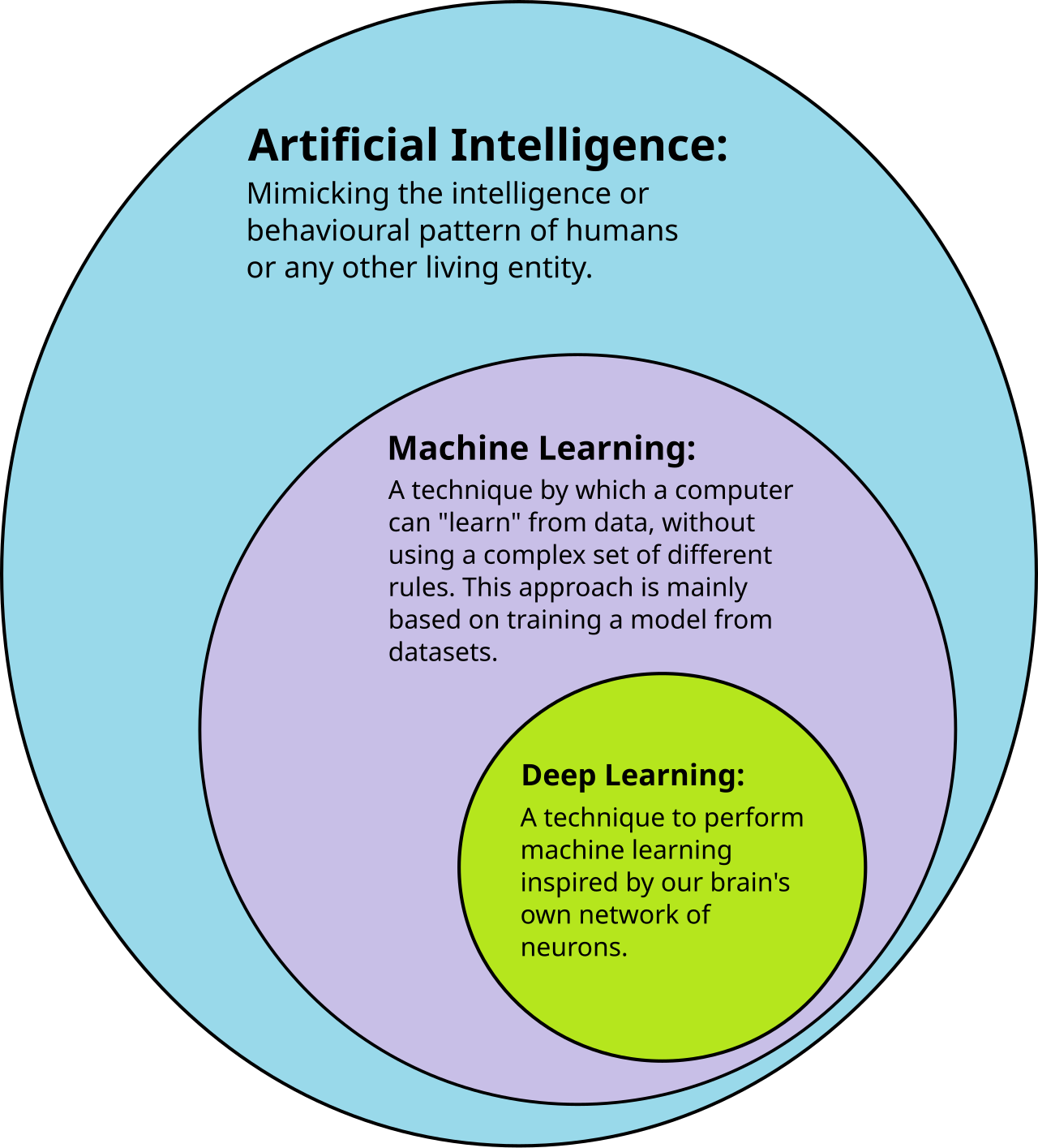
Avimanyu786 SVG version: Tukijaaliwa - File:AI-ML-DL.png
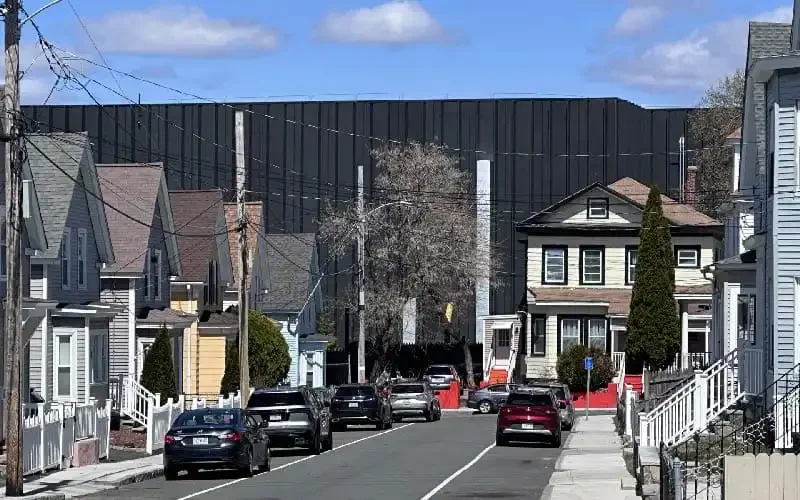
A huge Markley Group data center looms over a Lowell, Mass., neighborhood.
Photo: Yale Environmental Justice Law and Advocacy Clinic
From The Conversation (excepting pictures above)
WORCESTER, Mass.
Do artificial intelligence tools such as ChatGPT eliminate jobs, create new ones, or both? There’s a lot of speculation regarding this question, but little solid data in the U.S. to answer it.
I’m a sociologist who researches AI, among other topics. Seeking answers to that question and others, I commissioned an online survey by YouGov, a market research agency, to ask 1,250 U.S. workers between July 30 and Aug. 4, 2026, about their experiences with AI and their attitudes toward the technology.
The survey covered workers’ current use of AI, their perceptions of how it will affect their future job opportunities, and how they believe it has affected their job opportunities up until now. It is the basis of my study in progress, the results of which have not been peer reviewed.
The findings show that four years after ChatGPT’s debut in November 2022, AI has not yet resulted in substantial job losses or gains for these workers, contrary to what some AI pessimists and optimists might have predicted.
Only about 3% of workers said they had lost a job due to AI since 2023, while roughly 6% indicated they landed a job that didn’t exist before AI. Approximately 9% said they’ve earned a promotion or advancement related to AI.
For AI pessimists like me, it’s surprising that so few of the surveyed workers said they had lost jobs due to AI. And it might raise a few eyebrows to see how uncommon it was for workers to indicate any AI-related job changes since 2023.
Limited impact so far
YouGov surveyed a sample of employed U.S. adults intended to reflect the nation’s employed population in terms of age, gender, race, education and other characteristics.
My 25-question survey included the following three questions concerning AI’s role in job changes since 2023:
1) Since 2023, have you lost a job due to AI, such as AI’s automation of your previous job’s tasks?
2) Since 2023, have you landed a new job that did not previously exist before the adoption of artificial intelligence (AI), such as an AI data labeler or AI compliance specialist?
3) Since 2023, have you received a promotion or advancement that you believe was related to AI, such as your AI skills?
Approximately 95% of surveyed workers said “no” to the first question; 90% said no to the second; and 88% said no to the last. Between 3% and 4% were “not sure” they experienced any of these AI-related job changes. The numbers for each question may add up to more than 100% due to rounding.
It can be hard to get a human to help when you need customer service. mphillips007/iStock via Getty Images Plus
What this means
These results square with what some other researchers in the U.S. and elsewhere have found: AI is not having widespread effects on the labor market today. At the same time, job changes in the U.S. are a rarity, so the small percentages of surveyed workers who report AI-related job changes must be viewed in this general context.
The most important way AI appears to be affecting job opportunities so far, according to workers in my survey, is by affording some of them chances for promotion and advancement. These workers’ AI skills may very well be helping them to move up the career ladder, but it is still too early to know whether any such advantage will last.
Agentic AI, a newer form of AI that can act autonomously and automate jobs to a greater extent, may render some current AI expertise and skills less valuable in the future.
Surveys like this one offer a snapshot of the reported experiences of a group of people at one point in time. It is difficult for workers to know for sure whether AI is to blame or credit for their job changes. Also, the survey began in July 2026 when the official unemployment rate was 4.1%, but the workforce was shrinkingand AI was reportedly a leading reason for many layoffs.
Those who took the survey are like average U.S. workers in important ways, but that doesn’t necessarily mean their AI experiences and attitudes are typical. They chose to participate in YouGov’s online panel, which means their responses may differ from randomly selected workers. And none were jobless, whether due to AI or another reason.
That said, my study moves beyond many predictions made by economists and analyses produced by AI companies of this technology’s impact on the labor market by asking workers themselves how they are experiencing AI. And unlike some research and an AI unemployment tracker in California, my study doesn’t focus just on job loss; it also examines job gains and promotions.
There are remaining questions about how workers are experiencing AI. For example, who is getting promoted? Are workers using AI on the job in ways that may advance their careers? And how do workers think AI will affect their opportunities in the future? These are among the other questions that my survey data can speak to and that I’m currently working on to answer.
Jeffrey C. Dixon is a professor of sociology at the College of the Holly Cross.
He received funding from a College of the Holy Cross Ruettgers Grand Challenge Award and a Professional Development Account through the Provost’s Office in order to conduct the survey discussed here. He also has a consulting business, Ethical & Responsibility Artificial Intelligence Consulting, LLC.
Deming Sherman: Don’t put proposed state transit center at Station Park!

At Station Park, Providence, looking toward the train station, which is used by Amtrak and MBTA patrons.
August 31, 2026
Mayor Brett Smiley
City Hall
Providence, RI 02903
Dear Mayor Smiley:
I write as a former Chairman of the Capital Center Commission (for 12 years) to strongly object to the proposed use of Station Park in the Capital Center as a transit center.
In 1981, the City of Providence, the State of Rhode Island, the Federal Highway Administration and the Federal Railway Administration signed an Agreement (MOA) (Exhibit D to attached letter to P. Alviti) pursuant to which regulations for the commercial development of the Capital Center were to be prepared and overseen by the Capital Center Commission. The development guidelines were required to be consistent with the Design and Development Criteria prepared by Skidmore, Owings & Merrill. That was done.
Central to the development were open spaces and view corridors to the magnificent McKim, Mead and White State House on Capitol Hill; indeed the MOA required this. Station Park, also known as State House Park, was designated as Open Space, as was the State House lawn. Specifically, the Regulations state (5.D.2):
“State House Park shall be an expansive green lawn which covers the railroad and completes the open space link between Union Station and. the State House.’’
“State House Park is envisioned as an informal, yet critical open space garden for the District. It is an important link in the open space chain, which extends from the State House Lawn to Waterplace Park and Kennedy Plaza. . . State House Park shall be a public open space and shall not be used as a Development
site or to accommodate any off-street parking (emphasis added).’’
The transit proposal does violence to the agreement between the State, the City, and the federal government. Both the State House lawn and Station Park should remain as is.
In 2017, the RI Department of Transportation issued a proposal to develop the eastern portion of the State House lawn for commercial buildings. This was a clear violation of the Commission’s Regulations. On behalf of the Commission, I strongly objected both at meetings with RIDOT and publicly. The Cultural Landscape Foundation, a national non-profit organization that focuses on education about important landscapes, declared the lawn to be one of the top ten threatened landscapes in the nation. Fortunately, the project eventually was dropped. I have attached my letter to the Director of the Director of the Department that lays out in more detail the history of the Commission, its Regulations and the importance of open space and view corridors to the State House. The proposed development of Station Park for a transit center will take up valuable open space (enjoyed recently by the public for watch parties) and will interrupt a key view corridor from Waterplace Park to the State House. The reasons that require Station Park to remain open space are the same reasons that require the State House lawn to remain open space, as set forth in my letter.
In 2025, at the urging of the City, the Capital Center Commission and the Capital District were dissolved. However, the Regulations were not specifically rescinded in the dissolution ordinance (Chapter 2025-15) and, therefore, may well remain in place pursuant to the MOA. I previously recommended that the Regulations be folded into the Zoning Ordinance, but unfortunately that was not done. At a minimum, I understood from the Department of Planning & Development that the Regulations would be guidelines for future development in the Capital District. In any event, the Park is subject to zoning, where the question arises as to whether the proposal is even a permitted use, and any project with respect to this property is subject to the Downtown District Development Plan Review process.
Regardless of the status of the Regulations, open spaces are critical to the beauty and character of Providence, and there are a number of important open spaces that have been preserved or created along the Woonosquatucket and Providence Rivers and elsewhere. The Downtown Providence Parks Network oversees a string of parks from the State House to upper Narragansett Bay. It makes no sense to eviscerate the Capital Center Regulations that have been in place for more than 40 years, that have protected the open spaces in the District, and that have implemented the vision for the District, a vision that should continue. If Station Park is developed, does this mean that the State House lawn is no longer protected?
Station Park and the State House lawn should remain as open space.
Thank you for your consideration.
Very truly yours,
____/s/ Deming E. Sherman_____
cc Joseph I. Mulligan, III, Director, Department of Planning & Development
Christopher Durand, CEO, RIPTA
Governor Dan McKee
Christopher Marsella, Chairman, Providence Foundation
David Salvatore, Executive Director, Providence Foundation
Jeffrey Emidy, State Historic Preservation Officer
Marisa Brown, Executive Director, Providence Preservation Society
Suzanne Wernevi, Executive Director, Downtown Providence Parks Network
Robert Rocchio, P.E., Director, RIDOT
Thomas Verdi, Director of Department of Administration
Visions from thrift stores

“My First 25,000 Years on Earth” (collage), by Pepe Mar, in his show “Pepe Mar: Dream House,’’ at the Currier Museum of Art, Manchester, N.H., through Feb 21.
— Image courtesy of Mr. Mar and David Castillo
The museum says:
“Continuing Mar’s ongoing engagement with museum collections, “Dream House’’ is the first New England presentation of the Mexico-born, Miami-based artist whose exuberant works synthesize thrift store aesthetics, queer culture, science fiction, and fashion.’’
“The consumption and material overproduction of 21st Century life offers wellspring of meaning and material for Mar, whose work incorporates thousands of collaged images and objects such as ceramic vessels, second-hand clothing, and cornucopia baskets. Acquired through a habitual scouring of thrift stores, the artist transforms these objects into depictions of his enigmatic alter-ego, Paprika.’’
Philip K. Howard: Don’t try to let AI replace human judgment, responsibility

.
There’s no doubting the power and potential of artificial intelligence. But AI is not reliably moral. Indeed, its own inventors suggest that unchecked AI could lead to catastrophic consequences.
How do we control AI? There must be some mechanism that empowers human judgment and locates human responsibility—for example, requiring people who are accountable to build in guardrails. The frontier AI companies probably need to take this responsibility, overseen by an independent expert panel. Developing this oversight may require as much invention as AI itself.
But it’s not the only innovation required. The role of human judgment must also be resuscitated. We must abandon the myth that any complex legal system can achieve effective government. Fairness requires judgment in the circumstances. Individual freedom requires the power to use judgment. Safe AI requires judgment in design and in continuous oversight.
After the 1960s, America’s legal and governing structures were remade to preempt human judgment. The question seems to have become: “Who are you to judge?’’ Thick rulebooks tell us not only what to do, but exactly how to do it. Just follow the rules. Years-long procedures require us to prove by objective evidence what is right and what is wrong. But how does a school principal prove that a lousy teacher is just going through the motions?
Nothing much works in America as it should. Everyone knows it. The abundance advocates. The MAGA folks. But they haven’t put their finger on the root flaw—a governing framework that repudiates human judgment. Of course common sense is dead. Common sense requires judgment in the circumstances.
In The Washington Post, I argue that America needs to abandon the rationalistic red tape state—and indeed, the naïve notion that any “system” can right the ship. We must transition back to a simpler framework activated by real people using their judgment and accountable for how they do.
AI has called the question: Do we want humans to be in charge?
Common Good is working with leading citizens, experts, and think tanks to articulate this new human-centric model of governing. If you’re interested in getting involved, please get in touch.
Philip K. Howard, a lawyer and best-selling author (The Death of Common Sense, etc.), is founder and chairman of Common Good, a nonprofit legal-, regulatory-, and cultural-reform organization, as well as a New York civic leader and a photographer.