

Local inflection
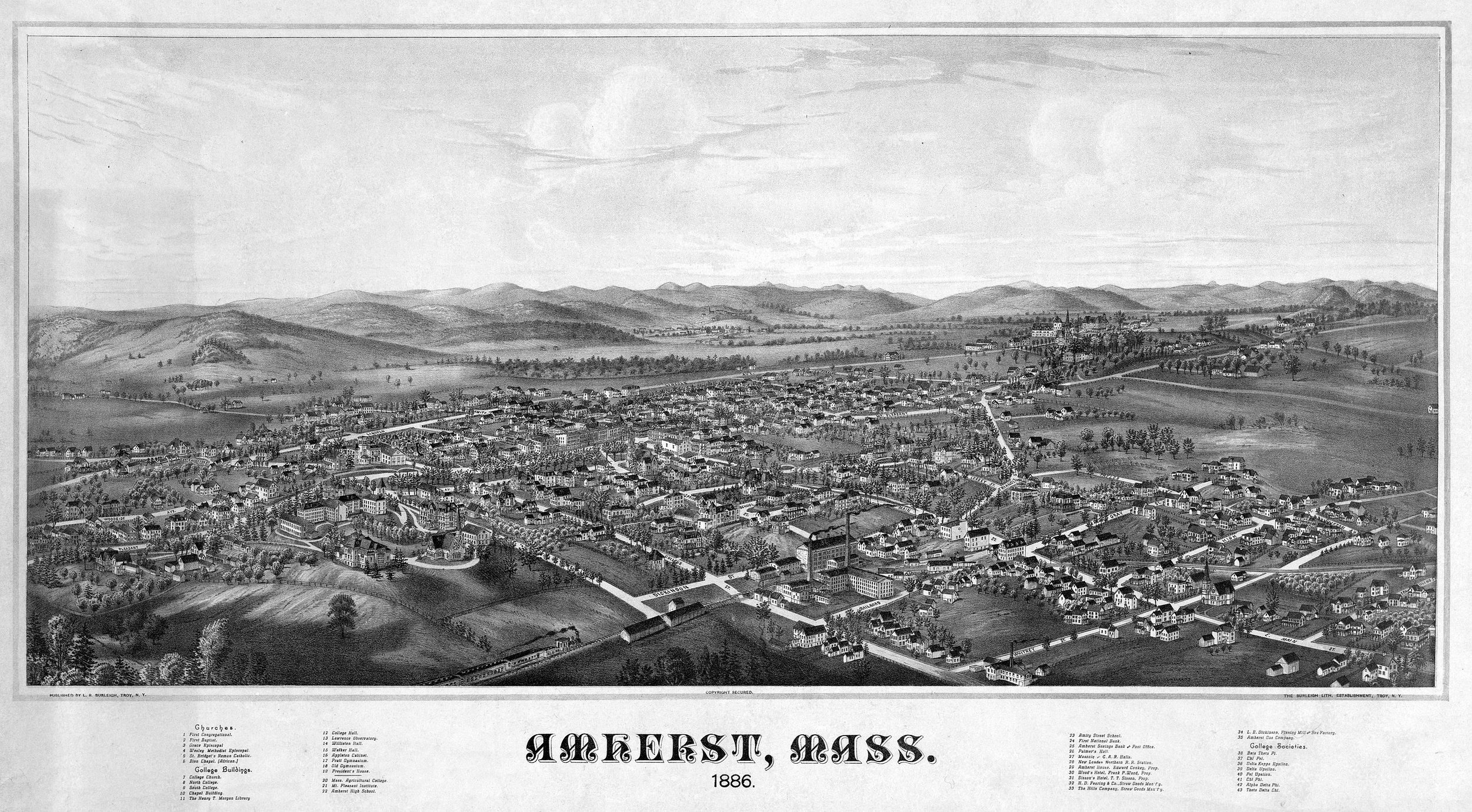
{Emily Dickinson, 1830-1886} wrote about nature, love, life, death, humanity’s relation with God — matters that from time to time occupy the thoughts of all thinking people. But her approach was always that of a New England villager…She wrote that she saw “New Englandly,’’ and she might just as accurately have expressed herself with another coinage, “Amherstly.’’
— From The New England Town in Fact and Fiction, by Perry D. Westbrook (1989)
‘Trapped memories’

From the Safarani sisters' new series of works, called “Submerged in Time,’’ at ShowUp Gallery, Boston, through Sept. 28. The works reflect efforts to deal with memories. The gallery notes: “Balloons and string lights seen through a translucent surface convey mystery and speak to the memories that exist in everyone’s life—those from our childhood or our unconscious. These memories may feel trapped or unclear, sometimes hidden behind a buffer we create to avoid remembering them clearly.’’
Intersecting systems
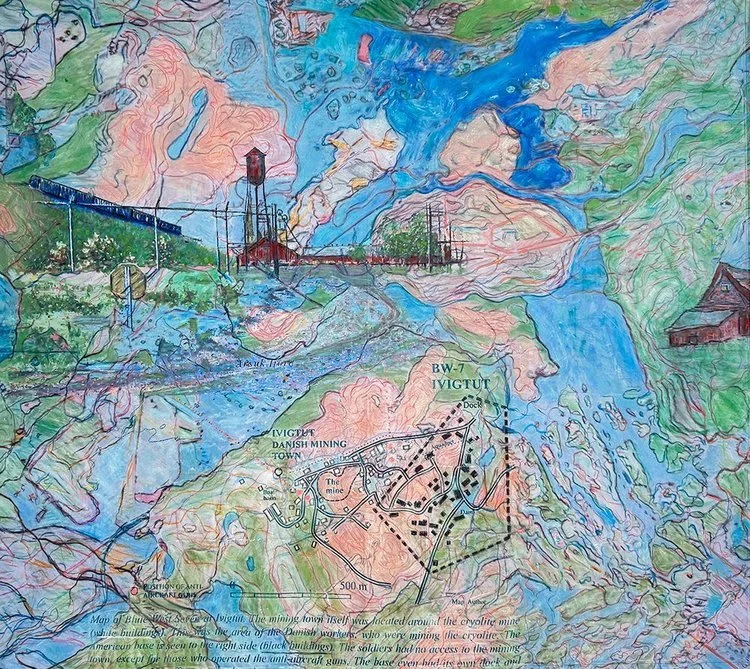
From “Intersecting Ecologies,’’ a two-person, collaborative exhibition by Paula Gerstenblatt and Jan Piribeck focused on the intersection of personal, social and environmental systems. The show runs on Sept. 5-Nov. 30, at The Parsonage gallery, Searsport, Maine. The work is situated in Maine and Greenland, where Gerstenblatt and Piribeck have worked as artists and researchers.

The Park-Griffin-Treat House, in Searsport, Maine, built for sea Captain Benjamin Bentley Park in 1840, during The Pine Tree State’s maritime heyday.
— Photo by Bruce C. Cooper
Chris Powell: Key Conn. Democrats keep pretending they aren’t obstructing ICE

MANCHESTER, Conn.
Some Connecticut Democrats keep doubling down in support of illegal immigration and obstruction of immigration-law enforcement even as they keep pretending they're not doing so.
The other week at the Legislative Office Building about 25 Democratic elected officials held a news conference that made a spectacle of their contradictions.
A week earlier state Rep. Corey Paris (D-Stamford) had issued a warning on social media that federal immigration agents were active in his district. He urged people to “remain vigilant, stay aware of our surroundings, and, above all, prioritize your safety," as well as to bring immigration-enforcement actions to the attention of groups that assist illegal immigrants.
Responding on social media, a conservative organization accused Paris of publicizing the “live location" of immigration agents and urged the Immigration and Customs Enforcement agency to “charge him."
ICE reposted the accusation, prompting, according to Paris, lots of anonymous threats against him. He denied disclosing the “live location" of immigration agents and putting any agents at risk.
Indeed, Paris had not posted that agents were, for example, working around the Stamford train station or a particular supermarket. But his district is a small place with defined borders, and citing it conveyed information useful to people seeking to remain in the country illegally, so Paris's intention was clear: to obstruct enforcement of immigration law.
At their news conference, Democratic elected officials, including Lt. Gov. Susan Bysiewicz and U.S. Sen. Richard Blumenthal, minimized that aspect of the controversy. They concentrated on the threats that Paris received, as if there is substantial political disagreement in Connecticut about the impropriety of such threats. (Even Republican state legislators felt obliged to deplore the threats against Paris while failing to deplore what he did.)
No, the substantial political disagreement is about illegal immigration.
“Corey did nothing wrong," Blumenthal insisted, and his colleagues at the news conference repeated this assertion.
All this came just days after Gov. Ned Lamont and state Atty. Gen. William Tong had proclaimed again that Connecticut is not a “sanctuary state" and does not interfere with immigration-law enforcement.
No one in journalism called the governor and the attorney general to ask why, if Connecticut is not a “sanctuary state," a state legislator had just acted as if it is one and if they approved of what he did.
Indeed, in calling their news conference the Democratic elected officials must have been confident that no one in the Capitol press corps would ever question them critically about illegal immigration.
No one asked the Democrats if, by saying Paris did “nothing wrong," they meant that trying to sabotage immigration-law enforcement is OK.
No one asked if they would feel justified in doing what Paris did if they knew that immigration agents were working in a particular area.
No one asked how the explosion in the country's illegal immigrant population in recent years is likely to affect congressional redistricting and which political party will benefit most from it.
No one asked if immigration-law violators who have not been accused or convicted of other offenses should be exempt from enforcement -- that is, if there should be another immigration amnesty.
No one asked if, for the country's protection, every foreigner should get ordinary vetting before being admitted.
And no one asked if, before publicizing immigration enforcement in his district, Paris should have determined whether the agents were going after criminals or just ordinary immigration law violators.
But almost simultaneously with the Democratic news conference,ICE announced that in a recent four-day operation in Connecticut it had arrested 65 people, 29 of whom “had been convicted or charged in the United States with serious crimes, including kidnapping, assault, drug offenses, weapons violations, and sex crimes." Others, ICE said, had criminal records in their native countries.
“Connectiut is a sanctuary no more," ICE said, implying that there would be more enforcement in the state.
How much more enforcement will be required in Connecticut before critical questions are put to public officials who deplore it?
Chris Powell has written about Connecticut government and politics for many years (CPowell@cox.net).
Michael Rose: New England Wax will celebrate an ancient artform in big Manhattan show
Michael Rose is the gallery manager of the Providence Art Club, as well as as an art reviewer, teacher and consultant.
The medium of encaustic has been in use for millennia and has found resurgent energy in the contemporary art community. Prized for its malleability and suggestive aesthetic qualities, art made in and with wax is again in vogue. New England Wax, a professional association made up of thirty artists across six states, is one of the organizations promoting the medium and supporting artists who create expressive works using bees wax and damar resin.
In an upcoming show at Atlantic Gallery in New York, New England Wax artists will share their work beyond the borders of their region while celebrating the remarkable qualities that can be achieved with their medium of choice.
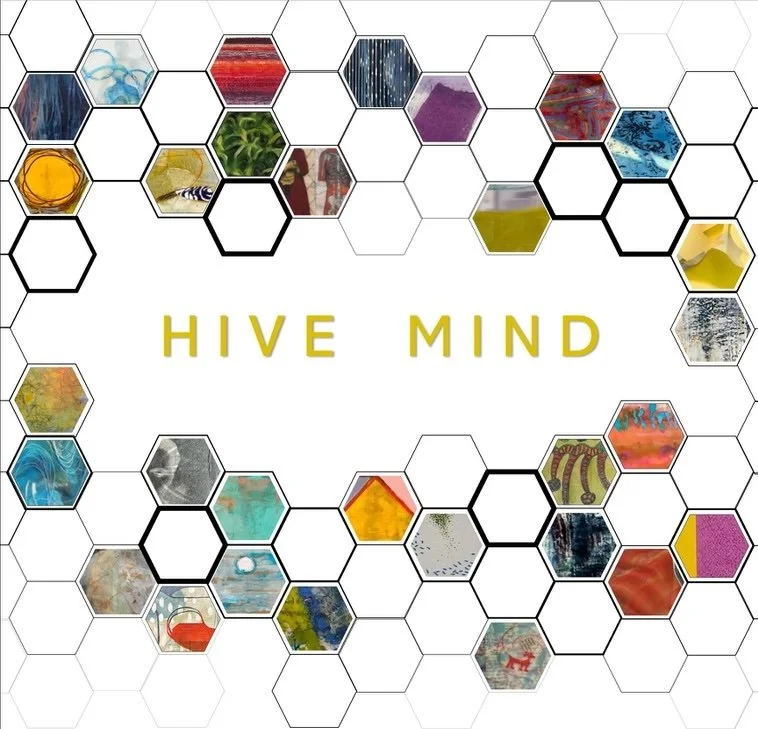
Titled “Hive Mind,’’ the exhibition will feature a collection representing 27 artists and will be on view Sept. 9 - 27 at Atlantic Gallery, at 548 West 28th St., Suite 540, in Manhattan’s Chelsea section. The show will be an opportunity for New Yorkers and visitors to the city to experience artworks by individuals who have been frequently featured in thoughtfully assembled group showcases throughout Connecticut, Rhode Island, Massachusetts, Maine, New Hampshire and Vermont. Past exhibitions organized by New England Wax have been mounted at such venues as Fitchburg State University, Southern Vermont Arts Center, New Bedford Art Museum, Fuller Craft Museum, and the Saco Museum of Art, among others. After their New York show, the group will exhibit in Chicago in November.
Describing the organization’s purpose, current New England Wax President Ruth Sack says, “Our mission is to promote excellence in fine art made with encaustic and other wax-based mediums to educate the general public about this medium to increase interest in encaustic and wax mediums in the art world.”
Diverse in approach, the artists in the upcoming show are united by their love for wax as a medium. Encaustic lends itself to a variety of applications. Some are bulbously dimensional while others are encompassed in a boxy form. Appealing color is a throughline, as is a collective interest in the tension inherent in a surface made of a material that turns from liquid to solid with some seeming magic. Wax is a uniquely sensuous medium and one that engages gallery visitors in a special way.
Among the works that will be on view, one of the punchiest is Kay Hartung’s “Geocolor 19,’’ a bright piece executed on a shaped substrate. Across the surface the artist uses raised geometric and organic patterns that denote different spaces within the form. There is something compartmental about the composition, an effect that builds enticing drama. Based in Massachusetts, Hartung earned her BFA from the Philadelphia College of Art and her MFA from Syracuse University.
Alongside Hartung, pattern is also a key part of “Symbioses,’’ an impressive mixed-media work by Charyl Weissbach. Leafy forms spread out across the surface and seemingly undulate within and atop the slick wax surface. A MassArt alum, Weissbach incorporates such materials as marble and 23-karat gold, a study in the multifaceted nature of encaustics. The subtleties in the piece are laudable and form a striking counterpoint to a more direct interpretation, such as the colorful “Yay! ,’’ by Pamela Dorris DeJong.
For DeJong, the encaustic surface is a playground for a mixed-media piece that leverages monoprints and oils in a collagelike treatment. The silhouettes of individuals populate the surface in a celebratory way while in the foreground two open hands press excitedly into the air. There is an energy of excitement and play here that recurs throughout the exhibition. Many of the artists combine media, experiment and blur boundaries to test how far they can push and pull the encaustic base.
Excitingly diverse and yet tightly choreographed, the exhibition is being assembled by curator Ingrid Dinter, a multitalented professional who has experience as an art dealer and independent curator. For Dinter, the idea of community was in mind as she selected artworks for the show.
She says, “When one thinks of ‘hive mind’ one thinks of busy bees working together -- collectively and in unison -- to produce or construct something with a common goal in mind. That can also apply to humans in social and creative situations, building bonds and unity, strengthening community, fostering solidarity – with a particular purpose in mind. In this case, it’s not so much that things should look the same, but that inherent in the individual differences in approach and appearance there is a shared spirit, overlapping and blending together, producing a whole larger than the sum of its parts.”
The artists of New England Wax form a supportive community. Together they explore the material that they all use with affection and zest. There is little competition among the artists, but instead a collective passion for a timeless artform. The shared enthusiasm of these makers will be on display in their Atlantic Gallery exhibition, which will offer viewers a chance to form a new appreciation for an ancient way of making art.
The reception for “Hive Mind’’ will be held at Atlantic Gallery on Saturday, Sept. 13, at 3-5 p.m., and the gallery will be open late on Thursday, Sept. 11, at 6-8 p.m.
Try to figure it out
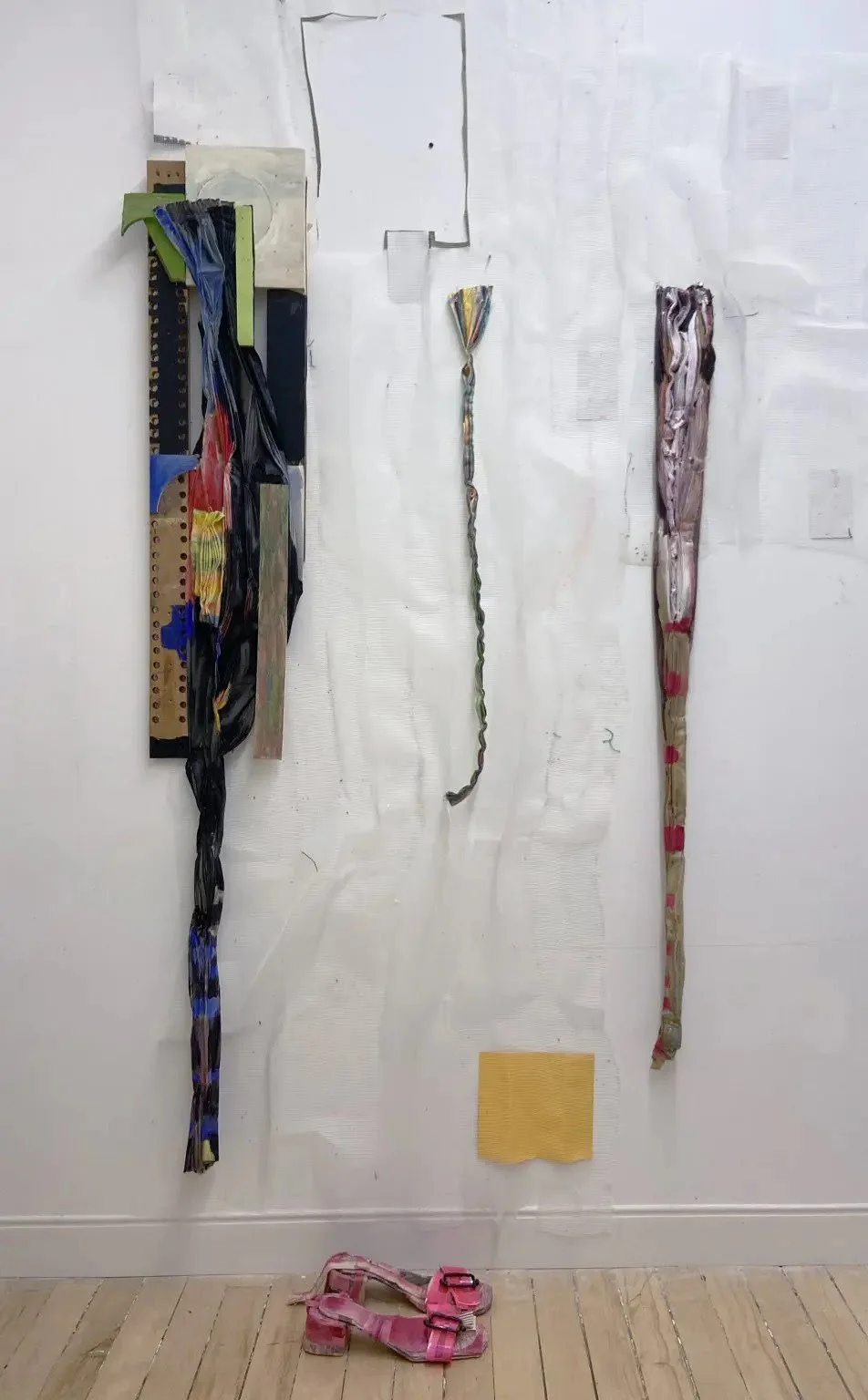
“As the apple disappears into water and sweetness in our bodies’’ (installation view), a show by Earthen Clay, at the Montserrat College of Art, Beverly, Mass., through Sept. 27.
The gallery says:
“This exhibition, named for the book The Wild Heart, by American author Jack Kornfield, includes paintings and sculptures made in the last two years. According to an artist statement, this body of work “responds to Kornfield’s visual theorization of objects" and through a series of interrelated works that call to each other, Clay is interested in questioning an unchanging, fixed view that forecloses alternate potential liberatory futures."
Squash those invasive and destructive Spotted Lanterflies

Spotted Lanternfly
Excerpted from an ecoRI News story by Colleen Cronin
PROVIDENCE
“Have you recently seen a blur of bright red on a sidewalk or a tree, moved a little closer to see an insect with spotted wings — and then, hopefully, taken your shoe or a stick and squashed it?
“You aren’t alone. Reports of the invasive Spotted Lanternfly are booming in Rhode Island, according to the Rhode Island Department of Environmental Management, and yes, the agency says, you should squish them….
‘‘A combination of feeding on sap and secreting a sugary substance onto plants that causes mold contribute to the invasive bugs’ destructive nature. They prefer grapes, hops, stone fruits, and hardwood trees….’’

Llewellyn King: The sometimes silly and unfair world of state secrets
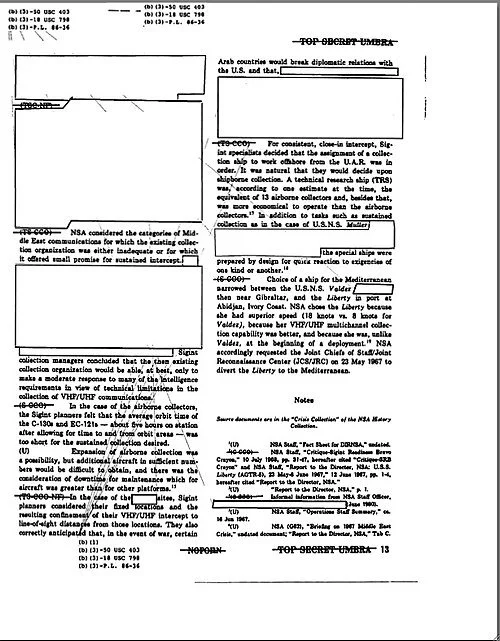
A typical partly declassified U.S. government document from 2004.

J. Robert Oppenheimer, “The Father of the Atomic Bomb,’’ in 1946. He lost his security clearance in 1954. (The movie Oppenheimer is well worth seeing.)
WEST WARWICK, R.I.
Beware: Classified documents don’t always hide state secrets, and security clearances are used as tools of manipulation and vengeance.
Before Xerox, if you wanted to keep a copy of something, you had to type it with a carbon sheet backing every page.
In 1969, I was commissioned by a long-gone consultancy, the Arctic Company, to write a paper on the use of hovercraft by the military, especially the infantry.
They were offering $500 for the job and, like most reporters, I was keen for the income and I signed up.
It was a time when it was believed that hovercraft —vehicles that cover the ground on a cushion of air — would be widely deployed.
I had no great insight into the vehicles or how they might be used as chariots of war. But I did have a lively imagination and access to The Washington Post library. I gorged on newspaper clippings, then wrote my commissioned piece.
After it had been accepted, and I was told by the company that the Army was “very pleased” with it, I forgot about it.
Then someone unrelated asked out of curiosity if they could see it. I said I didn’t have a copy, but I had been told that it had been mimeographed and widely distributed in the Pentagon.
I asked the Arctic Company for a copy, and they referred me to the appropriate office in the Pentagon. I was rebuffed, told that it was classified, and I could only see it if I had security clearance.
The Joint Committee on Atomic Energy, which controlled the nuclear establishment, military and civilian, used classification and security clearances to keep other members of Congress and the press out of its business; it regarded itself as the only responsible custodian of the nation’s nuclear secrets.
I was told that they were so classification-obsessed they couldn’t discuss the contents of the papers they had assembled to discuss because they were marked “Eyes Only.”
When James Schlesinger became chairman of the Atomic Energy Commission (AEC), in August 1971, he set about overhauling the classification of documents.
I was close to Schlesinger, and he told me that he thought more than half of the AEC documents shouldn’t be classified and he set about declassifying them. His argument: If you classify the trivial, all classification is degraded.
Dixy Lee Ray, the last chairperson of the AEC, became a friend of mine. I invited her to dinner at the venerable Red Fox Inn & Tavern in Middleburg, Va., established in 1728. It is a pleasant place to dine and claims to be the oldest continuously operating inn in America.
Ray went everywhere with her two dogs (Ghillie, a Scottish Deerhound, and Jacques, a Miniature Poodle), including in her limousine. The car also contained -- as I am sure the secretary of energy’s car does today -- the hotline that would be part of the launch procedure, in the event a nuclear attack is ordered by the president.
In her briefcase, Ray had an innocuous study she had wanted to give to me.
It was a blustery night, and her driver was waiting in the car in the parking lot with her briefcase on the backseat and both dogs on the front seat.
The moment that Ray opened the rear door, two things happened: A great gust of wind arose and Ghillie leapt from the front seat to the backseat, upsetting the briefcase. Crisis!
All the papers in the briefcase, many of them marked with the big red X of classified documents, blew all over the parking lot.
The three of us, in panic mode, set about scouring the bushes for them in the dark, fearing that someone would find one of them and, so to speak, the jig would be up. We could imagine the headlines.
After an hour’s search, we figured that we had gathered all the papers, and Ray did an inventory. Nonetheless, the next morning I drove out from Washington to make sure that no nuclear secret was impaled on a bush branch.
Most notably from 1954, when J. Robert Oppenheimer, who had been the scientific director of the Manhattan Project, lost his security clearance under murky circumstances, security clearances have been used as a tool of manipulation and vengeance.
If a scientist or a manager loses their clearance, they can appeal in a long, difficult and expensive process. Even if the victim appeals, the damage is done; the subject is damaged goods, publicly humiliated as morally deficient and untrustworthy.
Llewellyn King is executive producer and host of White House Chronicle, on PBS, and an international energy-sector consultant and speaker. His email address is llewellynking1@gmail.com, and he’s based in Rhode Island.
Party wherever you can
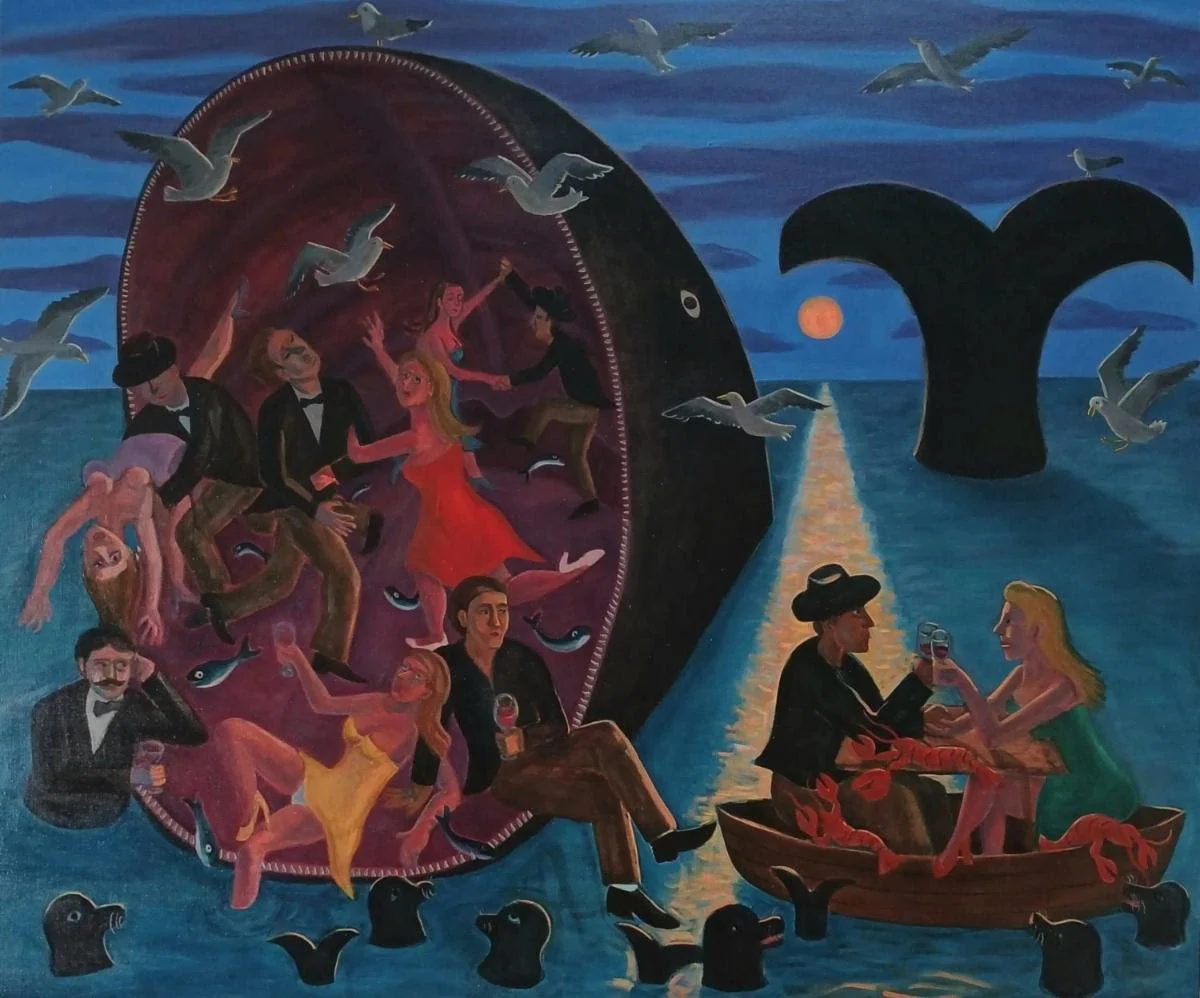
“A Dance in the Mouth of a Whale’’ (oil on linen), by Alexander Nolan, in his show “Airplane Mode,’’ at Cove Street Arts, Portland, Maine, through Oct 18. Mr. Nolan lives in the far Downeast Maine town of Lubec.
The gallery explains:
“Nolan presents a body of work inspired by ‘something funny that pops in my head, a dream, a domestic experience, or it might come from a narrative inspired by a book or movie,’ according to the artist. ‘In my paintings, I explore our human basic needs and need nots in life such as food, sex, love, joy, violence, vice, agony, greed, spirituality, and death.’’’
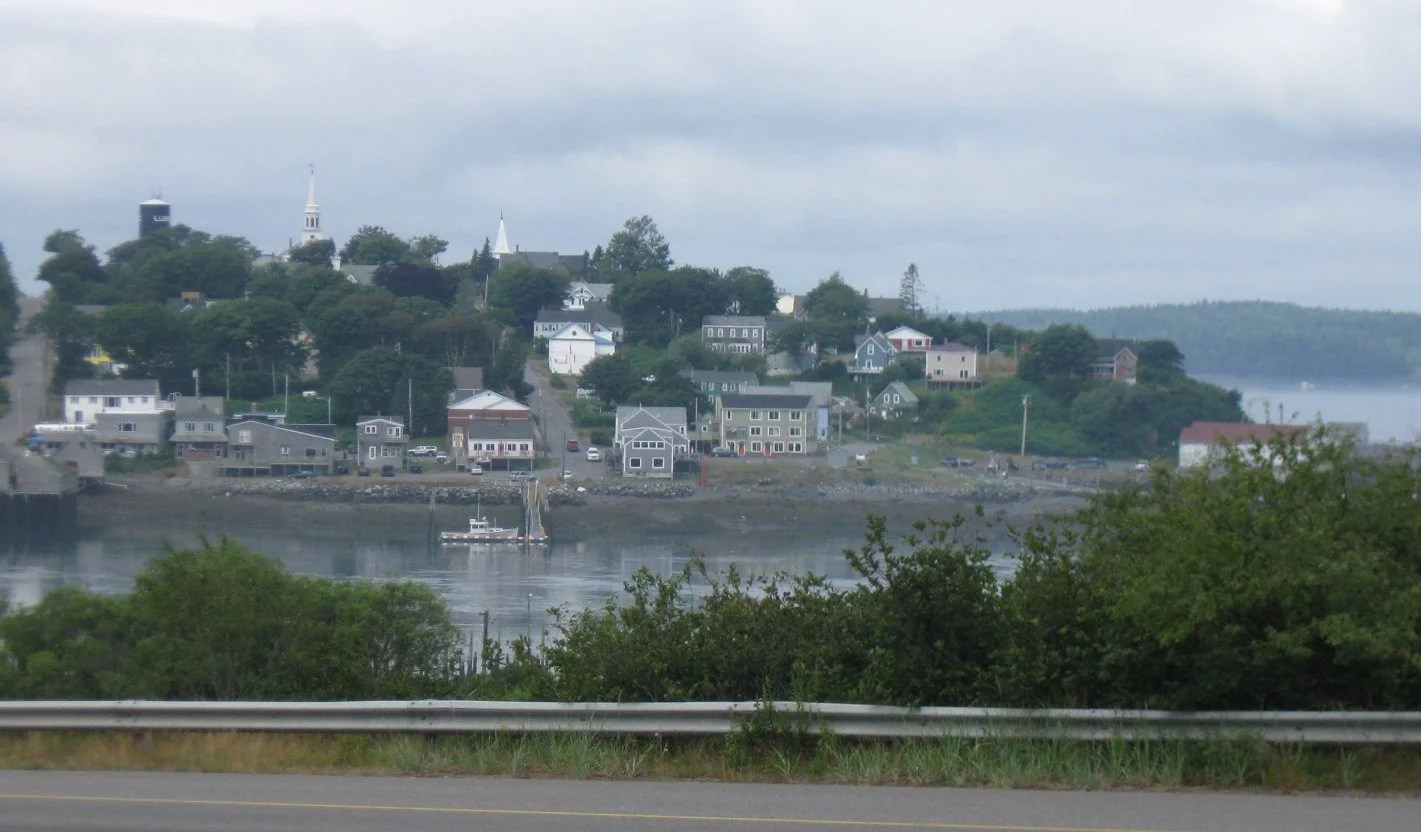
Center of Lubec, as seen from Canada’s Campobello Island.
A document to be very proud of
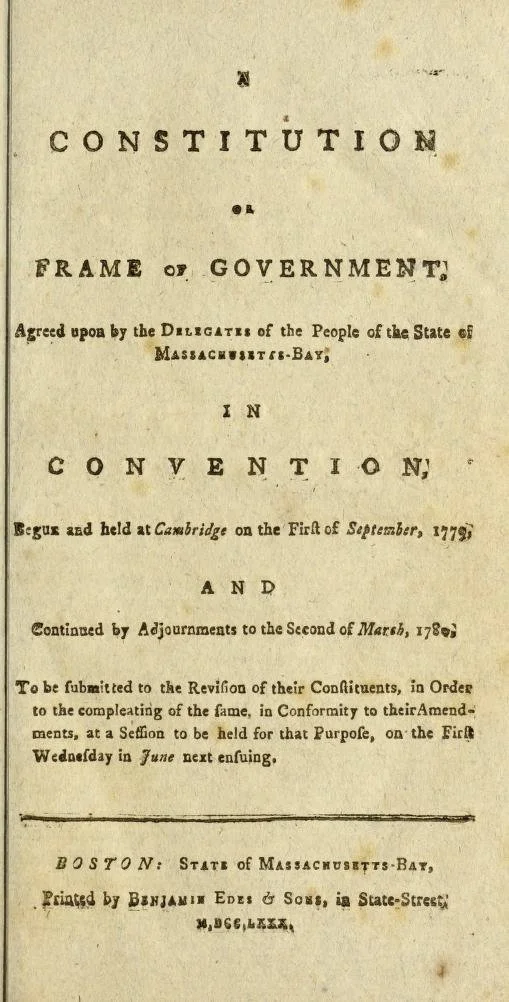

Parts of the Massachusetts Constitution.
“The Massachusetts Constitution coined the phrase ‘we the people’ … and the people of Massachusetts lived up to it. So let’s toast the people of Massachusetts — North, East, South and West — for their singular role in devising the oldest constitution in the western world!’’
— Mark D. Mason, Massachusetts Superior Court judge
Slightly correcting the judge: The Massachusetts Constitution, enacted in 1780, cites “the people of the State of Massachusetts-Bay.’’
‘The most interesting part of creation’
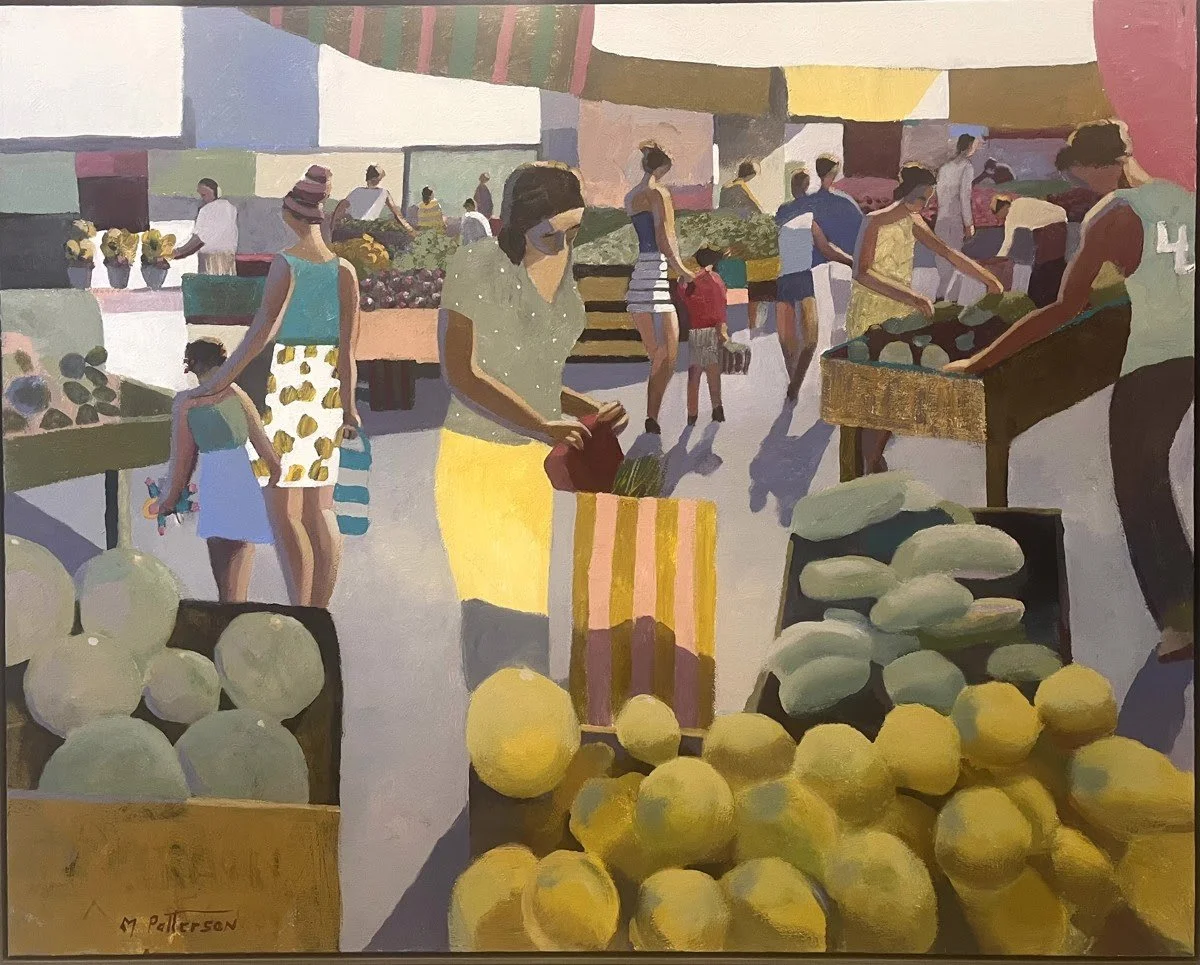
Michael Patterson’s painting of a Parisian marketplace, at the Lily Pad Gallery in Newport, R.I.
The Roxbury, Conn.-based artist says:
“My work is focused on several objectives. Light, reflected light and its color effects, as well as the positive and negative shapes of equal importance, creating the graphic energy of my compositions. This sets the rhythm for a piece and influences where the viewer’s eye travels and at what pace. I include curved lines with straight, organic shapes and juxtaposed geometric shapes woven together, always conscious of the line created by any color masses converging. This line flows throughout, interrupted, yet continuous. Finally, the subject of my work most always includes the human figure wherever they may be -- city streets, markets, the beach, alone or in groups. People are the most interesting part of creation."
Small state, big climate

Hurricane Carol attacks the Edgewood Yacht Club, in Cranston, R.I., on Aug. 31, 1954.
“Without going against Nature and absolutely defying the seasons, Rhode Island’s climate has as many variations as the solar system will permit.’’
— From WPA Guide to Rhode Island, 1937
Write them with a glaze
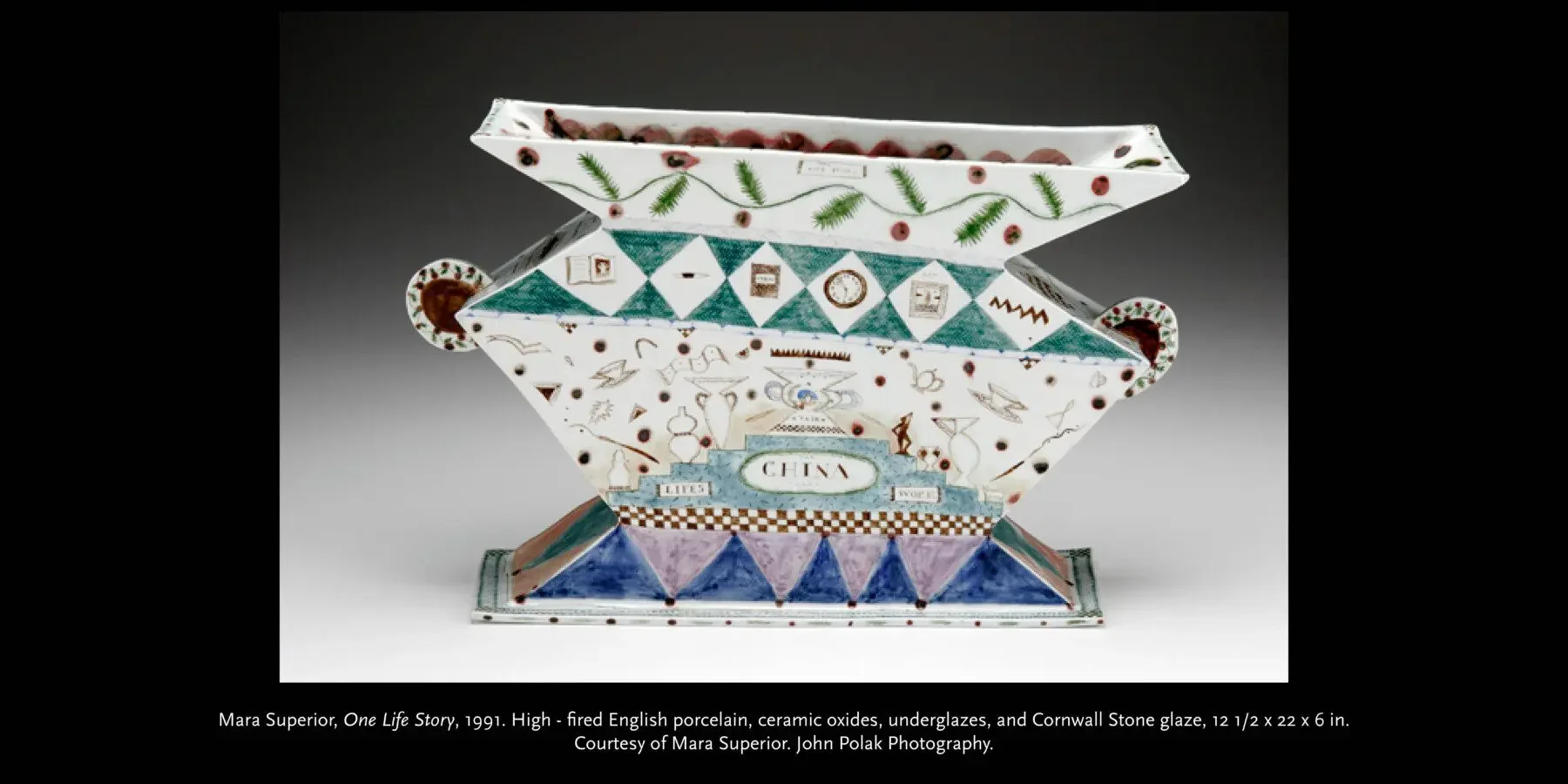
In the show “Porcelain L0ve Letters: The Art of Mara Superi0r,’’ at the Shelburne (Vt.) Museum, through Oct. 26.
—Photo by John Polak
Psychoacoustic experience
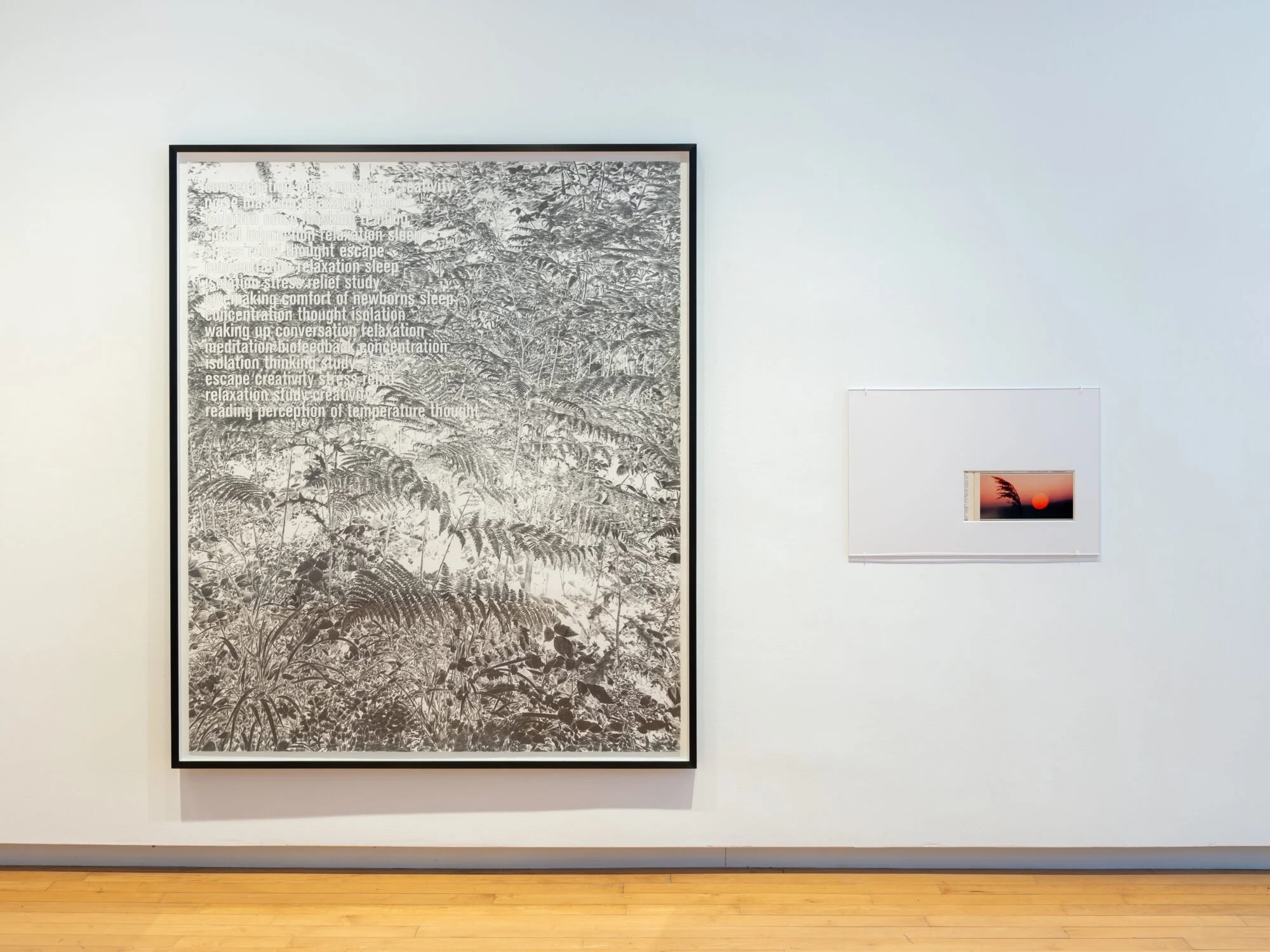
From Martin Beck’s show “… for hours, days, or weeks at a time,’’ through Oct. 5, at the Aldrich Contemporary Art Museum, Greenwich, Conn.
The museum explains that the show “explores the methods and means through which environments are captured, compressed, and represented. Using drawing, sound, video, and installation, the exhibition presents a suite of works informed by Beck’s research into ‘environments,’ a series of 11 vinyl records from the 1970s produced by the Syntonic Research Inc. label that registered the acoustics of nature and meditative sounds with high-fidelity recording technology. Marketed as psychoacoustic experiences with the potential to alter domestic and workspace atmospheres—for listeners to transcend the monotony of bureaucratic space and activity—the records laid the groundwork for an emerging industry catering to the care, efficiency, and control of the self. Beck’s interest in these records is their pioneering role as atmospheric tools for self-optimization within an ever more competitive capitalist setting.’’
‘I disregard the fear of man’ in the battle against slavery

Masthead of William Lloyd Garrison’s abolitionist newspaper
“I am aware, that many object to the severity of my language; but is there not cause for severity? I will be as harsh as truth, and as uncompromising as justice. On this subject, I do not wish to think, or speak, or write, with moderation. No! no! Tell a man whose house is on fire to give a moderate alarm; tell him to moderately rescue his wife from the hands of the ravisher; tell the mother to gradually extricate her babe from the fire into which it has fallen,b ut urge me not to use moderation in a cause like the present. I am in earnest—I will not equivocate—I will not excuse—I will not retreat a single inch—AND I WILL BE HEARD. The apathy of the people is enough to make every statue leap from its pedestal, and to hasten the resurrection of the dead.
“It is pretended that I am retarding the cause of emancipation by the coarseness of my invective and the precipitancy of my measures. The charge is not true. On this question my influence —humble as it is —is felt at this moment to a considerable extent, and shall be felt in coming years—not perniciously, but beneficially—not as a curse, but as a blessing; and posterity will bear testimony that I was right. I desire to thank God, that he enables me to disregard ‘the fear of man which bringeth a snare,’ and to speak his truth in its simplicity and power.’’
— William Lloyd Garrison (1805- 1879), an American abolitionist, journalist, and social reformer. Based in Boston, he is best known for his widely read anti-slavery newspaper The Liberator, which Garrison founded in 1831 and published in Boston until slavery in the United States was abolished by the Thirteenth Amendment in 1865.
This quote is from his (1831) “Letter to the Public’’
xxx
The Trump regime is trying to play down American slavery’s horrors and long-term sociological, economic and political effects on society, which of course linger to this day. Trump, brought up in intense privilege, said the other day:
“The Smithsonian is OUT OF CONTROL, where everything discussed is how horrible our Country is, how bad Slavery was, and how unaccomplished the downtrodden have been — Nothing about Success, nothing about Brightness, nothing about the Future. This Country cannot be WOKE, because WOKE IS BROKE. We have the ‘HOTTEST’ Country in the World, and we want people to talk about it, including in our Museums.”
Late-summer musings
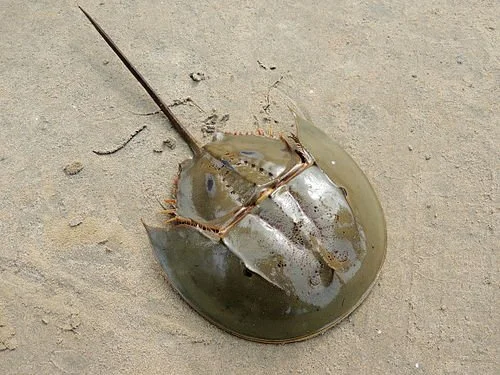
Horseshoe crab heading for the water. The very, very ancient creatures are not true crabs.

Horseshoe crab dorsal anatomy.
Adapted from Robert Whitcomb’s “Digital Diary,’’ in GoLocal24.com
Shoreline walkers would do well to read famed nature writer Rachel Carson’s (1907-1964) beautiful (poetic in some places) and animal-and-plant-and-geology-and-weather-packed 1955 classic The Edge of the Sea. (There were a lot more horseshoe crabs back then, and not much plastic on beaches, but also more oil on the shore from ships, before the EPA. As kids, we loved to find sea glass.)
xxx
It’s too bad that college students must go back to school so early these days. Late August and early September have the best weather of the year around here. In my time, many of us didn’t have to go back until mid-September. Among other things this gave us more time to make money on summer jobs. (May and early June weather not so good for such work.)
xxx
It’s old people who most sense summer (and all other time) seeming to go faster every year, even as summer is getting longer climate-wise. And we’re excessively looking forward, or fearing, the next season. Too bad this can distract us from the pleasures of the moment, especially in person (not on a screen), in a constantly changing nature, such as seeing the Asters, which have several vivid colors, Black-Eyed Susans, and the purple-blue of Chicory on the roadsides.
Enjoy the sweet corn from local farms and the softer sunshine. And those noisy cicadas have a delicious nut-like taste!
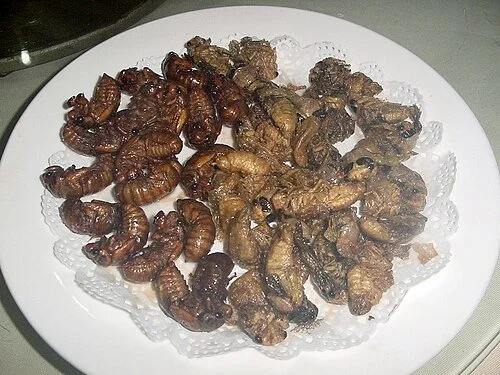
Deep-fried cicadas. Better than popcorn!
So watch what you say

“Where Everyone Knows Your Name” (oil on canvas), by Jean Jack, at Portland (Maine) Art Gallery.
She says: “When I see something I want to paint the hairs on my arms stand up.”
Haunted inspiration

Painting of the reputed-to-be-haunted Fort Knox, Maine, by Seth Eastman and done between 1870 and 1875.
“I think one of the reasons {Mainer) Stephen King's stories work so well is that he places his stories in spooky old New England, where a lot of American folk legends came from.’’
— Ted Naifeh, American comic-book author