
Vox clamantis in deserto



‘Between control and surrender’
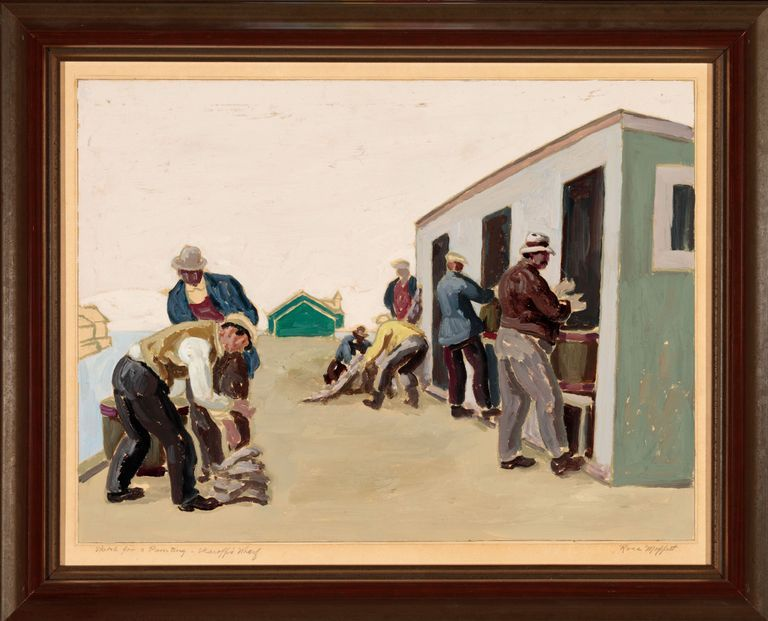
“Ocher — The Pursuit of Knowledge” (acrylic, charcoal and pastel sticks), by Mia Eriksson, in her show “Holding the Line,’’ at Alofft Gallery, Litchfield, Conn., through Nov. 1.
She says:
“We are surrounded by lines in our lives. Lines we face: starting lines, finish lines, blurred lines, and bottom lines. Lines we draw: ethical lines, moral lines, lines in the sand, and creative lines. And lines we learn to live with: aging lines, laugh lines, bloodlines, and timelines.
“These lines mark the boundaries between control and surrender. They define where we stand, what we protect, and how much of ourselves we are willing to expose.
“Within each painting in Holding the Line, I have placed a holding line, sometimes subtle, sometimes overt, and sometimes hidden within layers of color and texture. For me, it represents the place where we refuse to give up ground, compromise our principles, or surrender under pressure.
“The holding line is an ethical anchor and an emotional boundary. It is also a place of shared sacrifice, support, and commitment for people, nature, beliefs, and things we love.’’
N.E. Council’s warning about proposed federal regulation against ‘racial discrimination’ in private schools
Unsplash photo by Vitaly Gariev
From The New England Council (very slightly edited for clarity)
BOSTON
The New England Council recently submitted comments expressing our significant concerns regarding the proposed federal regulation entitled “Racial Nondiscrimination in Private Schools.”
Under the proposed rule, a private school would not qualify for federal tax-exempt status under section 501(c)(3) if it “adopts, maintains, or enforces a policy or practice that discriminates on the basis of race, color, or national or ethnic origin.” The rule would apply across admissions, educational policies, scholarships and loans, athletics, and any other school administered or school-supported program.
The Treasury Department, which includes the Internal Revenue Service, estimated that the proposal may affect as many as 18,000 private educational institutions, including tax-exempt private primary and secondary schools, colleges, universities, professional schools, and trade schools.
Threatening the tax-exempt status of private educational institutions based on their support for policies or programs designed to address racial discrimination raises serious concerns regarding freedom of speech, association, religion, and the ability of charitable organizations to pursue their lawful missions.
Here’s what the The New England Council has written to the IRS.
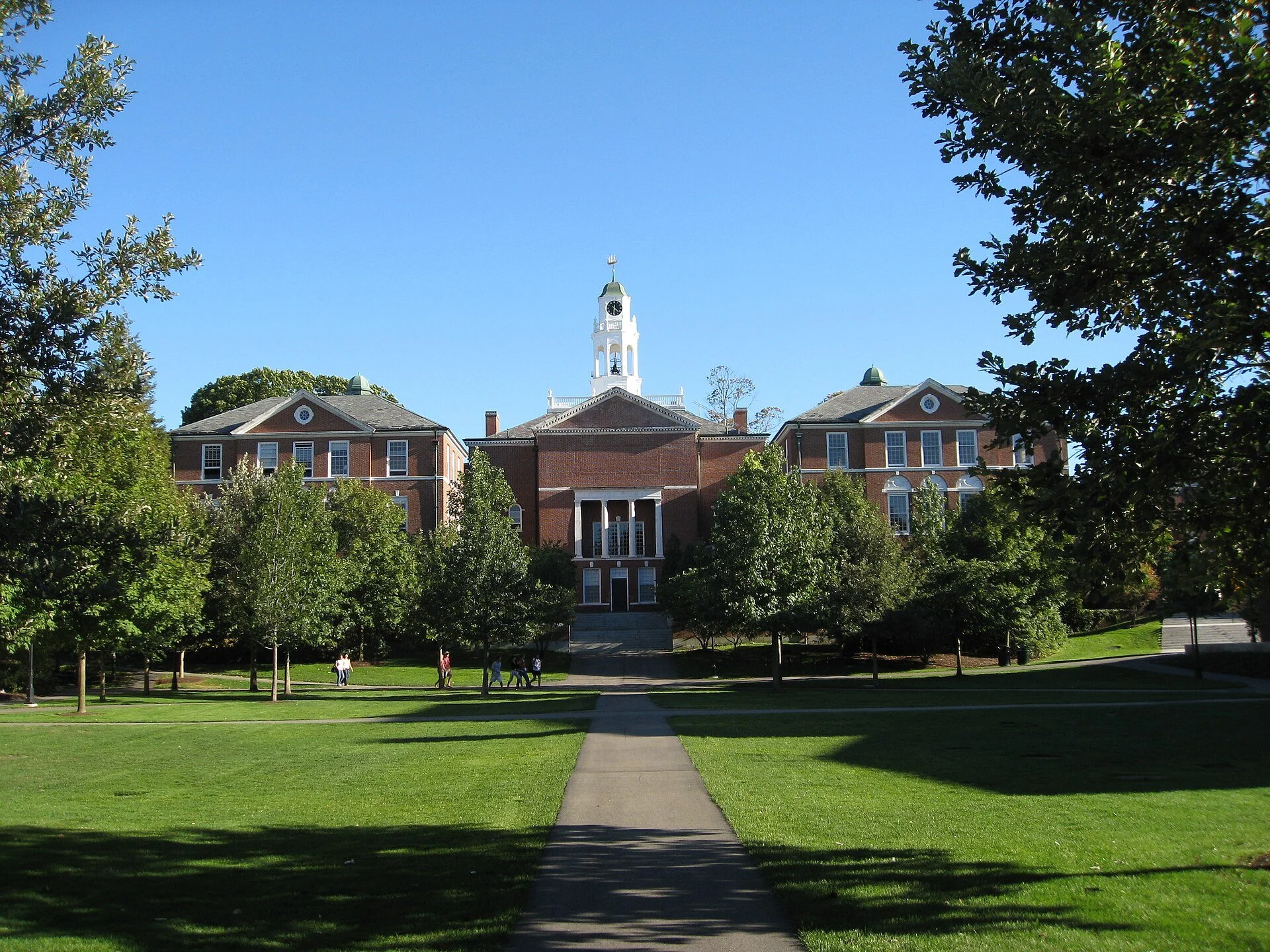
Phillips Exeter Academy in Exeter, N.H., founded in 1781, one of the oldest private boarding schools in the United States.
— Photo by Transmarinus
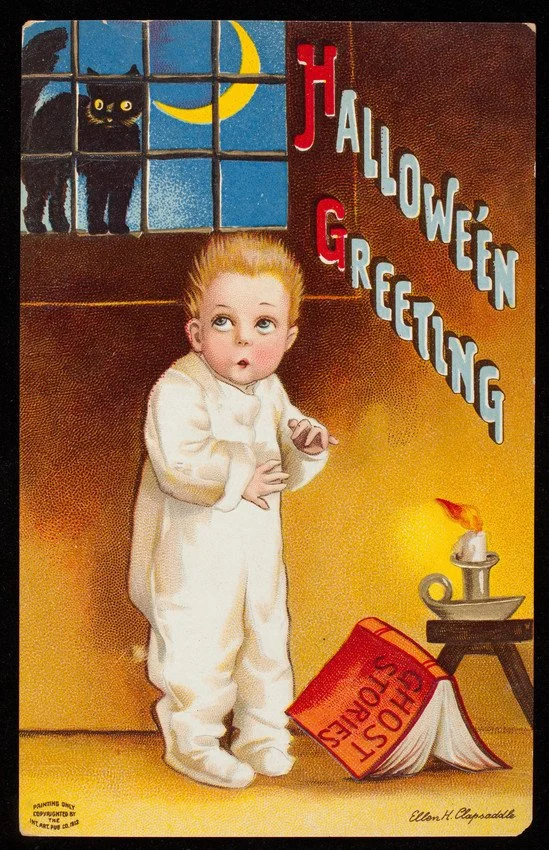
Having fun with horror in N.E.
Postcard was gift of Fielding Schofield to New England Historical Society, May 1, 1925
Excerpted and edited from an article by the New England Historical Society
“Many of the objects from the early history of Halloween celebrations in the U.S. relate directly to women and the home. As Halloween evolved into a popular holiday around the turn of the twentieth century, parties were often held at home and an increasing variety of decorations, postcards, and other items became commercially available for the Halloween season.
“Women and children feature prominently in the imagery of early Halloween postcards. The postcard above, in Historic New England’s collection, was created by American artist Ellen H. Clapsaddle. Clapsaddle was a successful commercial artist and designed many Halloween and other holiday postcards in the early twentieth century. The International Art Publishing Company manufactured this postcard around 1912….’’
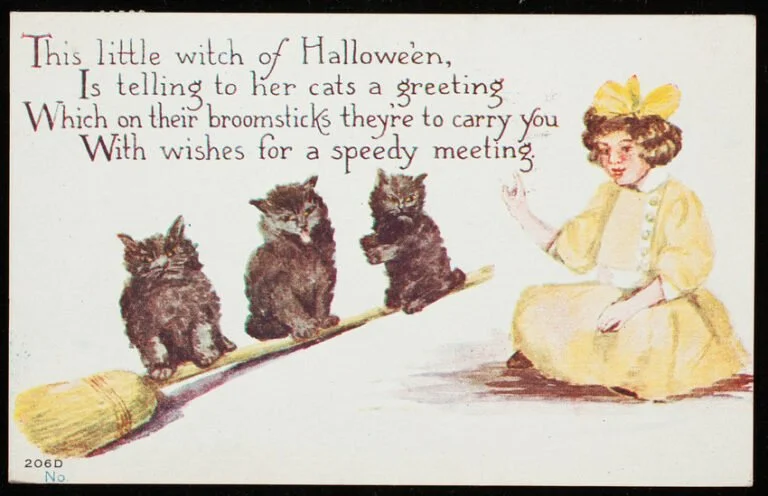
1926 postcard in Historic New England collection
“Since witchcraft was historically a crime associated with women and the home, it is interesting to consider that long after the threat of witch trials {in Salem, etc.} disappeared from New England, women were still closely connected to a holiday that celebrates witches and magic.’’
Make it another old-fashioned, please
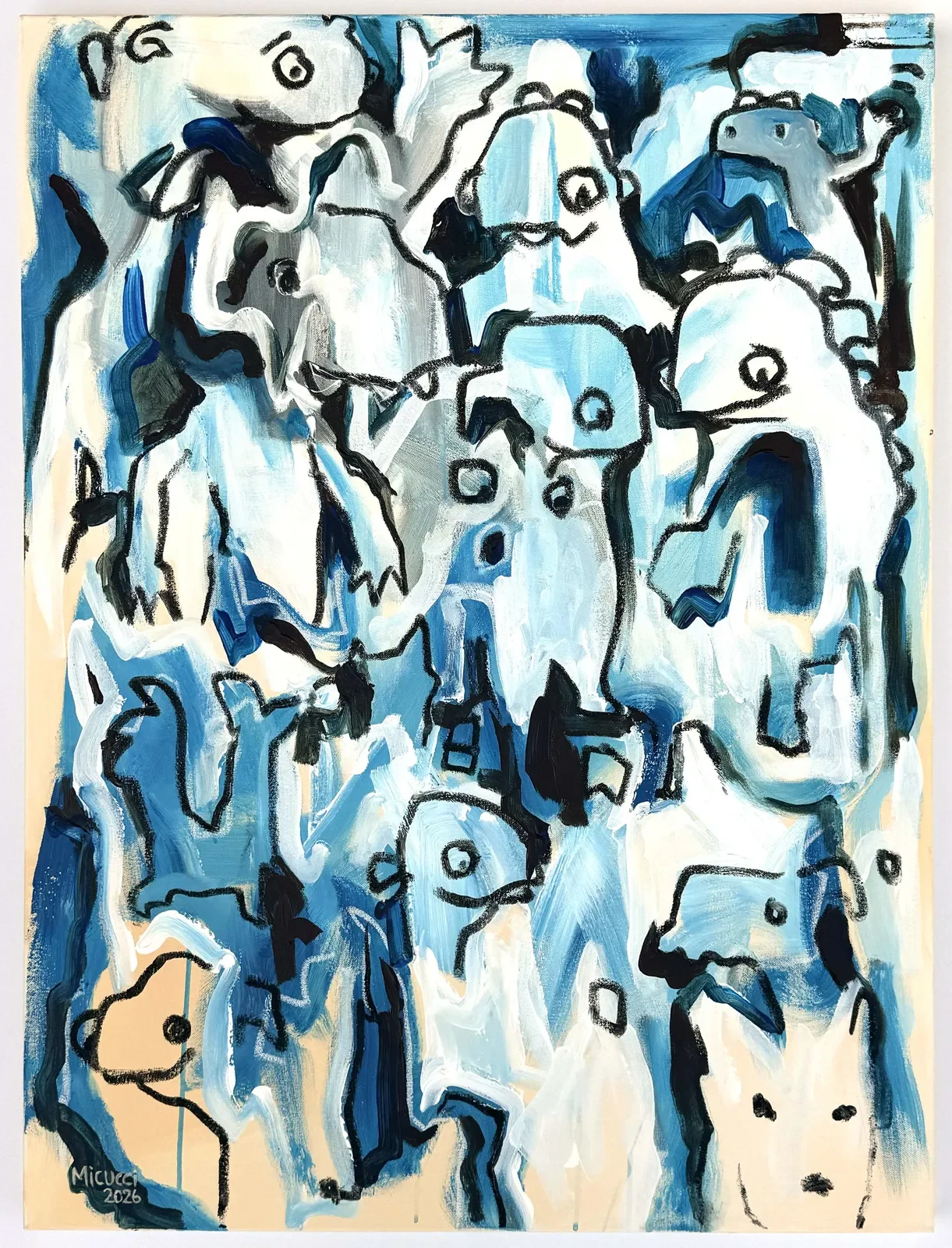
“A Friend Walks Into a Bar’’ (acrylic on canvas), by Kate Micucci, at the Samuel Owen Gallery, Greenwich, Conn.
The gallery says:
“Kate Micucci is a multidisciplinary artist whose work moves between drawing, painting, sculpture, performance, and interventions in public space. Known also for her work as an actress, comedian, and musician, Micucci brings a distinct sense of improvisation, curiosity, and emotional immediacy to her visual practice.’’
Nicholas Jacobs: In Maine and elsewhere, why access to public money depends heavily on the influence of individual politicians

The political success of Maine Sen. Susan Collins has heavily depended on her record of bringing federal contract money to the Pine Tree State.
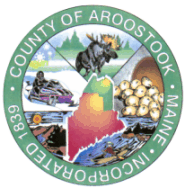
Seal of Aroostook County, the huge, northernmost and thinly populated home of both Collins and Troy Jackson, her Republican foe in their battle for a Senate seat in the next Congress.
From The Conversation (except for images above)
WATERVILLE, Maine
Give politicians the power to decide who gets a government contract, and people will naturally want to get on their good side. After all, the power to hand out something valuable is itself something valuable.
Consider the recent ProPublica investigation involving Sen. Susan Collins of Maine. Martin Kao, the former head of a Hawaii defense contractor called Navatek, told the FBI that his donations to the Republican senator’s campaign and an allied super PAC were part of a deal for help winning federal funding and contracts for his company.
That money padded Navatek’s bottom line, but it was also pitched as an investment in Maine: well-paying jobs from Navy contracts, university research and a new facility on Portland’s harbor.
Trading campaign contributions for official acts, or concealing illegal donations through relatives and shell companies, violate existing law – and it is part of why Kao now sits behind bars. Whether Collins or her official staff knew of an alleged bargain remains a legitimate question the public deserves answered.
But as a scholar of American politics, I argue that the question of criminal corruption obscures a larger problem: The line between political favoritism and effective representation is remarkably thin.
Instead, I wonder why a Hawaii defense contractor concluded that the surest route to federal money ran through a senator from Maine – and why his bet paid off.
Why is access to public money so dependent on the political influence of individual legislators?
On May 5, 2026, Sen. Susan Collins stands in front of posters announcing expansion plans for Bridgton Hospital, for which she helped get federal funding. Graeme Sloan/Getty Images
The power of appropriators
Earmarks – spending directed by a lawmaker to a specific local project – account for only about 1% of discretionary federal spending, but they offer an unusually clear window into a much larger competition for public money.
Congress revived the practice in 2021, allowing lawmakers to request funding for particular projects in their states and districts. Navatek’s funding came through the Pentagon budget in 2019, when earmarks were banned. But legislative disclosures make it possible to see who asks for money, who gets it and which politicians are best at delivering.
According to Senate Appropriations Committee disclosures, senators submitted 8,071 requests worth US$26.9 billion for fiscal year 2022. By 2026, that grew to 13,997 requests totaling $50.4 billion.
As these requests have grown, however, the share receiving such funding has fallen.
I matched nearly 55,000 Senate requests from fiscal years 2022 through 2026 against the projects Congress ultimately funded. For every senator, I calculated how many projects they requested independently and how many received funding.
Two things stand out.
The first is the seat: About 30 senators serve on the Appropriations Committee, which writes the bills funding federal agencies. They requested about one-third of the money but secured nearly half of the dollars approved and allocated. A dollar requested by an appropriator was almost twice as likely to become law.
The advantage isn’t partisan: Near the top of the chart, alongside Collins, sit a Vermont Democrat, Patrick Leahy, and a Kansas Republican, Jerry Moran. Leahy retired in 2023, while Moran is still on the panel.
The second is skill: Volume usually costs success – the more a senator asks for, the less of it lands. The median senator won 41% of the money they requested. But Collins is the exception. She requested 496 projects on her own over those five years and won 92% of them – the highest sustained rate in the Senate.
When Republicans regained the Senate majority in 2024, the rate only improved. In fiscal year 2026, her first year as chair, Congress funded 95% of her solo requests, while the median senator’s rate fell to 35%.
When Collins calls her chairmanship a “once in a century” opportunity, she has the evidence. The last Mainer to lead the appropriations committee was GOP Sen. Frederick Hale, who held the chair for four months in the 1930s.
Collins’ chairmanship explains her most recent advantage, but not her entire record. Even before taking the gavel, she secured funding at nearly twice the Senate median. Even in Washington, 30 years of showing up and working across the aisle still gets results.
Forms of political exchange
Now, put yourself in the position of a hospital, a business or a town seeking those dollars. Whose political career would you want to support?
In that respect, Collins is doing what senators are elected to do, and she’s doing it exceptionally well. When access to public resources depends on political influence, those who benefit have reasons to support the politicians most capable of delivering.
Voters call it delivering for Maine. It is why it is a core message of her reelection campaign. You cannot turn on a television in Maine without hearing about some project “Susan” delivered. It has helped get her reelected four times, because people support candidates who promise results; candidates then run on having delivered on that promise.
The same kind of political exchange happens when businesses contribute to super PACs supporting politicians who deliver. It happens when unions organize turnout for candidates promising favorable policies or when nonprofits support politicians who might fund their programs. These are all different forms of political exchange.
Political scientists call this “rent-seeking”: getting ahead by winning government favors rather than creating something of value. And the more government decides who gets what, the harder it becomes to distinguish representation from favoritism.
Systemic problem
The Supreme Court confronted this problem in McCormick v. United States, a 1991 case involving campaign contributions and extortion. To violate the law, the court said, payment had to be made in return for explicit, official action.
Otherwise, the court recognized, ordinary campaign finance would become nearly impossible to distinguish from criminal conduct.
The same relationships that make effective representation possible also make political favoritism difficult to distinguish from legitimate government. A company wins a contract after supporting a senator. A nonprofit receives a grant after helping elect an ally.
The problem is systemic.
Even if every senator were ethical, conscientious and committed to the public good, the incentives would remain the same. A senator who refused to compete wouldn’t make their state’s sewers less leaky. They would leave them unfunded while other states secured the money. The problem doesn’t require bad people.
Nor can it be resolved by declaring one set of political interests more virtuous than another.
Maine Democratic Senate candidate Troy Jackson greets supporters at a town hall on Sept. 13, 2026, in Biddeford, Maine. Joseph Prezioso/Getty Images
Clients and patrons
Collins’ Democratic challenger, Troy Jackson, for example, says he isn’t backed by corporate PACs or billionaire donors but by working people. Such a claim implies a distinction between self-interested corporate influence and supposedly public-spirited political support that motivates his donor base – even if that donor base includes a multimillion-dollar “dark money” super PAC.
But when a union invests substantial resources to elect politicians who promise favorable labor legislation, or if a nonprofit mobilizes its members to elect someone who promises to expand grants for its programs, the same client-patron relationship persists.
Corporate entities have particular interests; so do noncorporate entities. Both can expect benefits from government. Patronage exists even when the profits don’t go to shareholders.
To call one form of influence corrupt and the other well intentioned is to paper over the business model of reelection: Have they delivered? Will they continue to deliver? Changing the source of campaign support doesn’t change the powers the winner will exercise.
Restricting earmarks didn’t eliminate the underlying incentives. Nor can campaign finance laws, however necessary, eliminate the value of having a powerful political friend.
If Americans want less rent-seeking, it requires reducing how much government spending depends on discretionary political decisions in the first place. General funding rules, established in advance and responsive to differing local needs, offer one alternative. Such rules wouldn’t remove politics from public spending. But they could shift the political contest away from who gets a particular favor and toward the rules under which everyone receives funding.
Until then, voters face a choice between two kinds of political patrons. Each is asking to hold the pen and write checks. Neither is offering to put it down.
Nicholas Jacobs is Goldfarb Family Distinguished Chair in American Government at Colby College and is associated with the Institute for Humane Studies.
He does not work for, consult, own shares in or receive funding from any company or organization that would benefit from this article, and has disclosed no relevant affiliations beyond their academic appointment.
So near and yet so far
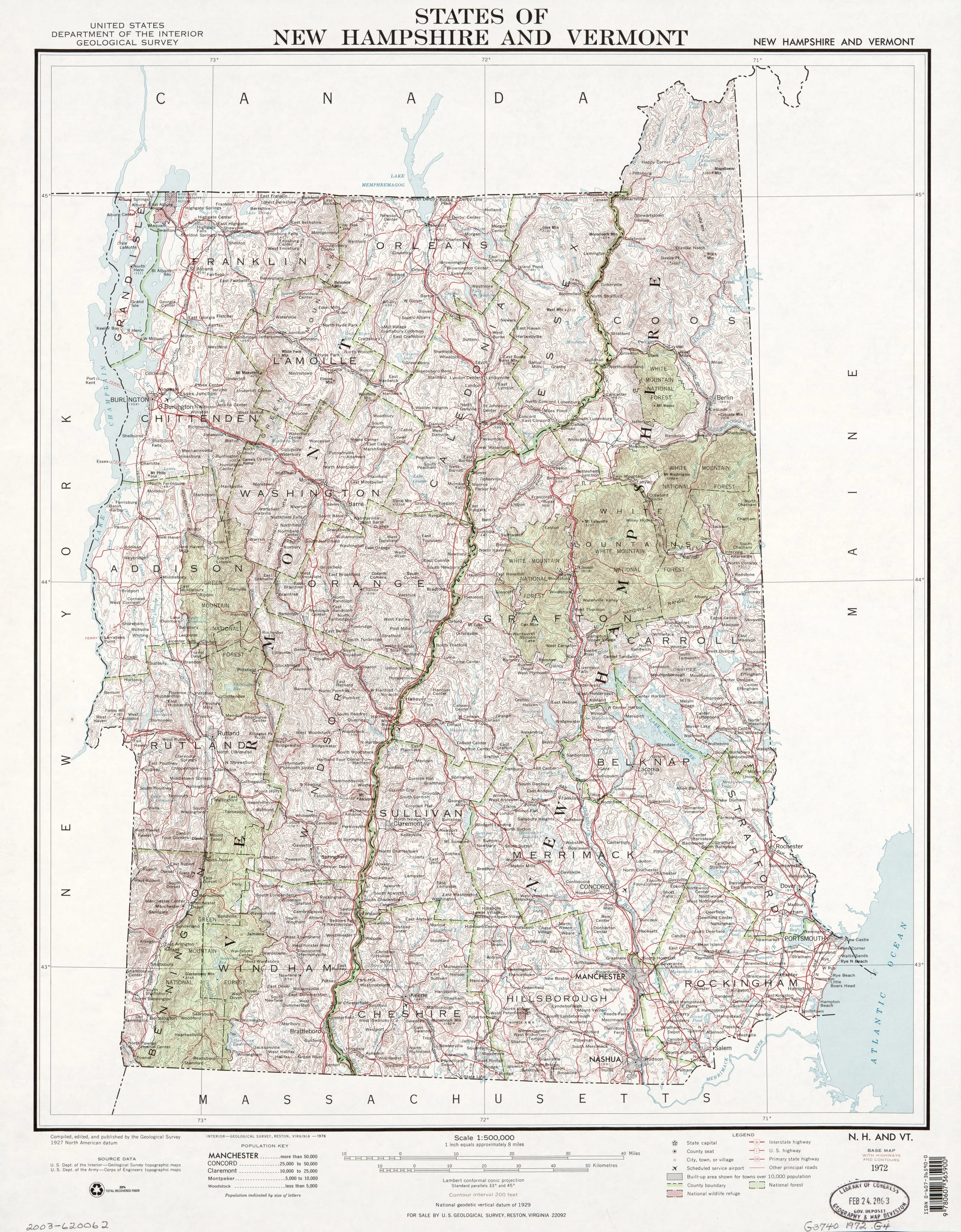
An item in my Oct. 25 GoLocalProv.com column referencing Brian L. Porto’s new book, Twin States, Different Paths, on how New Hampshire and Vermont have developed so differently as neighbors caught the eye of my friend John O. Harney, the now-retired editor of "The New England Journal of Higher Education (NEJHE)" and occasional contributor to New England Diary.
John and I have long shared a fascination with the nuances and contradictions of New England's culture and economy. Plus, John is always trying to preserve the good work of NEJHE and Connection, which he edited from 1989 until his retirement (and the journal's disappearance), in 2023. So he shared this short piece on the N.H.-VT. differences that the journal first ran in 2008 and John reprised in his blog on May 13, 2011.
Here it is. Good reading!
—- Robert Whitcomb
The Maritimes’ magic
“Rocks, Peggy’s Cove” (Nova Scotia),’’ by George Pepper (1903-1962), in the show “Art in the Atlantic Northeast, 1890-1940,’’ at the Farnsworth Art Museum, Rockland,Maine, May 1-Sept. 6, 2027.
The museum explains:
“‘Layered Terrain’ will be the first exhibition in the United States to examine Atlantic Canada’s significance for American artists in the early twentieth century. At its center are the diverse ways U.S. artists, specifically those with ties to Maine, pictured the region’s terrain, while highlighting how artists crossed, imagined, and worked at the borders. The themes of the exhibition are landscapes of a ‘wild North’; tourist-scapes of coastal towns and fishing harbors; industrial prospects of fishing, lumber, and mining; and sporting landscapes of fishing and hunting. These topics, visible in paintings, prints, and printed ephemera such as maps, tourist brochures, and books, will be driven by cross-cultural conversations between U.S. artists and contemporaneous Canadian and Indigenous artists living and working in the region.’’
The dangerous air along Boston highways
A Boston Guardian article by Joe Walsh and Will Nelson
(Robert Whitcomb, New England Diary’s editor, is chairman of The Boston Guardian.)
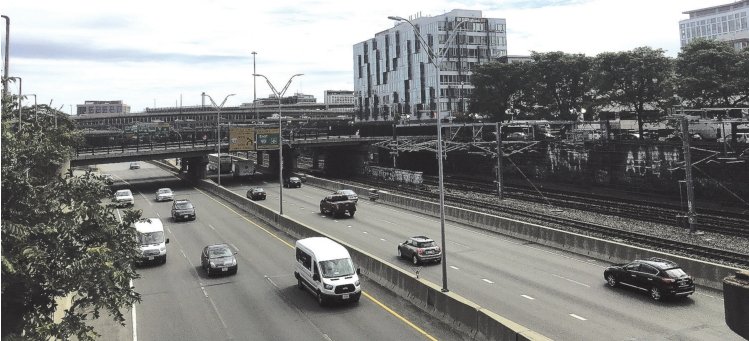
Scores of residential buildings have sprouted up steps away from Boston’s busiest highways, but the city has few regulations protecting these buildings’ tenants from dangerous car pollution.
More than a dozen new developments have been proposed near the Mass Pike and the Southeast Expressway, including thousands of residential units, millions of square feet of commercial space and two public schools, according to a Boston Guardian review.
Some of these developments could see hazardous levels of particulate pollution. Yet it is unknown how many of them designed their ventilation systems with this type of pollution in mind, and experts say the city’s rules for building near highways are lacking.
Cars and trucks on highways spew ultrafine particles less than a hundred thousandth of a meter wide. These particles can get swept into lungs and the bloodstream, leading to a host of heart and lung problems.
Ultrafine particles are most concentrated close to busy highways, leaving some development-heavy parts of Chinatown, the South End and the Fenway at risk, says Doug Brugge, a University of Connecticut public health professor who has studied air quality throughout Greater Boston.
In particular, several high-end developments like Ink Block, 112 Shawmut Avenue and the Troy occupy one of the city’s most heavily polluted areas. That corner of the South End lies next to both the Pike and the Expressway and is within range of South Station’s commuter trains.
“That whole area has very high ultrafine levels on a regular basis,” Brugge said. “I think it’s an area in which developers should be taking some very strong protective measures.”
Most developers planning projects near highways did not respond to requests for comment.
If developers choose to build right to highways, Brugge says they should adjust their designs to protect the residents and workers inside. These buildings’ ventilation systems should recirculate as much air as possible, Brugge says, and any new air should pass through tight filters.
On the public-sector side, Boston Public Schools has installed strong air filtration systems at the new Josiah Quincy Upper School building, which abuts the Mass Pike in Chinatown.
However, private developments near highways are not required to take any special protective measures.
The city’s zoning code requires developments to meet the US Green Building Council’s Leadership in Energy and Environmental Design (LEED) standard, which includes air quality rules, a Boston Planning and Development Agency spokesperson said. But according to Brugge, LEED does not take traffic pollution into account, so he does not see these rules as sufficient.
The Boston Public Health Commission, meanwhile, does not regulate developments, a spokesperson said. And the Boston Environment Department (BED) helps to review large projects and occasionally offers feedback, but it focuses on reducing car pollution rather than regulating construction.
“The major efforts that we are making are in reducing the production of particulate matter in the first place,” said BED spokesperson. “The most important thing to do is to reduce the source.”
In such other cities as Los Angeles and Somerville, zoning rules have begun to address highway pollution, forcing new developments in hazardous areas to install tighter filtration systems, Brugge notes. With stronger rules, Boston can ensure developers are proactive.
‘Accumulation of memories
In the “From the Pier” show at the Provincetown Art Association and Museum, through Nov. 1
The museum says:
“For generations, Provincetown’s piers and wharves have been points of departure and return, places of labor and exchange, and thresholds between land and sea. The working waterfront once defined the rhythms of daily life, as fishing boats came and went with the tides and the harbor connected Provincetown to the wider world.
“From the water, the town assumes a different character. The familiar shoreline becomes a composition of boats, buildings, docks, and sky; the contours of the town shift with distance, light, and tide. This perspective has long attracted artists, who have looked
toward Provincetown from the harbor and, in doing so, recorded not only a landscape but a particular moment in its history.
“The works gathered here span different periods and offer views of piers, wharves, the harbor, and the town beyond. Some depict places that have disappeared; others show a waterfront that has been transformed. Together, they evoke Provincetown as both a
physical place and an accumulation of memories—of work, arrival, departure, community, and change.
“Art has the capacity to preserve what time cannot. A painting or photograph can hold the architecture of a vanished wharf, the silhouette of a fishing boat, or the particular relationship between town and water at a moment that no longer exists. Seen together,
these works become a record of a changing Provincetown and of the many ways artists have understood and experienced this place.
‘‘‘From the Pier’ invites us to look across the harbor and through time—to consider the landscape before us, the landscapes that came before it, and what continues to endure.
“The view changes. The place endures.’’
Chris Powell: ‘Affordable’ health insurance is more than just bashing Amazon

MANCHESTER, Conn.
Pervasiveness is a strength of Connecticut Gov. Ned Lamont’s re-election campaign because he has so much of his own money to spend on it.
The governor's campaign commercials emphasize his support for "affordable health care for everyone" but don't specify what that means.
Does it mean "Medicare for all"? If it does, that's something for the federal government to arrange, something beyond state government's control.
Does it mean extending state government's employee insurance to private employers and individuals? That is theoretically possible but implausible insofar as it would be spectacularly expensive, and the first obligation of any supporter of such legislation would be to say where the money would come from. (Would it come from more de-facto borrowing against state government's pension funds, pushing their obligations deeper into the future? That is how state government continues to finance itself.)
In any case a state government medical-insurance system that was truly universal would risk attracting to Connecticut every medically needy person from around the country and even the world, much as California's medical insurance for illegal immigrants has swamped that state financially and much as Connecticut's making itself a "sanctuary state" has drawn illegal immigrant social costs here.
Medical insurance is a problem that could be solved reasonably well only nationally, but being honest and coherent about it would not make a 30-second commercial as upbeat as the governor's commercials that merely hope for nice things.
The other week the governor's campaign doubled down on the medical insurance issue with a commercial featuring his running mate, Lt. Gov. Susan Bysiewicz. She says she and the governor want to make big corporations such as Amazon reimburse state government for the medical insurance the state gives to employees of big corporations who don't receive medical-insurance benefits.
That state medical insurance is the kind given to the indigent. It may be "affordable" but it's not very good. It is mainly more scaffolding for the country's current system of tying people's medical insurance to their employers, a system that inevitably provides grossly unequal levels of insurance, some decent, some not.
Besides, the Bysiewicz commercial's attack on Amazon is misplaced, since the company provides comprehensive medical insurance not just to full-time employees but also to many part-timers. While many other part-time Amazon workers -- those with sharply limited hours, along with the company's seasonal workers -- don't qualify for medical insurance benefits, of course that is common practice throughout the country.
Unlike the national government, which can always create as much money as it wants and finance itself with inflation and currency devaluation, businesses large and small survive financially only if they fix an accurate relationship between the value produced by employee labor and its cost. As public education continues to decline, many people enter the workforce without the skills necessary to do work whose value covers both the wages they need and the medical insurance they'd like, what with medical insurance growing more expensive.
Most businesses, large and small, don't provide medical insurance to part-time and seasonal workers. Some businesses would go broke if they were required to. They're not evil; they are living in the real world every day, unlike government, which, comfortable in its powers of money creation and cost shifting, inhabits the real world only occasionally.
Making Amazon pay a penalty for its uninsured part-time and seasonal workers will do nothing for Connecticut's un- and underinsured. Advocating such a penalty is just more scapegoating and demagoguery posing as liberalism.
Maybe the best thing Connecticut could do on its own to ensure that more people have good medical insurance would be to ensure that more of its children got decent educations instead of just social promotion in school.
While the Democratic campaign commercials prattled this month about affordable health care, the Connecticut Business and Industry Association reminded the state that its manufacturers have 86,000 job openings for skilled workers, jobs offering good salaries and insurance. But it's hard for the manufacturers to find such workers, since Connecticut's schools don't produce enough.
Chris Powell has written about Connecticut government and politics for many years (CPowell@cox.net).
‘To the mythical’

From Larry Pollans’s show “Threshing,’’ at Boston Sculptors Gallery, through Nov. 1.
The gallery says:
“The exhibition features an eclectic mix of polychrome sculptures fashioned in wood, as well as drawings on plywood, masonite, slate, and steel. Toggling between the dimensions, figure versus ground, and the natural versus the decorative, Pollans offers engaging compositions in which figures, birds, and the intertwining of limbs are the focus. The sculptural works in ‘Threshing’ begin with drawing on bare wood, then cutting away, as well as adding pieces, to create open-ended narratives. Finally, Pollans adds acrylic paint and wax to provide color, most often in subtle tertiary tones. The result is exuberant movement and rhythm contained in a compact space. Pollans’ work belies traces of his myriad influences, ranging from illuminated manuscripts to postmodernism, and spanning from the natural world to the mythical.’’
A New Hampshire memory

“All the time we were there, you could see that dead squirrel right out in plain sight. Whenever anyone mentions New Hampshire, that squirrel is always what I think of. I bet I’ve thought about that squirrel a million times.”
― Wally Lamb (born 1950), American writer, in I Know This Much Is True
Huge restaurant chain’s curious origins
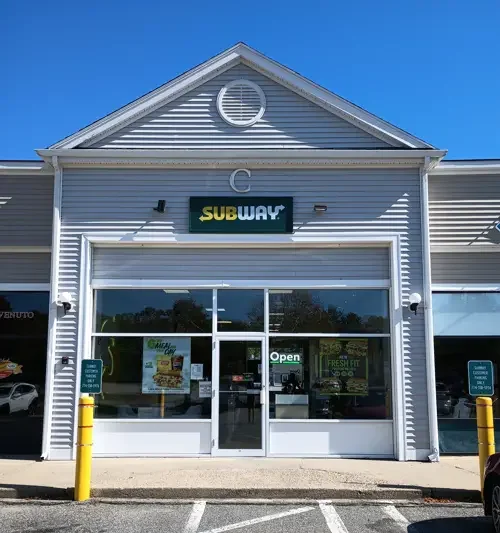
A New England Historical Society article tells of the very unusual partnership that created the Connecticut-based Subway restaurant chain.
The article starts:
“Peter Buck was a 35-year-old Yankee with a Ph.D. in physics. Fred Deluca was an Italian American teenager who grew up in a New York City housing project. They lived 40 miles apart. In 1965, they formed a business partnership that became Subway Restaurants.’’
Here’s the article:
Watching for predators

“Observation Post” (pastel), by Marcia Hill, in the group show “The Artist Next Door,’’ at the T.W. Wood Museum, Montpelier, Vt., through Nov. 21.
Kept in their place
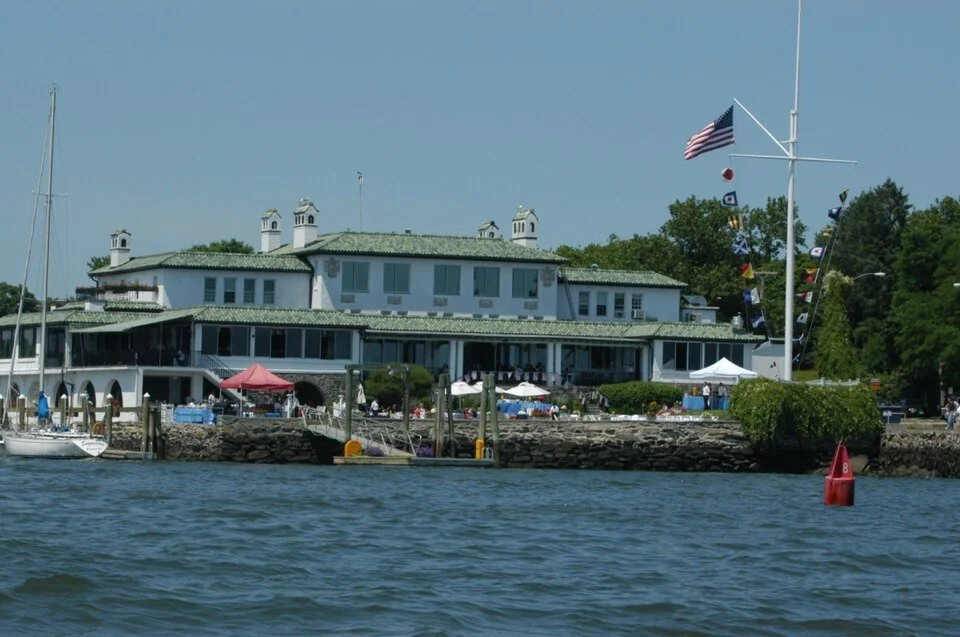
The Indian Harbor Yacht Club, in Greenwich, Conn.
“But stepping aboard the launch, I felt the net,
woven so carefully by so many hands,
the seamless, almost miraculously strong,
transparent canopy that keeps everyone
in Greenwich exquisitely and forever in place.’’
From “The Net (Long Island Sound, 1960),” by Peter Harris, American poet. The poem is set at the exclusive Indian Harbor Yacht Club.
Here’s the whole poem:
https://www.theatlantic.com/past/docs/unbound/poetry/antholog/harris/thenet.htm
Llewellyn King: U.S. Democratic Socialists should look abroad and decide what they really support
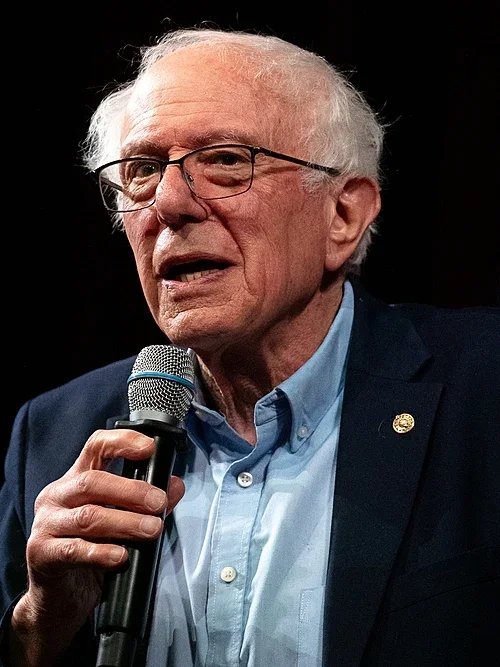
Vermont Sen. Bernie Sanders, America’s best-known Democratic Socialist.
WEST WARWICK, R.I.
Historically in parts of the British Isles, there were shortages of family names which is why a disproportionate number of the Welsh are called Evans, Jones or Williams.
Yes, my first name is Welsh, but I believe we were of untrammeled English stock with possibly a smidgen of Dutch.
I mention these things because names, and what they mean, are becoming troublesome or seem to be.
The Democratic Socialists of America might rue that name. They might have gone for one with less baggage — perhaps the New Democrats, The Fair Vote Party or the Better Shake Democrats.
They are Democrats and they haven’t fallen far from the tree. But calling themselves socialists is causing good country club Republicans to shake uncontrollably, spilling their martinis, olives and all.
Socialism is a toxic term for most Americans. Classically, it is a political philosophy which posits the means of production and distribution should be owned by the state.
You might note that it isn’t indistinguishable from communism, which, in the days of the Soviet Union, kept the Russians and their vassal states in subjugation.
But that isn’t what today’s Democratic Socialists want. Even if they haven’t articulated it well, what New York Mayor Zohran Mamdani, New York Rep. Alexandria Ocasio-Cortez and that old warrior of the left, Vermont Sen. Bernie Sanders, want is the kind of democratic socialism that Scandinavian and Nordic countries practice, and mostly pull off: a government-provided social network plus capitalism. {Editor’s note: David Morales, almost certainly the next mayor of Providence, is a Democratic Socialist.}
For those countries, this means high taxes, free education, free health care, subsidized but good transportation, and annual six-week vacations. It also includes tax-funded parental leave — where both the father and the mother can stay at home for lengthy periods.
Ostentatious wealth is frowned upon. For those on the bottom rung of the income ladder, there are comprehensive aid services.
Underlying not just Scandinavian-Nordic socialism (AKA social democracy) is a desire to perfect society, to make it fairer and kinder.
In two countries I know something about, Finland and Sweden, I find people proud of their social-democratic systems, but also railing against them for the smothering nature of the state.
U.S. left-wingers support socialism because they want a genteel, kind world. They don’t want what we have now: some with billions and some homeless. They want health care without strings for the sick, and freedom from the fear of financial ruin from catastrophic illness.
Britain, which has an extensive social network, is a country suffering under an unsustainable burden of good intentions. Welfare provisions, known as “benefit” aren’t only killing the British economy, but also the British spirit.
The Wall Street Journal, in a clear piece of reporting, details the nightmare of good intentions that is impoverishing Britain. As the Journal pointed out, in some circumstances, a patient with a real or imaginary phobia can get a new leased car every three years. A phobia or a “fiddle”?
Somewhere in its post-war history, the idea of a fiddle — a little something on the side — became part of the Brit psyche.
When I worked for a newspaper in Fleet Street, like other reporters, I had access to a motor pool of drivers who drove us around London as we needed. They also did editorial assistant jobs, like finding the nearest phone box — which, in those days before cell phones, were so important.
The driver I had was a huge man who, of course, was nicknamed “Tiny.” One day, Tiny confided to me that he had another job. While he was driving for the editorial side of the newspaper, he was simultaneously signed up as a delivery-truck driver and getting fully paid for a job he never did.
When I told him that was appalling, he said, “It’s my fiddle, everyone has a fiddle. What about your expenses? Aren’t they a fiddle?”
Well, they were. Reporters were compensated by “expenses.” They were told how much to overcharge the company and held to it. Newspapers allowed differences over and above what we actually spent.
I mention this to explain how the British welfare system has been so abused, and how the British are at peace with cheating the system.
The government — the “nanny state,” as it is called — tries to ease all human difficulties, and it has reached a point where the real economy can’t afford the social welfare it has been so proud of providing.
France and other countries that have taken this gentler socialism route have also found themselves choked by it.
The Democratic Socialists of America need to decide what they are for and what it will cost. Being hostile to the status quo isn’t a policy.
Llewellyn King is executive producer and host of White House Chronicle, on PBS, and an international energy-sector consultant. His email is llewellynking1@gmail.com, and he’s based in Rhode Island.
The symbolism of clothes

“On My Time” (colored pencils, toned paper), by Mark Zieff, in his show “Life Force,’’ at Galatea Fine Art, Boston, Nov. 5-Nov. 29.
He writes:
“As an industrial designer and artist, I have always been fascinated with older, everyday household objects – the well-worn, used and imperfect. I use my artwork to explore the relationships between object and user; both the physical and emotional connection we have with inanimate objects.
“Our relationship with clothing is the most unique among man-made objects and can be both physical and emotional as well as spiritual. Many of us attach deep sentimental and psychological value to our clothing, making them powerful nostalgic links to the past. Some believe that fabrics absorb the spiritual energy and memories of the people who wore them, creating a lasting energetic presence.
“The central theme of this body of work is classic workwear – the simple, rugged attire worn by craftsmen, factory workers, tradespeople and others who perform manual work. These clothes have deep roots in our history and symbolize the individuality, grit and resiliency of those who labored to build and shape our communities and industries.”
Stefano Tijerina: How U.S. and Canada’s energy systems are very tightly integrated
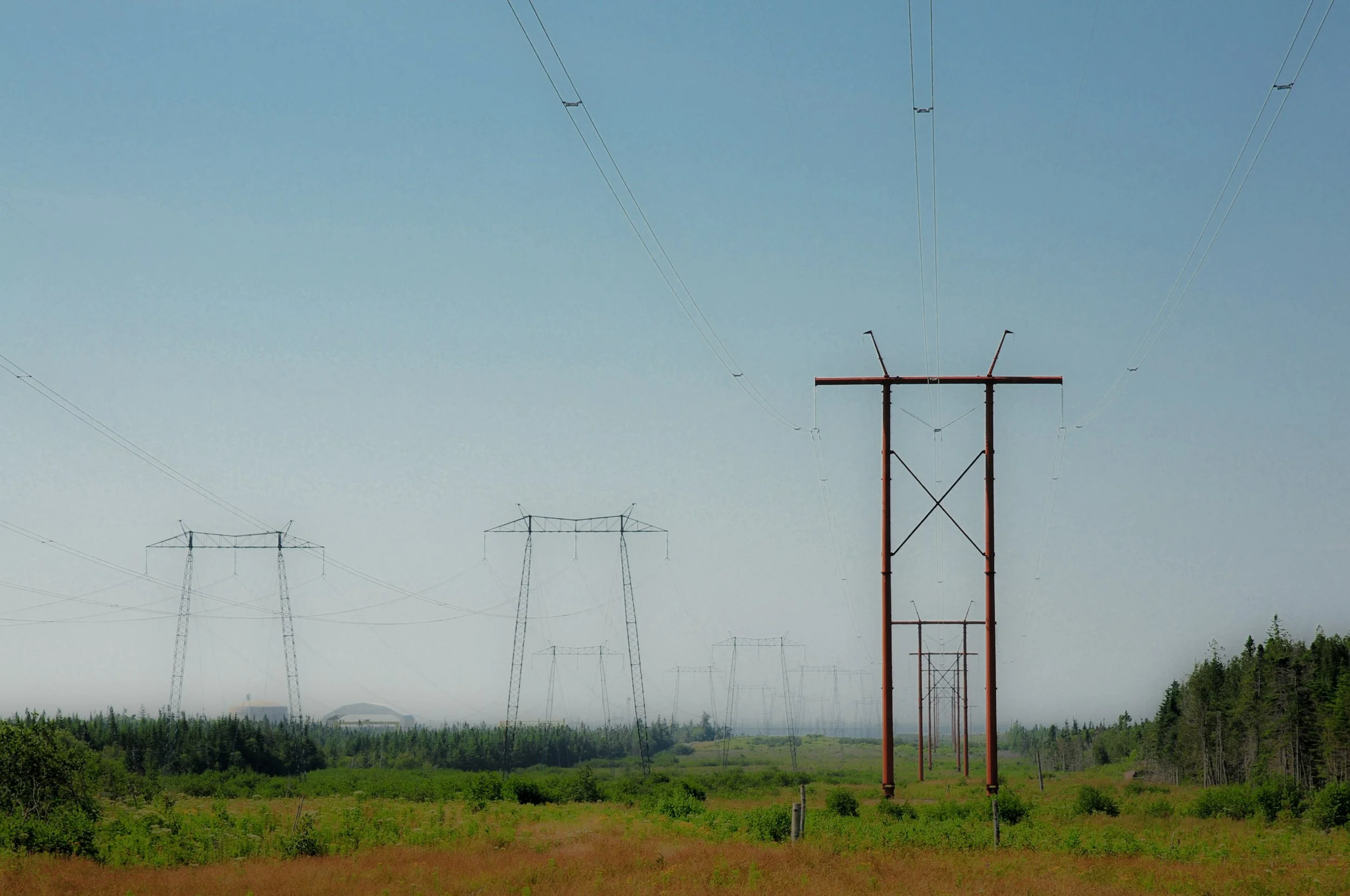
Transmission lines near the Point Lepreau Nuclear Generating Station, in southwestern New Brunswick. New Brunswick Power Corporation provides electricity to 60,000 customers in Maine.
From The Conversation, except for image above. New England Diary’s editor, Robert Whitcomb, is a donor to The Conversation, which is a nonprofit organization.
The 50% tariffs imposed by President Trump’s administration on imports from Canada in July 2026, and the reciprocal 50% tariffs imposed by Prime Minister Mark Carney’s administration on imports to Canada from the U.S. a month later, do not include oil and natural gas. Electricity and some petroleum products were also left out, although they remain subject to a 10% tariff imposed in 2025.
That’s because the two countries’ energy systems and markets are so intertwined that tariffs would devastate both economies. Canada is the biggest supplier of foreign petroleum to the United States, supplying half of all its petroleum imports. It is also the only direct foreign supplier of electricity to the U.S., with 34 major transmission points moving electricity from Canada south across the border.
In truth, Canada could shut down those power links and leave thousands of Americans in the dark, as Ontario provincial Premier Doug Ford threatened in August 2026.
But researchers like me, who study the historical links that have shaped Canadian and U.S. business relations, know that over the past 50 years Canada has expanded its energy production with one specific goal: serving U.S. consumption. In 2024, 84% of Canadian oil production and 76% of Canadian electricity production were exported to the U.S. Without American buyers, there is no real energy market in Canada.
Early connections
Since the second half of the 19th Century, energy generated on both sides of the border – and across them – has connected the two nations. The Great Lakes Basin was the hydraulic center of energy interconnectivity, as both nations shared the energy generated by Niagara Falls and the St. Lawrence River.
During the early stages of World War II, even before the U.S. entered the fight, Canada and the U.S. started to integrate their energy systems. That work was part of joint security efforts to protect North America through the integration of defense manufacturing production systems.
The Ogdensburg Declaration of 1940 and the 1941 Hyde Park Declaration consolidated and formalized the strategic economic and military cooperation between the two countries and set the foundations for future collaboration.
Ambassador Bridge, linking Windsor, Ontario, with Detroit, Mich., is just one of many border crossings vital to both nations’ economies. Steven_Kriemadis/iStock / Getty Images Plus
From cooperation to integration
After the war, Canadian and U.S. businesses liked the idea of sharing production and manufacturing operations, even beyond war-related work.
Nevertheless, manufacturing on both sides of the border went back to prewar ways of producing things domestically. Nationalist voices opposed the idea of further integrating the Canadian and U.S. economies.
Less than two decades after the war ended, though, the two nations signed the Auto Pact of 1965, which eliminated tariffs on cars, trucks and automotive parts. Canadian parts manufacturers could compete directly with those based in the U.S., all to serve U.S. automakers.
This initial experiment in free trade revealed to businesses on both sides of the border that supply chain integration could benefit other production and service industries.
By 1989, the two countries had signed a full-scale free trade agreement that removed tariffs for goods crossing the border in either direction. That opened the door for more closely integrating their energy markets too.
In 1992, a U.S. federal law changed a wide swath of regulations over the country’s energy markets. Some of the provisions allowed Canadian companies to sell excess energy to the U.S., and two years later the North American Free Trade Agreement brought Mexico into the relationship too.
NAFTA integrated the production, processing and distribution of thousands of goods and services across all three countries.
Hydro-Québec operates several dams on Canadian waterways that provide power not only to Canada but also to the U.S. Lars Hagberg/AFP via Getty Images
But it was the interconnection of energy infrastructure that turned the Canadian and U.S. economies into one single energy market. Today, four major U.S. electrical grids depend on imported power from Canada: those serving the six New England states, New York state, 15 states across the Midwest and the South, and California.
Moreover, there are more than 40 natural gas and petroleum liquids pipelines connecting Canada with the United States. And although energy products move back and forth across the border, the U.S. has an energy trade deficit with Canada. Much of the U.S. economy runs on Canadian energy, and much of Canada’s energy production is sold to the U.S.
The current reality on the ground shows an integrated energy system between the two nations: something very difficult and costly to untangle, and a process that would take decades to reengineer.
Local impact
Today, those links form the basis for very tight integration between the two countries’ business and industrial marketplaces.
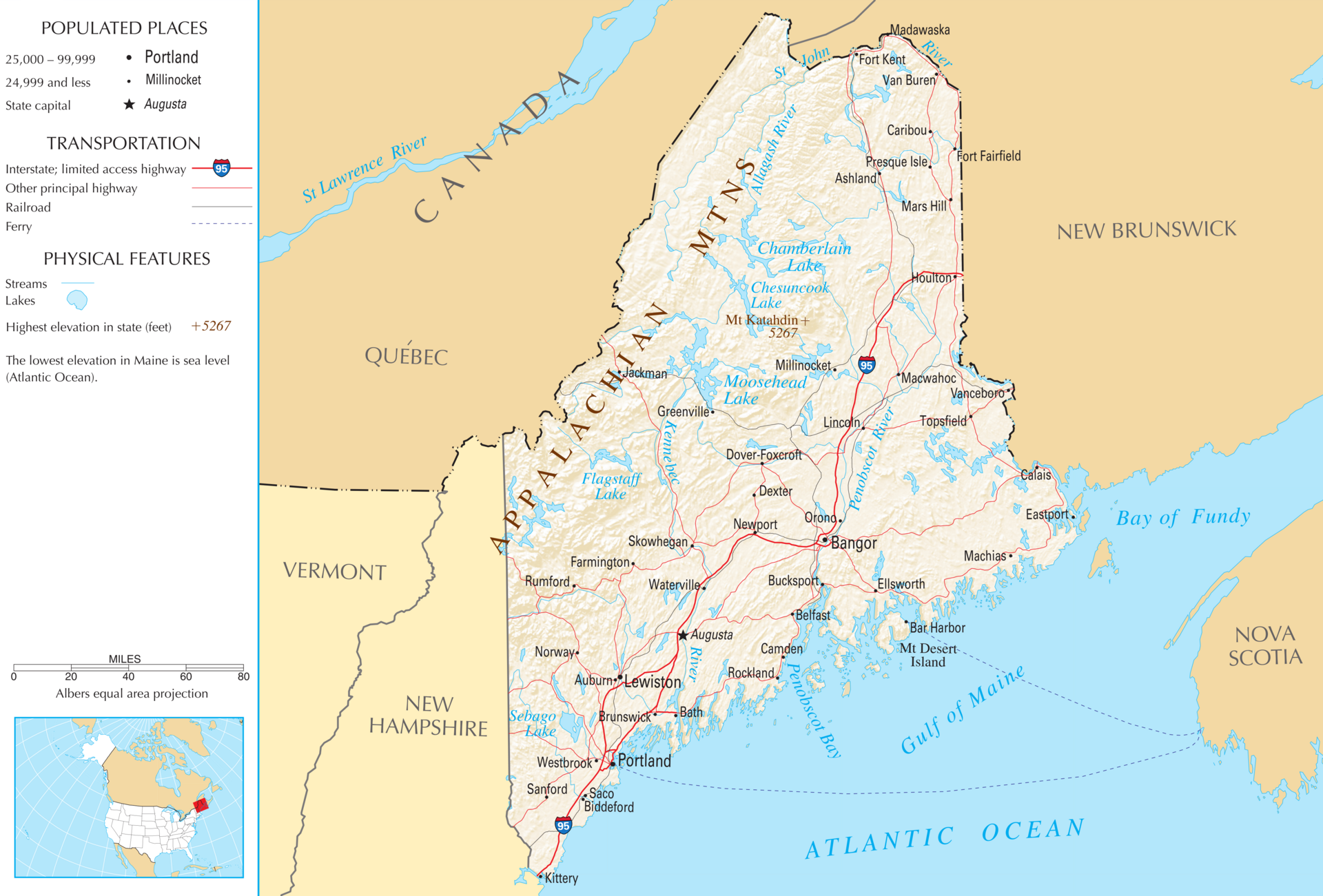
For example, Maine, where I live and work, gets close to 30% of its electricity from Canada.
The state’s northern electrical grid is run by the New Brunswick Power Corp., owned by the province of New Brunswick, which serves close to 60,000 Mainers.
Today, Maine’s electric grid is owned mostly by foreign interests, including ENMAX, the municipally owned utilities corporation of Calgary, Alberta, and the owner of Versant Power, which serves 16% of Maine’s market. And 80% is served by Central Maine Power, which is owned by Iberdrola from Spain.
Canadian energy reaches deeper into the U.S., too. In 2025, Hydro-Quebec, a company that generates electricity from dams across the province of Quebec, secured a deal with local regulators to use Maine as a corridor to supply clean energy to Massachusetts. Hydro-Quebec is owned by the government of the province of Quebec.
The bilateral integration of energy infrastructure over the past 30-plus years explains why this sector was exempt from the most recent tariffs.
Stefano Tijerina is a senior lecturer on management at the University of Maine.
He does not work for, consult, own shares in or receive funding from any company or organization that would benefit from this article, and has disclosed no relevant affiliations beyond their academic appointment.
The University of Maine provides funding as a member of The Conversation US.