
Wartime ‘Shew’ at the chateau
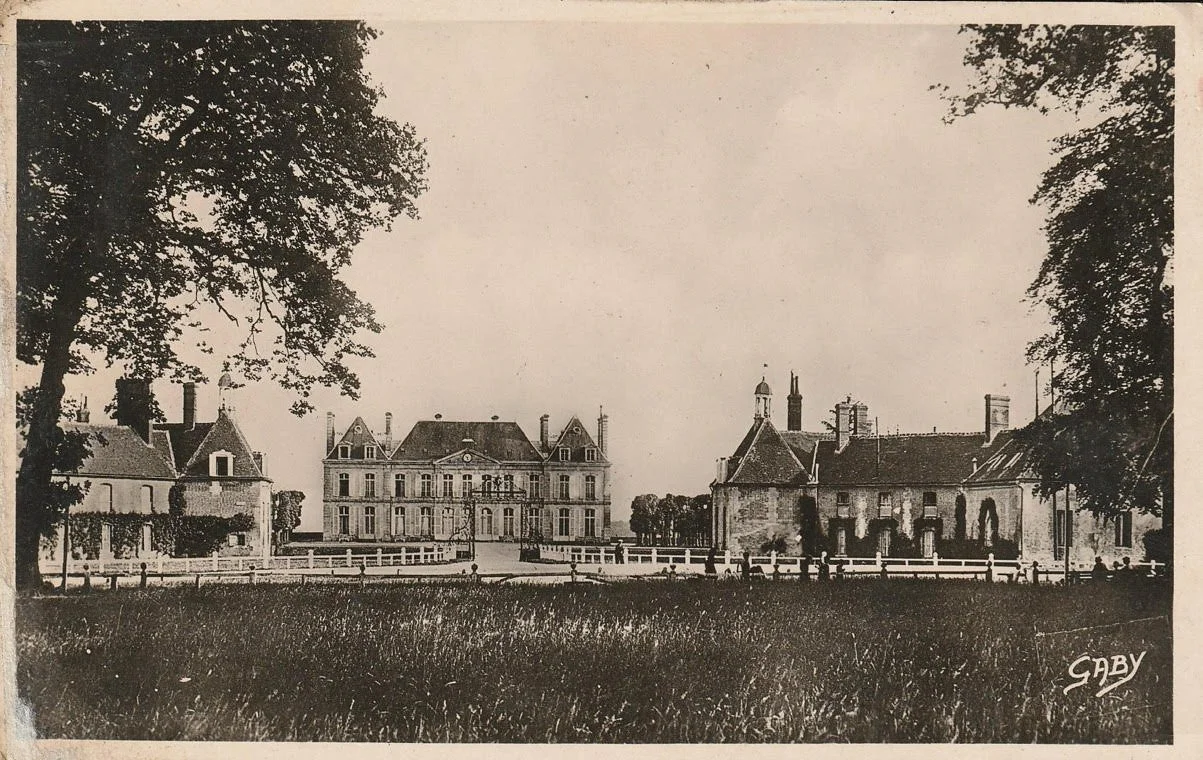
Another $1 postcard in a New England antique shop may offer a mystery, or maybe just a story.
Also known as Le Pin-au-Haras, this early 18th-Century chateau 35 miles southeast of Caen was designed by Robert de Cotte, architect to King Louis XV and successor to the great Jules Hardouin-Mansart, builder of much of Versailles. The complex was the first royal stud farm, created to breed horses for the French army, and was called the equine Versailles.
This postcard, however, dates from 1944, clearly sometime after D-Day, when British troops pushed south from the Normandy beachhead. The area must have been secured enough for the Tommies to safely watch a film at the chateau.
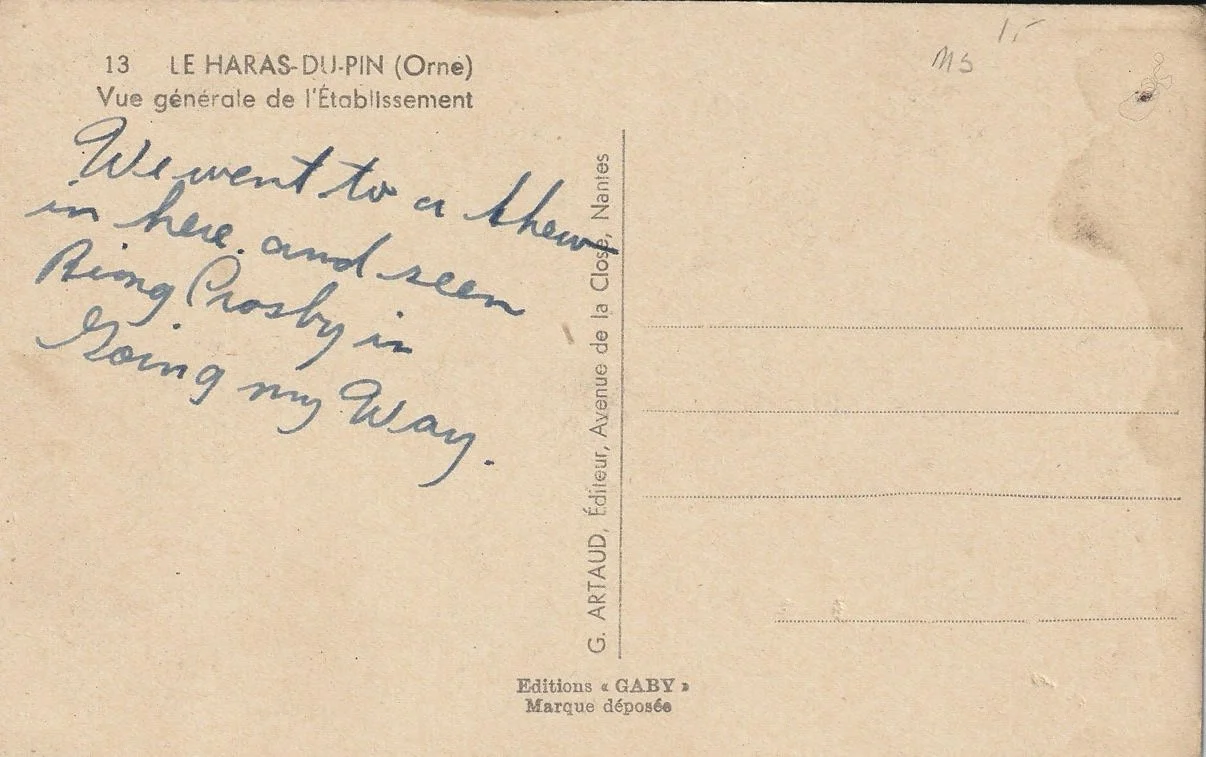
Sadly, the card was never addressed, never sent. But writing in ink, the soldier “went to a Shew in here and seen Bing Crosby in Going My Way.’’ The movie won seven Oscars, including for Best Picture and best song, “Swinging on a Star.’’ It’s star-studded cast and the New York City setting must have offered quite a contrast with war-torn France.
Providence-based architecture writer William Morgan searches for the larger story in the small detail. His books include The Cape Cod Cottage and Academia: Collegiate Gothic Architecture in the United States.
Will Morgan: A mystery photo and missing memory

Half a dozen years ago, our current president published a book about his son’s death from glioblastoma. Titled Promise Me, Dad: A Year of Hope, Hardship, and Purpose, started with Beau Biden’s plea to his father not to let grief overcome him. (The loss of the Delaware senator’s wife and daughter in a car accident in 1972 almost derailed Biden’s life, including his political career.)
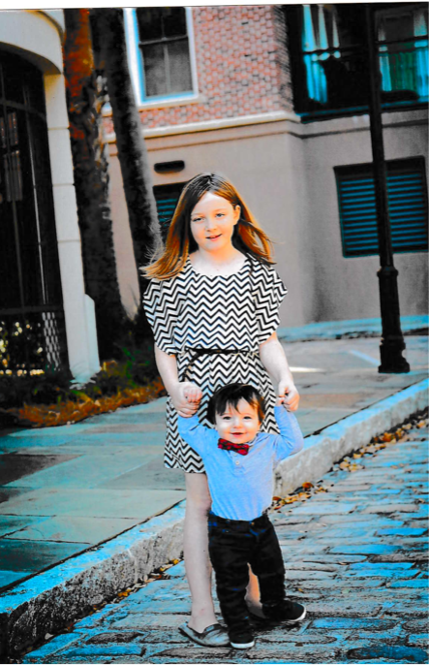
I found an autographed copy of the book, simply inscribed “Joe Biden,’’ in Savers in Boston’s West Roxbury for $4.49. The forgotten best seller did, nevertheless, offer a treasure, the mystery photo above.
There are almost no clues as to the identity of this young girl and, presumably, her younger brother. It’s printed on Kodak Xtralife II paper, but who uses prints in this age of computers and online libraries? The buildings look recent – faux Georgian – although the cobblestone street could be European.
Looking at the lass’s auburn hair and complexion, we could guess that these children are Irish.
There’s a story here, at least in our imaginations. But, promise me, Dad, that you will date your photos and tell us why images like this represent a memory worth keeping.
An architectural and photo historian, William Morgan is a frequent contributor to New England Diary. His latest book, Academia: Collegiate Gothic Architecture in the United States, will be published in October.