
The indoor sport invented in response to New England winters

The first basketball court, at what became Springfield College
“The invention of basketball was not an accident. It was developed to meet a need. Those boys would not simply play ‘Drop the Handkerchief.’’’
James Naismith, the inventor of basketball, on his time at Springfield College
In December 1891, Naismith, a Canadian-American physical-education professor at the International Young Men's Christian Association Training School (today, Springfield College) in Springfield, Mass., sought to create a vigorous indoor game to help keep his students occupied and fit during the long New England winters. After rejecting other ideas as either too rough or poorly suited to gymnasiums, he wrote the basic rules and put up a peach basket.

The Basketball Hall of Fame, in Springfield
And mostly disposable

“Small Things”, by Marjorie Forte, in her show, with Antoinette Winters, “Language as Muse,’’ at Brickbottom Artists Association, Somerville, Mass., through Feb. 27
New England Council’s new virtual networking series

The New England Ensign, one of several flags historically associated with New England. This flag was used by colonial merchant ships sailing out of New England ports, 1686 – c. 1737.
From The New England Council (newenglandcouncil.com)
BOSTON
The New England Council is pleased to announce the launch of our new virtual networking series, Council Connections. We have heard from many members that one aspect of the Council that they have missed the most during the pandemic when in-person gatherings are not possible is the opportunity to network with fellow Council members across different industries and throughout the region. During this hour-long program, you will have the opportunity to meet and converse with other Council members in a series of smaller, randomly assigned group breakout sessions. Please note that due to technological constraints, capacity for this program is limited, however if there is interest, we hope to hold these sessions regularly.
How it will work:
The session will be conducted using Zoom. We strongly encourage you to connect on a desktop, laptop, or tablet with video enabled.
All participants will join the meeting and first be placed in a large general session, just like any other Zoom meeting.
Once all participants have joined the general session, Jim Brett will welcome everyone and give some brief opening remarks.
There will then be a series of four, 10-minute breakout sessions. During the breakout sessions, participants will be randomly placed into a smaller group meeting of five people total. During the 10-minute session, you will have the opportunity to converse with and get to know those in your breakout room.
Between each session, all participants will return briefly to the general session before being randomly placed in the next breakout session.
We will provide all participants with the full list of program participants including email addresses so that you are able to easily follow up with anyone you meet during the networking program.
Please note that the breakout session participants are randomly selected are we are not able to honor requests to connect with specific individuals. However, if there is someone you are interested in meeting, our staff is happy to help facilitate a connection separate from this event.
While these sessions will be open to all Council members across various industries, we are also considering some sector specific networking programs for our various policy committees.
We hope you will join us for the first Council Connections program, on Tuesday, February 9, 2021, from 1:00 – 2:00 p.m.

View of Cambridge, Mass., home of both Harvard and MIT and, as a result, a high concentration of startups in general and technology companies in particular
Brian Mullin/Sherelle Wu: Can colleges mandate that their employees get COVID-19 shots?
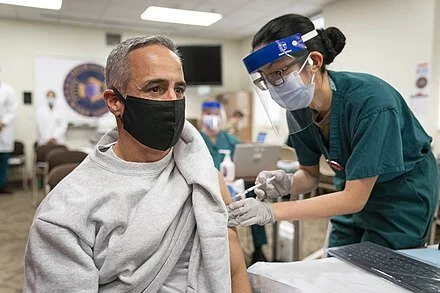
Via The New England Journal of Higher Education, a service of The New England Board of Higher Education (nebhe.org)
BOSTON
As COVID-19 cases continue to surge nationwide, the newly approved COVID-19 vaccines cannot come soon enough. Although higher- education institutions (HEIs) are not at the top of the priority list to receive scarce early doses of the vaccine, colleges and universities should prepare for how they will handle vaccination on their campuses.
In general, both public and private HEIs may mandate that their staff receive the COVID-19 vaccine once it becomes available to the general public and may discipline an employee who refuses to receive the vaccine without cause. The U.S. Supreme Court has upheld the constitutionality of a state vaccine mandate that was “necessary for the public health or the public safety” (Jacobson v. Massachusetts, 197 U.S. 11 (1905)) as well as the exclusion of students from both public and private schools due to refusal to receive a mandatory vaccine (Zucht v. King, 260 U.S. 174 (1922)).
Under the federal Occupational Safety and Health Act (OSHA), employers have an obligation to provide a safe workplace free from serious recognized hazards and should do their part to encourage compliance with governmental health and safety guidelines.
In practice, however, HEIs should be aware that staff may be entitled to medical exemptions under the Americans with Disabilities Act (ADA) and religious exemptions under Title VII. Institutions should have a uniform policy for staff to apply for such exemptions.
When an employee requests an exemption, both Title VII and the ADA require that the institution engage in an interactive process to determine effective accommodations or alternatives to vaccination specific to that employee. Such accommodations may include permitting the employee to work remotely; temporarily reassigning the employee to a different, less public-facing position or workstation; or allowing the employee to take a temporary leave of absence.
In certain circumstances, if the exemption poses an “undue hardship” to the employer, the HEI may deny the exemption and require that the employee receive the vaccination. An undue hardship under Title VII is defined as a minimal cost or burden to the employer’s operations. This will vary depending on the size and nature of the HEI, but can be any economic or noneconomic expense that would create a burden on its operation such as, for example, changes to schedules that increase payroll expenses or result in other employees working less desirable shifts. In comparison, an undue hardship under the ADA requires an HEI to show a “significant difficulty or expense,” a much higher standard to meet.
Under both statutes, consideration of an undue hardship includes both financial costs as well as cultural or operational costs such as whether the accommodation would compromise the integrity of a seniority system—for example, an HEI that has a collective-bargaining agreement which provides for seniority for bidding for positions. Relevant factors in considering an undue hardship in the vaccination context would include, the risk to the public due to noncompliance; the availability of an alternate means of infection control such as personal protective equipment (PPE); and the number of employees who actually request an accommodation.
While an employee’s refusal or inability to receive the vaccination may cause jealousy or friction between coworkers, such a conflict would not constitute an undue hardship unless the accommodation would infringe on the coworkers’ rights or ability to perform their duties in a safe way.
In deciding whether to mandate (rather than strongly encourage) staff COVID-19 vaccination, each college or university should carefully consider its own community needs and circumstances. For example, a medical or nursing school that employs certain staff in health-care facilities may have a much more compelling need to mandate vaccinations than an institution whose employees continue to operate on a mostly remote or hybrid basis. As the vaccination rollout varies widely from state to state, institutions should consult their own state’s laws and narrowly tailor their own vaccine policy to match their local public-health agency’s guidance.
HEIs considering mandatory vaccines should maintain an objective written policy based on business necessity (i.e. actual job requirements) and apply the policy consistently. The institution can narrowly tailor the mandate to apply only to specific departments or positions. For example, an institution could mandate vaccination only for public-facing staff positions which are required to perform work on-campus rather than positions that may be performed remotely. The HEI should educate their employees on the benefits of vaccination and the process to request an accommodation.
An institution that has decided to require compulsory COVID-19 vaccination should provide free and convenient vaccine administration to its employees and should ensure that staff can take the necessary time off from work to receive the vaccine and recover from any side effects if necessary.
Importantly, given the need to carefully track vaccine administration to ensure individuals receive both doses at the appropriate time, colleges and universities must be careful to safeguard the privacy of employees’ medical information, including keeping it separate from personnel files.
Since the currently available COVID-19 vaccines are approved on an emergency-use basis, HEIs should carefully watch any changes in approval, efficacy and best practices. For example, pregnant women were not included in the clinical trials and may be excluded from initial vaccine administration. Institutions should also look out for additional guidance from the Centers for Disease Control, Equal Employment Opportunity Commission, or OSHA.
Brian Mullin and Sherelle Wu are lawyers practicing in the Employment & Higher Education Groups in the Boston law firm of Bowditch & Dewey LLP.

Sam Pizzigati: Walgreens workers take the pandemic risks as chain's senior execs get even richer

A Walgreens store on Route 1 in Saugus, Mass.
Via OtherWords.org
BOSTON
Every week, millions of us walk into a Walgreens drugstore without giving it a second thought.
Maybe we should. Walgreens perfectly encapsulates the long-term economic trends of the Trump years: top corporate executives pocketing immense paychecks at the expense of their workers.
At Walgreens, workers start at just $10 an hour. No chain-store empire employing essential workers pays less.
And no retail giant in the United States has given its workers less of a pandemic hazard pay bump — just 18 cents an hour, according to Brookings analysts Molly Kinder and Laura Stateler.
These paltry numbers look even worse when we turn our attention to the power suits who run Walgreens, who face no pandemic hazard. Walgreens CEO Stefano Pessina took home $17 million last year. Altogether, the five top Walgreens execs averaged $11 million for the year, a 9 percent hike over the previous year’s annual average.
Meanwhile, the typical Walgreens employee pulled down a mere $33,396. Pessina’s take-home outpaced that meager reward by 524 times. In effect, Pessina made more in a single weekday morning than his company’s typical worker made for an entire year.
Kinder and Stateler found similar levels of greed at other U.S. retail giants, especially Amazon and Walmart. Amazon CEO Jeff Bezos and the heirs to the Walmart fortune, they note, “have grown $116 billion richer during the pandemic — 35 times the total hazard pay given to more than 2.5 million Amazon and Walmart workers.”
Amazon and Walmart, they add, “could have quadrupled the extra COVID-19 compensation they gave to their workers” and still earned more profit than the previous year.
Not every major corporate player has treated the pandemic as just another easy greed-grab. Workers at Costco — who start at $15 an hour, $5 an hour more than workers at Walgreens — got an extra $2 an hour in hazard pay.
Costco’s top executive team, interestingly, last year collected less than half the pay that went to their counterparts at Walgreens. Costco’s most typical workers took home $47,312 for the year. At 169 to one, that’s less than one-third the pay gap between Walgreen’s chief exec and his company’s most typical workers.
As a society, which corporations should we be rewarding — those whose executives enrich themselves at worker expense, or those that value the contributions all their employees are making?
In moments of past national crises, like World War II, lawmakers took action to prevent corporate profiteering. They put in place stiff excess profits taxes. We could act in that same spirit today. We could, for instance, raise the tax rate on companies that pay their top execs unconscionably more than their workers.
We could also start linking government contracts to corporate pay scales: no tax dollars to any corporations that pay their CEOs over a certain multiple of what their workers take home.
Efforts to link taxes and contracts to corporate pay ratios have already begun.
Voters in San Francisco this past November opted to levy a tax penalty on corporations with top executives making over 100 times typical San Francisco worker pay. Portland, Oregon took a similar step in 2018. At the national level, progressive lawmakers have introduced comparable legislation.
Donald Trump may be gone, but the executives who did so well throughout his tenure remain in place. We need to change the rules that flatter their fortunes.
Sam Pizzigati, based in Boston, is the co-editor of Inequality.org and author of The Case for a Maximum Wage and The Rich Don’t Always Win.

Distraction via exploration

“Scituate Beach, Massachusetts,’’ byThomas Doughty, 1837
From Robert Whitcomb’s “Digital Diary,’’ in GoLocal24.com
When things in the world in general and/or in your own little world in particular seem almost intolerably tense, you can’t beat wandering around in nature without an itinerary for relief. I remember that fondly from my boyhood in a small, still partly rural, town on Massachusetts Bay. Alone, or with a pal or two, I’d go “exploring’’. And it was a good place to explore.
There were beaches, more pebbles than sand, with rocky headlands and innumerable sea birds, some of which would attack if you approached their nests. There were shark’s eggs to pick up, along with lovely sea glass (this was before the explosion of plastic pollution), and horseshoe crab shells amidst the seaweed dumped on the beach at the high-tide mark. (There were also tin cans to shoot at with BB guns.)
After northeast storms, we’d look for small boats that might have been tossed ashore.
Nearby were bullrush forests along the marshes, through which we’d make trails leading to little “rooms” we’d create. We’d use rowboats to explore the tidal rivers through the marshes, with their often sulfurous smells.
Sometimes in midwinter the more brackish and less salty marsh streams would freeze up and we’d do our exploring on skates.
Inland, small streams beckoned us to find their sources, and we’d check out a nearby farm, fragrant in certain weather with the aroma of manure, where we would sometimes intentionally irritate the bulls. There were rock-topped mini-mountains and tall oak trees to climb and abandoned houses to trespass in. (See poem fragment above.) And everywhere pleasing smells, such as of cedar trees, of which we had a lot, and flowering trees in May, of wet, newly cut grass and of rotting apples on the ground in the fall.
And the sights, smells and sounds could vary much from day to day, with the sharpest changes in early spring. Every day’s light was different.
What a miraculous world!

— Photo by Stefan-Xp
While this winter has generally been milder than usual, it looks like we won’t be getting the “January Thaw” – that sweet stretch of days with temps in the 50s that we often get at this time of year in New England, giving us a tempting taste of spring. A January Thaw would have been particularly appreciated by COVID-desperate restaurant owners because they could more comfortably serve customers outdoors.
Meanwhile, while most (?) New Englanders like mild winters, that our winters are getting warmer and shorter is a bad sign for the world, showing that man-fueled global warming is speeding up.
'The port is near'
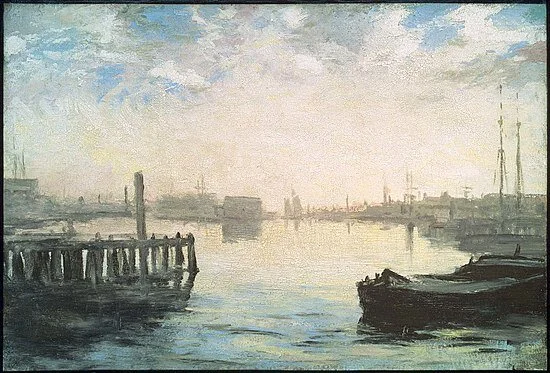
Gloucester Harbor ca. 1877, by William Morris Hunt
It is time to be old,
To take in sail:—
The god of bounds,
Who sets to seas a shore,
Came to me in his fatal rounds,
And said: “No more!
No farther shoot
Thy broad ambitious branches, and thy root.
Fancy departs: no more invent;
Contract thy firmament
To compass of a tent.
There’s not enough for this and that,
Make thy option which of two;
Economize the failing river,
Not the less revere the Giver,
Leave the many and hold the few.
Timely wise accept the terms,
Soften the fall with wary foot;
A little while
Still plan and smile,
And,—fault of novel germs,—
Mature the unfallen fruit.
Curse, if thou wilt, thy sires,
Bad husbands of their fires,
Who, when they gave thee breath,
Failed to bequeath
The needful sinew stark as once,
The Baresark marrow to thy bones,
But left a legacy of ebbing veins,
Inconstant heat and nerveless reins,—
Amid the Muses, left thee deaf and dumb,
Amid the gladiators, halt and numb.”
As the bird trims her to the gale,
I trim myself to the storm of time,
I man the rudder, reef the sail,
Obey the voice at eve obeyed at prime:
“Lowly faithful, banish fear,
Right onward drive unharmed;
The port, well worth the cruise, is near,
And every wave is charmed.”
“Terminus,’’ by Ralph Waldo Emerson (1803-1882) the American essayist, lecturer, philosopher, and poet who led the New England-based transcendentalist movement of the mid-19th Century.

Uncooperative deity

“Ancient of Days,’’ by William Blake, 1794
“Although he’s regularly asked to do so, God does not take sides in American politics.’’
— George J. Mitchell (born 1933), former U.S. senator (and majority leader) from Maine, diplomat, federal judge and author. He was born and raised in Waterville, Maine, a former manufacturing town (e.g., Hathaway Shirts) now best known as the home of Colby College. Mr. Mitchell himself graduated from Bowdoin College, in Brunswick, Maine.

Waterville City Hall and Opera House in 1905, when the city was a thriving manufacturing center.
A hot and satisfying Jan. 20 party in the northern Berkshires
On the evening of Inauguration Day, Jan. 20, a score of revelers gathered in a field in the northern Berkshires to bid farewell to Donald Trump in a time-honored way, by burning him in effigy.

Head of Trump effigy
— Photo by Ann McCallum
Williamstown architects Andrus Burr and Ann McCallum fashioned a seven-foot-tall figure of the Apricot Toddler.

Trump effigy
— Photo by Ann McCallum
Sharing hot toddies and welcoming the local fire marshal around their bonfire, the group read aloud the names of the 147 members of the U.S. House who had voted not to accept the election results.

— Photo by Ann McCallum
Like the bonfires lit across Britain after the defeat of the Spanish Armada or Queen Elizabeth II’s Jubilee, or just simply to exorcise a demon, the Trump burning was both cathartic and warming.

— Photo by Cleo Levin
William Morgan is a Providence-based art historian and writer.
NEC to host program on outlook for environmental policy

Solar panels on house in Greater Boston
From The New England Council (newenglandcouncil.com)
BOSTON
“On Feb. 2, 2021, from 11:00 a.m. – 12:00 p.m., The New England Council’s Energy & Environment Committee will host a special program, ‘2021 Environmental Policy Outlook.’ The virtual event will feature a panel of environmental policy experts who will share their insights on what to expect from the Biden administration and the 117th Congress as it relates to environmental regulation and legislation. Our panelists are:
Jim Jones, former EPA Assistant Administrator of the Office of Chemical Safety and Pollution Prevention, and President, JJones Environmental
Renee Martin-Nagle, Ph.D., Special Counsel, Eckert Seamans
David Rockman, Chair, Environmental Practice Group, Eckert Seamans
Tiernan Sittenfeld, Senior Vice President of Government Affairs at the League of Conservation Voters
Mark Kalpin, a Partner at Holland & Knight and the Chair of the NEC Energy & Environment Committee, will serve as moderator.
The program is open to all interested New England Council members. For more information on this program or the Council’s Energy & Environment Committee, please contact Sean Malone.’’
In Boston, labor and business together

Aerial view of Downtown Boston, 2015
— Photo by Nick Allen
Adapted from Robert Whitcomb’s “Digital Diary,’’ in GoLocal24.com
Kim Janey, the president of the Boston City Council, will become The Hub’s acting mayor as Mayor Marty Walsh heads off to become Joe Biden’s labor secretary. It’s unclear whether she’ll actually run for the job.
I hope not, since Ms. Janey seems more interested in ethnic identity and appealing to certain neighborhood politics than with the overall state of the city. She also seems to have little knowledge of, or respect for, business. That Marty Walsh and his predecessor, Tom Menino, both standard liberal Democrats, understood that nurturing a vibrant business climate was essential in paying for municipal programs explains some of Boston’s stunning prosperity in recent decades.
As Jon Chesto wrote in The Boston Globe, “Walsh knew what every big-city mayor understands: Success depends heavily on a thriving business community. Boston’s budget is particularly reliant on a strong haul of commercial property taxes, a steady stream that has continued to earn the city high marks from two bond-rating agencies during the COVID-19 pandemic.’’ When a city’s bond rating falls, its interest costs – and often its taxes -- go up. Mr. Chesto noted: “progressivism often gives way to pragmatism when you have to run a city as large and as dynamic as Boston.’’
To read Mr. Chesto’s article, please hit this link.
Whoa, a U.S. labor secretary who will be pro-labor instead of pro-plutocrat (the case under the gangster who left the Oval Office Jan. 20)!
Mr. Walsh used to run the Boston Building Trades, among other union positions, before he became mayor. He understands the needs of working people. But he also understands business. Yes, you can be pro-labor and pro-business. Indeed, such a mating is the best for the long-term health of the economy.

Some safe in memory


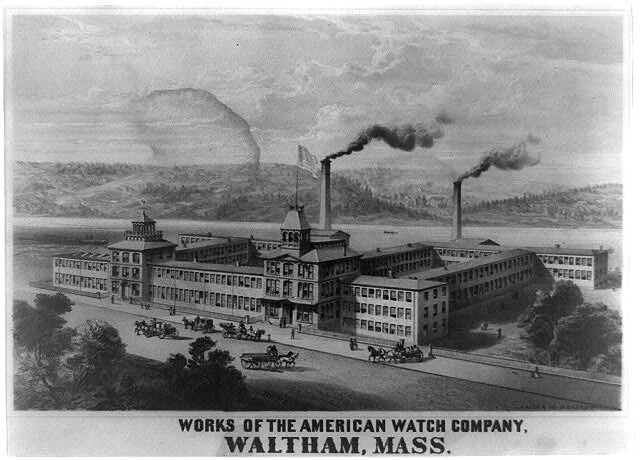
The inside and outside of the pocket watch I inherited from my father. The watch seems to have been a gift in honor of his graduation from high school, in 1935. It was made by the late-lamented Waltham (Mass.) Watch Co. (1850-1957). Waltham Watch, also known as the American Waltham Watch Co. and the American Watch Co., made about 40 million watches, clocks, speedometers, compasses, time fuses and other precision instruments in its long life. The company's 19th-Century manufacturing facilities in Waltham have been preserved as the American Waltham Watch Company Historic District.
— Robert Whitcomb
“Some things you get back,
but they’re not the same.
Some, though lost,
remain in memory that cannot be shorn.
and some
are just gone.’’
— From “Memories of an Antique Pocket Watch,’’ by Chris LaMay-West, a Burlington, Vt.-based poet and former editor of Mud Season Review

Yankees believed in multiple uses of gear

“A Snowy Monday, The Cooperage, Hancock, New Hampshire,’’ by Lilla Cabot Perry
In the Hancock, New Hampshire, historical society…is the town coffin, once used to bury the poor. {Thrifty Yankees, using the same coffin, and thriftier still — for years it was used as a chicken feeder on a farm.)
— Howard Mansfield (born 1957) historian, from In the Memory House. He lives in Hancock.
Hancock Historical Society

David Warsh: Toward a third Reconstruction

The March on Washington, D.C., on Aug. 28, 1963, during the Civil Rights Movement — what might be called the “Second Reconstruction.’’
SOMERVILLE, Mass.
Until recently, Reconstruction was a topic in American history of interest chiefly to high school juniors preparing to take the college Advanced Placement exam. During the 13 years after the Civil War, the United States reintegrated the states that had seceded from the Union and struggled to define the legal status in them of African-Americans under the 13th, 14th and 15th Amendments to the Constitution. By 1916, when President Woodrow Wilson reintroduced segregation to the federal workforce, the hard-fought gains of the episode had faded from living memory.
Then again, every America born before, say, 1960, has a first-hand experience of the Civil Rights Movement. It is often dated from President Harry Truman’s 1948 decision to integrate U.S. armed forces after the contradictions of segregation re-emerged and became untenable during World War II. There was Jackie Robinson and the integration of Major League Baseball, and then the marches with their dramatic confrontations. Martin Luther King Jr. was assassinated in 1968; George Wallace was roundly defeated as a third-party presidential candidate (though he did better than any third-party candidate between Theodore Roosevelt and H, Ross Perot). After 1970, most people turned their attention to other concerns. Ill-feelings were cosmetically treated away on television: Archie Bunker and the Cosby show.
Events of the last several years, often summed up by the assertion that Black lives matter, have often been portrayed as the beginnings of a Third Reconstruction. The implication is that the Civil Rights Movement was the second: historian C. Vann Woodward said as much. There may one day be a fourth. The Rev. William Barber II, pastor of Greenleaf Christian Church, in Goldsboro, N.C., anticipated as much in 2016 with The Third Reconstruction: Moral Mondays, Fusion Politics, and the Rise of a New Justice Movement.
The view that the history of the Unites States is essentially inseparable from the history of slavery was forcefully voiced by The New York Times, in 2019, in its 1619 Project. “Our democracy’s founding ideals were false when they were written,” asserted Nikole Hanna-Jones, in an opening essay. “Black Americans have fought to make them true.” Not everyone was convinced. But the Trump administration’s rejoinder, the “1776 Project” of its 1776 Commission, released last week, has been quickly dismissed. The inauguration ceremonies brought all this to mind. Three books, more than any others in the last 30 years, have done more to open my eyes:
The Promised Land: The Great Black Migration and How It Changed America (1991), by Nicholas Lemann, then of The Atlantic Monthly, decisively put on the map the enormous changes wrought after 1944 by the introduction of the mechanical cotton picker, replacing workers whose numbers had soared after 1794, when the invention of the cotton gin made the crop newly much more profitable. The subsequent migration of unemployed farm workers from the rural South to the metropolitan North brought a cascade of changes in the lives of the migrants, and the cities in which they sought homes and jobs. Ghettoes, unemployment, single-parent families, drugs and crime were among the unintended effects. So was newfound political power and, for many, greater affluence.
Race and Reunion: The Civil War in American Memory (2002), by David Blight, of Yale University, demonstrated that of the three quite different stories that emerged from the Civil War, it was the vision of reconciliation between the mostly white armies of the North and the South that came to dominate, permitting the White supremacist vision of continuing racial segregation and reasserted white privilege to eclipse an emancipationist vision of constitutional equality for African-Americans citizens. Blight followed up with a Pulitzer-Prize-winning biography, Frederick Douglass: Prophet of Freedom (2018).
The Color of Law: A Forgotten History of How Our Government Segregated America (2017), by Richard Rothstein, of the Economic Policy Institute, recovered a lost history of how bankers and real-estate agents successfully enlisted federal, state and local policies to create and maintain racially homogenous neighborhoods in cities and suburbs nationwide. The patterns of segregation that resulted violate constitutional rights, he argued, and now require remediation. His memorable account of how such policies loomed in the background of the 2014 killing of Michael Brown, in Ferguson, Mo., is here.
Last week I read Revisiting Time on the Cross after 45 Years: The Slavery Debate and the New Economic History, by Eric Hilt, of Wellesley College and the National Bureau of Economic Research. Hilt noted that a wave of celebrated books that have appeared in recent years evaluating the role of slavery in the development of the American economy, among them Walter Johnson’s River of Dark Dreams; Edward Baptist’s The Half that Has Never Been Told; Sven Beckert’s Empire of Cotton; and Beckert and Seth Rockman’s Slavery’s Capitalism.
Yet some of the arguments resemble those that appeared first in Time on the Cross: The Economics of American Negro Slavery, by Robert Fogel and Stanley Engerman, published in 1974. Time on the Cross was a work of enormous novelty, undertaken in the service of the much- ballyhooed variety of economic history calling itself “cliometrics” (or “econometric history’’). Its fundamental assertions were, as Hilt puts them, that slavery was “profitable, productive and humane.” A storm of controversy followed.
The debate over measurement issues has moved on since then, Hilt notes; the technical literature has become hard for layfolk to follow. Time on the Cross’s assertions of the fundamental benevolence of slaveholders have been thoroughly disproved. Yet Fogel and Engerman’s purely economic conclusions about the profitability and productivity of slavery stand up pretty well. Fogel later shared a Nobel Prize with economic historian Douglass North.
The slave economies of the South were thriving before the Civil War. Secessionist politicians and their business backers knew it. The North undertook the Civil War for the best of reasons. Its leaders knew that slavery was wrong. A hundred and fifty years later, Americans of all sorts are still working to mitigate its ill-effects.
David Warsh, a veteran columnist and an economic historian, is proprietor of Somerville-based economicprincipals.com, where this essay first appeared.
The wind and my words
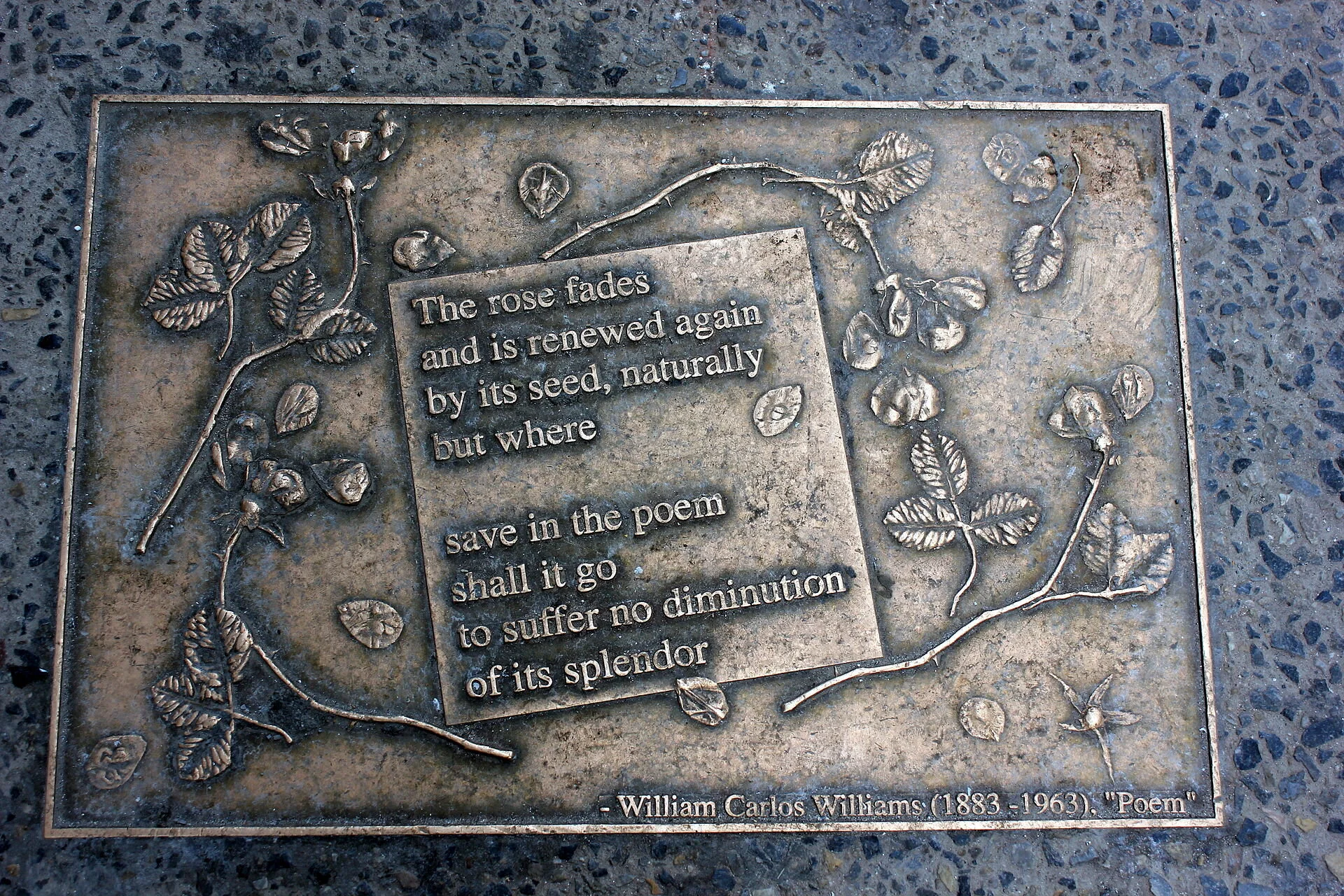
Again I reply to the triple winds
running chromatic fifths of derision
outside my window:
Play louder.
You will not succeed. I am
bound more to my sentences
the more you batter at me
to follow you.
And the wind,
as before, fingers perfectly
its derisive music.
“January,’’ by William Carlos Williams, M.D. (1883-1963), American poet, essayist and physician
Quarantine explosion

“Sunburst Energy (Force of Energy Series)’’ (mixed media), by Jeannine Hunter Lazzaro in her show “Colors, Shapes and Thoughts on Paper,’’ at Galatea Fine Art, Boston, Feb. 5-28. She lives in North Attleboro, Mass.
She says:
"This show contains works on paper done during the quarantine and focusing on – colors, shapes, energy, and time. After working on canvas for a while, I began to create work on paper. I have often vacillated among a variety of surfaces in my work. The truth here though is that I ran out of canvas during this quarantine. The way that various materials I use, react on paper is entirely different than they do on canvas.
“Long ago, in trying to characterize my work in a very brief description, I found myself say-the lines belong to everyone, but the colors are all mine. In some ways my work has its own spirit. What I mean is that the paintings get done with my intervention and manipulation, which is derived from the experiences I have had. Colors mix or simply bump into one another creating a drama all their own.
“I would say the same thing about the shapes that arise in my work. I employ several methods to allow them to create themselves and I embellish or diminish where I feel I need to. I like to say that I have come to know life through my art. Time, for instance is a construct. We often think about time as a concrete thing, a dimension. However, like a shape in one of my paintings it is just there because we say it is. I have heard it said -there is no such thing as time, only words.
“Energy can be good or bad. But what if we think of it as only good? The idea that something good happens out of everything compels me to feel positive at times when it may be hard to maintain a positive outlook. The recent Covid19 quarantine for instance, forced people inside to find ways to cope and be with each other. This was happening at a time when a lot of people were existing in an ‘outside’ media-related existence. We are also learning how important the sense of touch is.’’
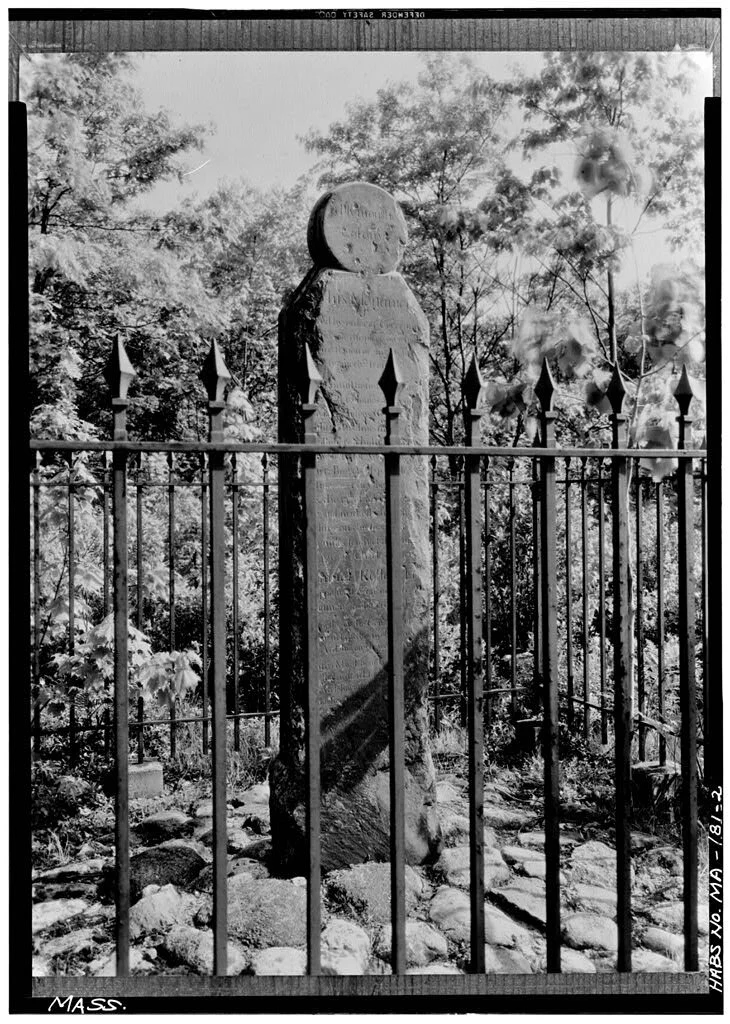
This is the weird Angle Tree Stone, an historic boundary marker astride the border of North Attleboro and Plainville, Mass.
The slate marker was built in 1790 by a father-and-son team of gravestone makers. The stone was added to the National Historic Register in 1976. The stone replaced the "Angle Tree" from the 17th Century, which was a surveying landmark for the boundary between Bristol and Norfolk counties. The county border is a straight east-west line coming from Cumberland, R.I., to the site of the tree (now the stone) and then turning at an angle (hence the "angle tree" designation) and running in a straight line from there almost to Massachusetts Bay near Cohasset.

The unexpectedly modern North Attleboro Town Hall

Chris Powell: Military-industrial complex is fine with Conn. delegation

This building in the affluent Hartford suburb of Farmington, Conn., was United Technologies’ headquarters in 2015-2020.
— Photo by Daniel Pennfield
MANCHESTER, Conn
In his farewell address 60 years ago President Dwight D. Eisenhower warned against what he called "unwarranted influence, whether sought or unsought, by the military-industrial complex." Since he was a military hero, perhaps only Eisenhower could give such a warning during the Cold War without risking denunciation as a Communist.
But Eisenhower's warning has never been heeded, and President Biden, with his defense secretary, is essentially proclaiming the victory of the military-industrial complex. The new secretary is retired Army Gen. Lloyd Austin, who upon leaving the Army a few years ago joined the board of directors of military contractor and Waltham, Mass.-based Raytheon Technologies Corp., which recently acquired Connecticut-based United Technologies Corp. Austin will have to sell Raytheon stock he received for serving on the board. It may net him as much as $1.7 million.
Acknowledging what will be his continuing potential for conflict of interest, Austin pledges to avoid decisions involving Raytheon for a year. But this can't worry Raytheon much about its investment in the general, since the corporation plans to be doing government business a lot longer than that.
With Austin at Defense and former Federal Reserve Chair Janet Yellen becoming Treasury secretary after receiving at least $7 million in speaking fees from big banks and investment houses in the last three years, the federal government's two most lucrative agencies will have been securely captured by their primary beneficiaries.
With the exception of Sen. Richard Blumenthal, the members of Connecticut's congressional delegation -- all supposed liberals -- are fine with this exploitation. After all, the state is full of investment bankers and military contractors and what's good for them may be considered good for the state. As for the country, that's something else.
Even Blumenthal's concern about Austin probably became a mere quibble. Federal law prohibits military officers from becoming defense secretary until they have been out of uniform for seven years, so Austin needed a waiver from Congress. Such waivers have been granted twice before. Blumenthal said that to uphold the principle of civilian control of the military, he opposed another waiver. But few other members of Congress objected to it, and Blumenthal and those others still had it both ways, voting against the waiver and then voting to appoint Austin once the waiver is granted.
Besides, with the Democrats in full control of the federal government, conflicts of interest and civilian control will barely register against the party's new highest objective in Cabinet appointments -- racial, ethnic and gender diversity. Austin is Black and so meets the decisive qualification.
xxx
PAY AS YOU THROW?: The administration of Connecticut Gov. Ned Lamont seems to have determined that state government no longer can make any money by burning trash to generate electricity at the state Materials Innovation and Recycling Authority's facility in the South Meadows section of Hartford. Such generation apparently is now much more expensive than electricity generated from natural gas, and the facility's equipment already needs renovation estimated to cost more than $300 million.
So the authority plans to close the facility by July 2022, turning it into a trash-transfer depot and shipping to out-of-state dumps the trash now being burned. This is not only retrograde environmental policy; it likely will raise costs for the authority's 70 client towns. As a result the authority and the towns are discussing how to reduce their "waste streams" -- possibly by charging residents a fee for every bag of trash collected, a system called "pay as you throw."
There would be some sense to this, since it would cause people to take more responsibility for their trash, the packaging of what they buy, and recycling. But this also would increase the risk of illegal dumping, even as Connecticut's roadsides and city streets are already strewn with trash.
It might be best for state or federal sales taxes or fees to recover in advance the disposal costs of everything sure to wear out, as the state already does with beverage containers and mattresses and used to do with tires.
Government needs to teach people more about the trash issue. But all that roadside litter suggests that many people are unteachable slobs.
Chris Powell is a columnist for the Journal Inquirer, in Manchester, Conn.
‘Compulsory cannibalism’ needed
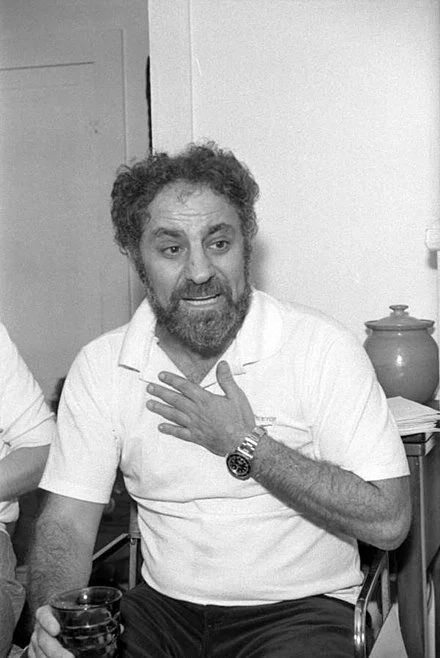
Abbie Hoffman in 1989
“I believe in compulsory cannibalism. If people were forced to eat what they killed, there would be no more wars.’’
— Abbot Howard Hoffman, better known as Abbie Hoffman, a famous/infamous American political and social activist/agitator who co-founded the Youth International Party ("Yippies") and was a member of the Chicago Seven. He was also a leading proponent of the Flower Power movement. You could also call him transitional figure between the Beat Generation and the Hippies.
He grew up in Worcester, where as a student, he was a troublemaker who started fights, played pranks, vandalized school property and called teachers by their first names. In his second year, Hoffman was expelled from Classical High School, a now-closed public high school in Worcester where, as an atheist, he wrote a paper declaring that, "God could not possibly exist, for if he did, there wouldn't be any suffering in the world." The teacher ripped up the paper and called him "a Communist punk." Hoffman then assaulted the teacher until he was restrained and then was thrown out of the school. On June 3, 1954, 17-year-old Hoffman was arrested, for the first of many times, in this case for for driving without a license. After his expulsion from the public high school, he attended Worcester Academy (the alma mater of, of all people, Cole Porter). He graduated in 1955, and then went on to Brandeis University, In Waltham, Mass.
He died of an apparently accidental drug overdose, leaving an FBI file on him totaling 13,262 pages
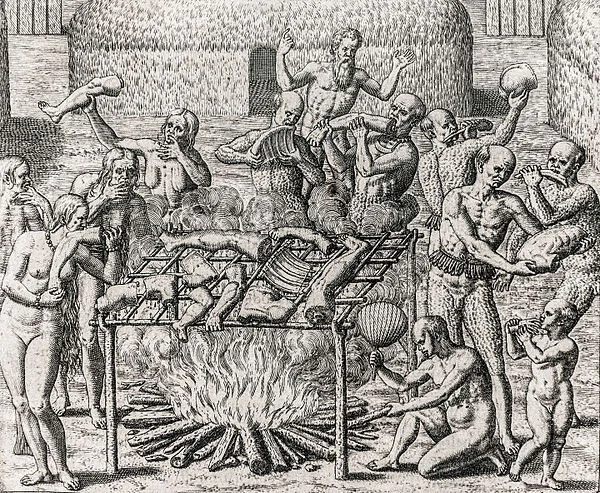
Cannibalism in Brazil engraving by Theodor de Bry to illustrate Hans Staden's account of his captivity in 1557
Todd McLeish: A proposal for 'freedom lawns'


From ecoRI News (ecori.org)
Few people put much thought into the soil beneath their feet, but Loren Byrne does. A professor at Roger Williams University, in Bristol, R.I., Byrne is an expert on urban soil ecology, and he worries that humans are changing the structural integrity of soils in urban environments and limiting the ability of plants and animals to live in and nourish the earth.
“Soil is easily overlooked and taken for granted because it’s everywhere,” he said. “We walk all over it and think of it as dirt that we can manipulate at our will. But the secret of soil is what’s happening with soil organisms and what’s happening with their interactions below ground that help regulate our earth’s ecosystems.”
Byrne contributed a chapter about urban soils to a report, State of Knowledge of Soil Biodiversity, issued last year by the U.N.’s Food and Agriculture Organization. He discussed how the ecology of the soil changes as it is compacted during construction, paved over, chemically treated for lawns, and dug up and carried away.
“The main takeaway is that urbanization can potentially harm biodiversity, but our biggest current threat is ignorance,” he said. “We don’t understand enough about soil biodiversity in urban environments, so we may not be able to manage it in ways to provide the benefits that are possible.”
Soil is the foundation for terrestrial life, according to Byrne. It’s the medium in which plants are grown and it regulates the nitrogen cycle, sequesters carbon, and manages the flow of water. He said soils are fascinating because they contain the full range of life, from single-celled bacteria and fungi to animals of all varieties.
“If you’re patient enough to get down on your hands and knees and pull up some soil, you’ll see mites, springtails, isopods, millipedes, centipedes, spiders, ants, beetles,” Byrne said. “Some of them have negative popular connotations, but ecologically, if we can see them as having value, then that will help us maintain more sustainable landscapes.
“Changing our perspectives of what these organisms are doing in the ecosystem is important. They perform beneficial functions, like decomposition. I tell my students that if it wasn’t for this whole suite of biodiversity in our soils, we’d literally be up to our necks in dead stuff.”
Although it may seem counterintuitive, Byrne said urban soils contain the full range of biodiversity that is found in natural soils, and some research shows that they contain more organisms and a greater diversity than agricultural soils.
“A lot of urban habitat types, like lawns and little forest patches, are perennial, so they don’t face the same level of annual disturbance as agricultural fields,” he said. “And they have more organic matter in them, so that allows the food web to become more complex. Urban soils are home to a lot of organisms.”
He noted, however, that there is also a massive volume of degraded soil in urban areas that is compacted, trampled, over-fertilized, and removed and replaced with lower quality soil.
“It’s a very interesting dichotomy,” Byrne said. “There are some high-quality soils and other locations that have been severely negatively impacted where we would want to somehow improve them.”
How to improve degraded soils is the topic of Byrne’s latest research. Decompacting the soil and remediating pollution are important steps, but the key is the addition of organic matter.
“There’s been a wide diversity of organic matter sources that have been investigated, from basic garden compost to sewage sludge to bio-char, which is a burned organic matter that, when added to soil, provides good surfaces for microbes to live on,” he said. “But you have to be very careful about what you’re using and in what contexts and the source, because not all organic matter is the same.
“A lot of research has shown that adding organic matter will help remediate the soils in various ways. Organic matter holds onto water, so it helps with water issues, for instance. But in locations that are already prone to water-logging, adding organic matter could be a bad thing. So context matters. You need to be familiar with site specific issues to come up with a good management plan.”
Byrne focuses a great deal of his research attention on lawns, which he calls a “human-created ecosystem.” While he noted that a lawn provides a nice place for a picnic and is better than pavement, he said installing a lawn is the least biodiverse way of improving urban landscapes.
“The goal with a lawn is often one grass species that’s bright green and isn’t growing or reproducing, which is the exact opposite of what life wants to do,” he said. “In the grand scheme of all life, a place becomes more diverse over time, it grows and reproduces, and humans are trying to stop all of that in a lawn.
“The problem isn’t so much the lawn itself as the monoculture, pesticide-managed lawn. A lot of what ecologists advocate is a more biodiverse lawn where we let the so-called weeds grow and let the grass grow a little taller. That’s good for the soil ecosystem because a higher variety of plants and no chemical pesticides will allow more soil organisms to thrive.”
To create a more sustainable urban landscape, Byrne advocates for what some have called “freedom lawns” — a mowed lawn that maintains a high diversity of grasses and weeds and good soils.
“If we can convince people that it’s more patriotic to shift to freedom lawns, it will be more sustainable,” he said. “And if we can shrink the area of lawn by creating more biodiverse habitat through shrubs and wildflowers, that’s another step toward sustainability and biodiversity.”
Rhode Island resident and author Todd McLeish runs a wildlife blog.