
For last time until spring?

“Path through the Dunes” (oil on canvas), by Vermont-based artist, writer and farmer Greg Bernhardt, at Alpers Fine Art, Andover, Mass.
His artist says:
“I am a painter living in central Vermont on a farm that my wife, Hannah Sessions, and I began 20 years ago. With animal husbandry and producing award winning cheeses as the reason why we live where we do, painting and writing has been the method by which we understand what we do here.
Blue Ledge Farm affords us an intimate look at the relationship between people and animals, and an appreciation of the land as we spend the vast amount of our time on this plot of earth and have come to know it as deeply as we could anything.
Since having majored in Studio Art and Creative Writing at Bates College (in Maine) in the late ’90s, and having lived abroad studying the Italian language, Renaissance Art, and Italian Literature in Florence, Italy 1997-1998, I have aimed to merge the central themes of my life and found in the end that all these focal points rely on one another, the farm and its inhabitants, the artisanal cheese craft, and the creative acts of writing and painting about these subject matters.’’

Companies’ creepy surveillance of their own workers


The evil dictator in George Orwell’s 1984
Via OtherWords.org
For generations, workers have been punished by corporate bosses for watching the clock. But now, the corporate clock is watching workers.
Called “digital productivity monitoring,” this surveillance is done by an integrated computer system including a real-time clock, camera, keyboard tracker, and algorithms to provide a second-by-second record of what each employee is doing.
Amazon founder Jeff Bezos pioneered use of this ticking electronic eye in his monstrous warehouses, forcing hapless, low-paid “pickers” to sprint down cavernous stacks of consumer stuff to fill online orders, pronto — beat the clock, or be fired.
Terrific idea, exclaimed taskmasters at hospital chains, banks, tech giants, newspapers, colleges, and other outfits employing millions of mid-level professionals.
They’ve been installing these unblinking digital snoops to watch their employees, even timing their bathroom breaks and constantly eying each one’s pace of work. They’ve plugged in new software with such Orwellian names as WorkSmart and Time Doctor to count worker’s keystrokes and to snap pictures every 10 minutes of workers’ faces and screens, recording all on digital scoreboards.
You are paid only for the minutes the computers “see” you in action. Bosses hail the electronic minders as “Fitbits” of productivity, spurring workers to keep noses to the grindstone, and also to instill workplace honesty.
Only… the whole scheme is dishonest.
No employee’s worthiness can be measured in keystrokes and 10-minute snapshots! What about thinking, conferring with colleagues, or listening to customers? No “productivity points” are awarded for that work.
For example, The New York Times reports that the multibillion-dollar United Health Group marks its drug-addiction therapists “idle” if they are conversing off-line with patients, leaving their keyboards inactive.
Employees call this digital management “demoralizing,” “toxic,” and “just wrong.” But corporate investors are pouring billions into it. Which group do you trust to shape America’s workplace?
OtherWords columnist Jim Hightower is a radio commentator, writer and public speaker.


'Persistent interrogation'
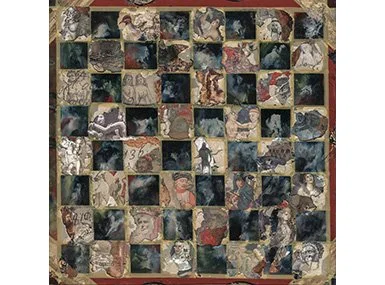
“Checkerboard ("It's How You Play the Game"), (mixed-media collage). by Greater Boston artist Rosamond Purcell, in her first retrospective show, “Nature Stands Aside,’’ at the Addison Gallery, at Phillips Andover Academy, Andover, Mass., through Dec. 31.
The gallery says:
“Murre eggs nestled in cotton that appear to have been decorated by an overzealous Abstract Expressionist, a blanched piranha charging ahead in a glass jar of orange-tinged formaldehyde, a cast off typewriter transformed by time into an octopean tangle of rusticles. From luscious large format Polaroid prints to objects rescued from obscurity, the empathetic, evocative, and multifaceted work of the photographer and conceptual artist Rosamond Purcell (born 1942) explores the ill-defined interstices between the unsettling and the sublime, the beautiful and the bizarre, the natural and the manufactured. As a body of work, it lays bare humanity’s desperate desire to collect and make sense of it all.
“Over a career spanning some fifty years, Purcell has collaborated with paleontologists, anthropologists, historians, museum curators, termite experts, and even a scholar-magician to illuminate and explore the shifting boundaries between art and science. She has found some of her greatest inspiration in long-overlooked storage spaces in natural history museums across the world and in the hills and the shacks of a 13-acre junkyard located in an otherwise picturesque Maine coastal town. Purcell’s six decades of work, while brilliantly varied and resistant to easy classification, speaks eloquently to the artist’s persistent interrogation of the ways in which humanity has and continues to attempt, often fruitlessly, to understand the world around it.”
Parasite state

Terminal of Manchester-Boston Regional Airport, whose name is aimed at grabbing Greater Boston business.
— Photo by MaxVT
“As part of the regional metro-Boston area, southern New Hampshire offers all the benefits typically associated with major metro areas yet maintains the advantages of being in a truly enterprise-friendly state: access to a world-class workforce, a pro-business, low-tax environment, and a streamlined regulatory environment.’’
— New Hampshire Gov. Chris Sununu
Omicron boosters: Is salesmanship trumping science?
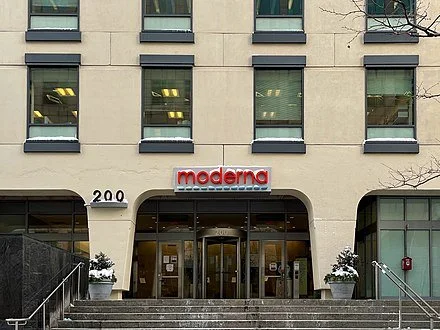
Moderna headquarters in Cambridge, Mass.
Last month, the Food and Drug Administration authorized Omicron-specific vaccines (with Moderna’s the best known), accompanied by breathless science-by-press release and a media blitz. Just days after the FDA’s move, the Centers for Disease Control and Prevention followed, recommending updated boosters for anyone age 12 and up who had received at least two doses of the original COVID-19 vaccines. The message to a nation still struggling with the COVID pandemic: The cavalry — in the form of a shot — is coming over the hill.
But for those familiar with the business tactics of the pharmaceutical industry, that exuberant messaging — combined with the lack of completed studies — has caused considerable heartburn and raised an array of unanswered concerns.
The updated shots easily clear the “safe and effective” bar for government authorization. But in the real world, are the Omicron-specific vaccines significantly more protective — and in what ways — than the original COVID vaccines so many have already taken? If so, who would benefit most from the new shots? Since the federal government is purchasing these new vaccines — and many of the original, already purchased vaccines may never find their way into taxpayers’ arms — is the $3.2 billion price tag worth the unclear benefit? Especially when these funds had to be pulled from other covid response efforts, like testing and treatment.
Several members of the CDC advisory committee that voted 13-1 for the recommendation voiced similar questions and concerns, one saying she only “reluctantly” voted in the affirmative.
Some said they set aside their desire for more information and better data and voted yes out of fear of a potential winter COVID surge. They expressed hope that the new vaccines — or at least the vaccination campaign that would accompany their rollout — would put a dent in the number of future cases, hospitalizations, and deaths.
That calculus is, perhaps, understandable at a time when an average of more than 300 Americans are dying of COVID each day.
But it leaves front-line health care providers in the impossible position of trying to advise individual patients whether and when to take the hot new vaccines without complete data and in the face of marketing hype.
Don’t get us wrong. We’re grateful and amazed that Pfizer-BioNTech and Moderna (with assists from the National Institutes of Health and Operation Warp Speed) developed an effective vaccine in record time, freeing the nation from the deadliest phase of the covid pandemic, when thousands were dying each day. The pandemic isn’t over, but the vaccines are largely credited for enabling most of America to return to a semblance of normalcy. We’re both up-to-date with our covid vaccinations and don’t understand why anyone would choose not to be, playing Russian roulette with their health.
But as society moves into the next phase of the pandemic, the pharmaceutical industry may be moving into more familiar territory: developing products that may be a smidgen better than what came before, selling — sometimes overselling — their increased effectiveness in the absence of adequate controlled studies or published data, advertising them as desirable for all when only some stand to benefit significantly, and in all likelihood raising the price later.
This last point is concerning because the government no longer has funds to purchase COVID vaccines after this autumn. Funding to cover the provider fees for vaccinations and community outreach to those who would most benefit from vaccination has already run out. So updated boosters now and in the future will likely go to the “worried well” who have good insurance rather than to those at highest risk for infection and progression to severe disease.
The FDA’s mandated task is merely to determine whether a new drug is safe and effective. However, the FDA could have requested more clinical vaccine effectiveness data from Pfizer and Moderna before authorizing their updated omicron BA.5 boosters.
Yet the FDA cannot weigh in on important follow-up questions: How much more effective are the updated boosters than vaccines already on the market? In which populations? And what increase in effectiveness is enough to merit an increase in price (a so-called cost-benefit analysis)? Other countries, such as the United Kingdom, perform such an analysis before allowing new medicines onto the market, to negotiate a fair national price.
The updated booster vaccine formulations are identical to the original covid vaccines except for a tweak in the mRNA code to match the omicron BA.5 virus. Studies by Pfizer showed that its updated Omicron BA.1 booster provides a 1.56 times higher increase in neutralizing antibody titers against the BA.1 virus as compared with a booster using its original vaccine. Moderna’s studies of its updated Omicron BA.1 booster demonstrated very similar results. However, others predict that a 1.5 times higher antibody titer would yield only slight improvement in vaccine effectiveness against symptomatic illness and severe disease, with a bump of about 5 percent and 1 percent, respectively. Pfizer and Moderna are just starting to study their updated Omicron BA.5 boosters in human trials.
Though the studies of the updated Omicron BA.5 boosters were conducted only in mice, the agency’s authorization is in line with precedent: The FDA clears updated flu shots for new strains each year without demanding human testing. But with flu vaccines, scientists have decades of experience and a better understanding of how increases in neutralizing antibody titers correlate with improvements in vaccine effectiveness. That’s not the case with COVID vaccines. And if mouse data were a good predictor of clinical effectiveness, we’d have an HIV vaccine by now.
As population immunity builds up through vaccination and infection, it’s unclear whether additional vaccine boosters, updated or not, would benefit all ages equally. In 2022, the U.S. has seen COVID-hospitalization rates among people 65 and older increase relative to younger age groups. And while COVID vaccine boosters seem to be cost-effective in the elderly, they may not be in younger populations. The CDC’s Advisory Committee on Immunization Practices considered limiting the updated boosters to people 50 and up, but eventually decided that doing so would be too complicated.
Unfortunately, history shows that — as with other pharmaceutical products — once a vaccine arrives and is accompanied by marketing, salesmanship trumps science: Many people with money and insurance will demand it whether data ultimately proves it is necessary for them individually or not.
We are all likely to encounter the SARS-CoV-2 virus again and again, and the virus will continue to mutate, giving rise to new variants year after year. In a country where significant portions of at-risk populations remain unvaccinated and unboosted, the fear of a winter surge is legitimate.
But will the widespread adoption of a vaccine — in this case yearly updated COVID boosters — end up enhancing protection for those who really need it or just enhance drugmakers’ profits? And will it be money well spent?
The federal government has been paying a negotiated price of $15 to $19.50 a dose of mRNA vaccine under a purchasing agreement signed during the height of the pandemic. When those government agreements lapse, analysts expect the price to triple or quadruple, and perhaps even more for updated yearly COVID boosters, which Moderna’s CEO said would evolve “like an iPhone.” To deploy these shots and these dollars wisely, a lot less hype and a lot more information might help.
Elisabeth Rosenthal (erosenthal@kff.org, @rosenthalhealth) and Céline Gounder (cgounder@kff.org) are Kaiser Health News journalists.
Bella DeVaan, Rebekah Entralgo: Skimping on schools while squandering money on the rich
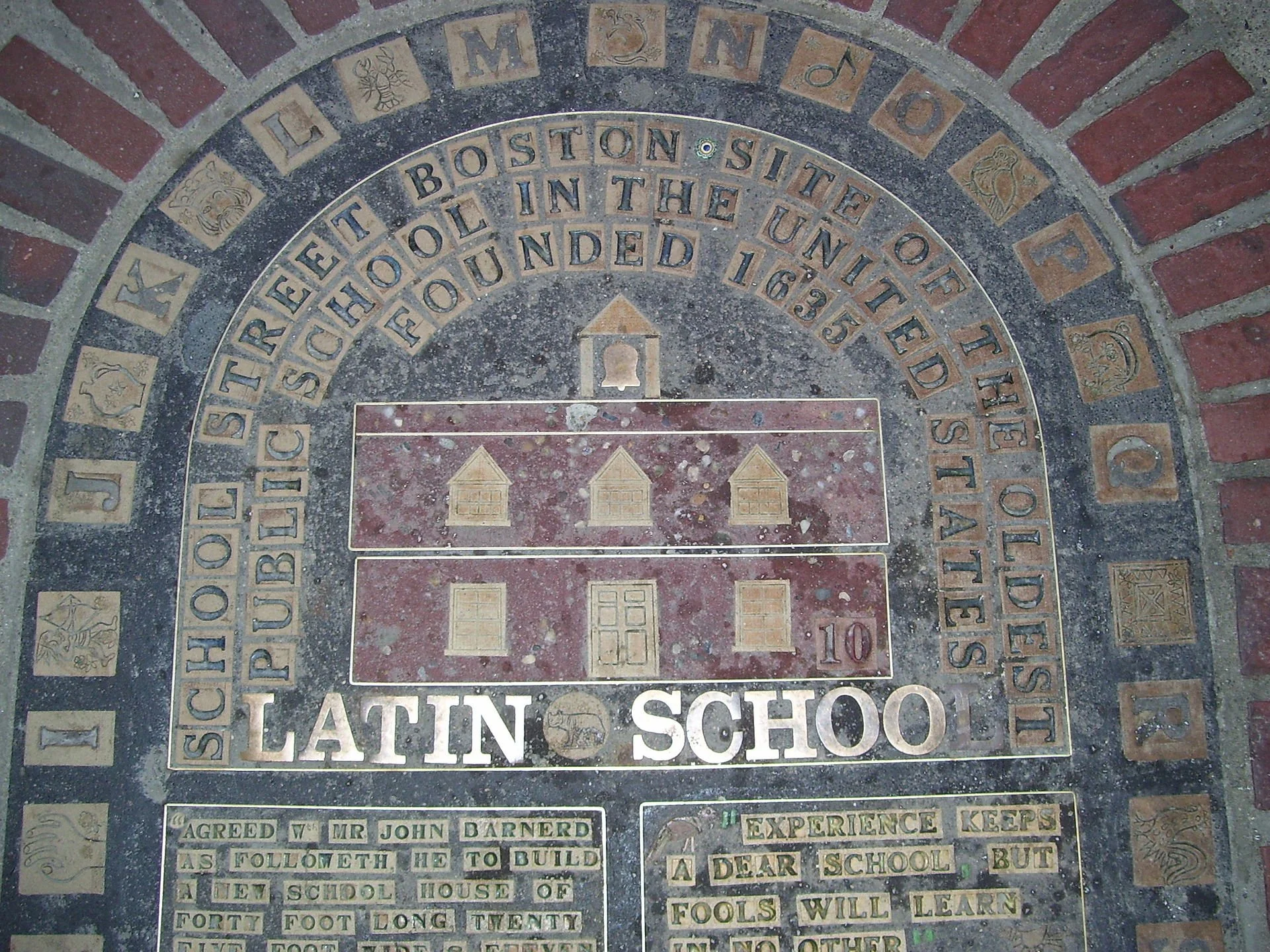
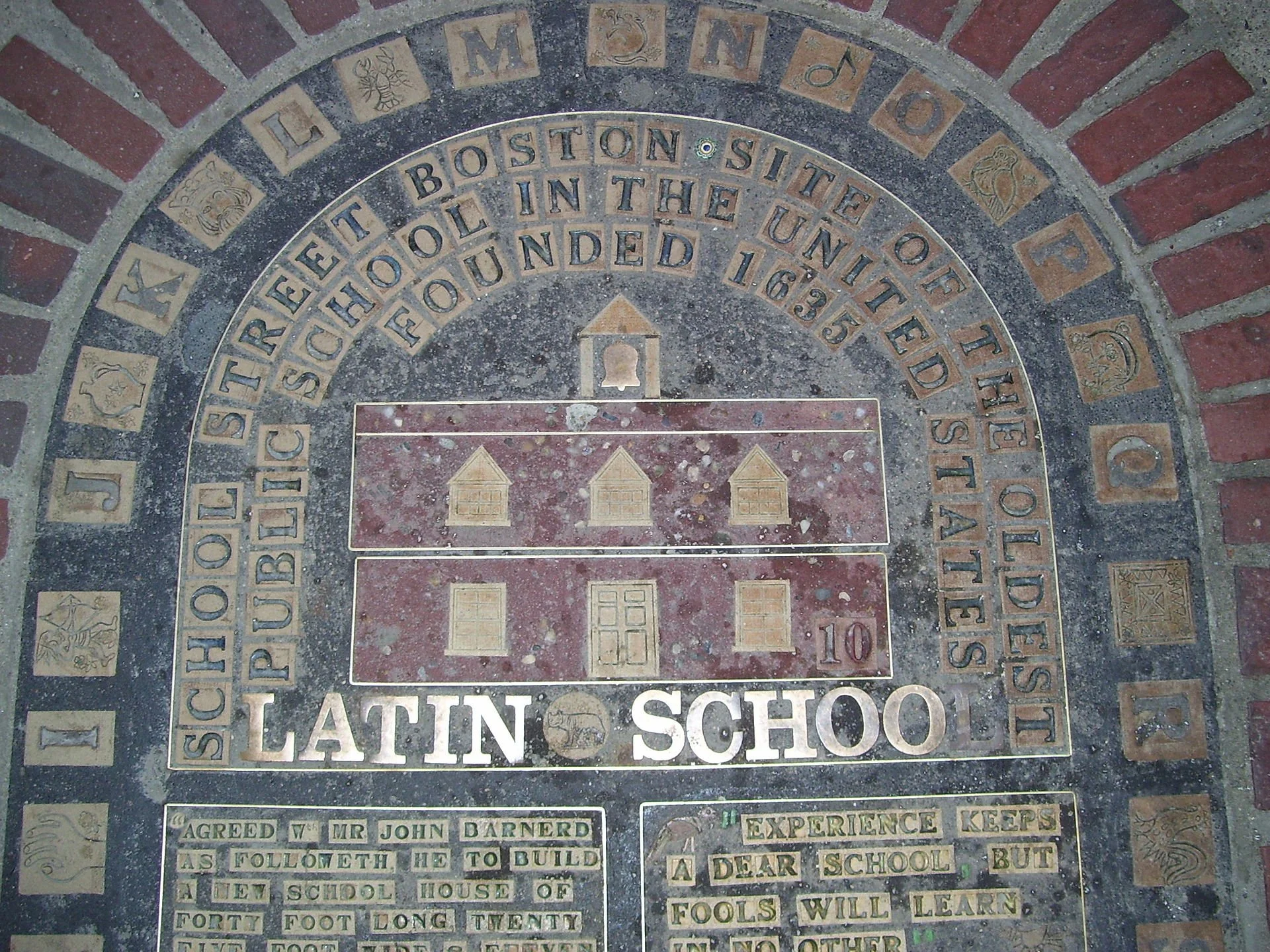
Plaque on School Street, Boston, commemorating the site of the first Boston Latin School building. Boston Latin, the city’s most prestigious high school, was founded in 1635, before there were “high schools,’’ making it by far the oldest public school in America.
Via OtherWords.org
As students have been returning to the classroom, school districts across the country are facing a historic number of teacher vacancies — an estimated 300,000, according to the National Education Association (NEA), the largest U.S. teachers union.
Some states are particularly hard hit, with approximately 2,000 empty positions in Illinois and Arizona, 3,000 in Nevada, and 9,000 in Florida.
How are political leaders responding? A number of rural Texas districts have moved to a four-day school schedule, creating major hassles for working parents. A new Arizona law will no longer require a bachelor’s degree for full-time teachers. Florida is allowing military veterans to temporarily teach without prior certification. Florida’s Broward County recruited over 100 teachers from The Philippines.
These band-aid actions ignore the root causes of the teacher crisis: low pay and burnout.
A new Economic Policy Institute report finds that teachers made 23.5 percent less than comparable college graduates in 2021. That’s the widest gap ever — despite the extraordinary challenges teachers have faced during the pandemic. The gap is even wider in some of the states with the largest teacher shortages, reaching 32 percent in Arizona, for example.
Across the country, real wages for public school teachers have essentially flatlined since 1996.
When the NEA surveyed teachers earlier this year, 55 percent reported they plan to leave the profession sooner than planned. An overwhelming 91 percent pointed to burnout as their biggest concern, with 96 percent supporting raising salaries as a means to address burnout.
Some states are getting the message: In New Mexico, lawmakers have instituted minimum teacher salary tiers based on experience — beginning at $50,000 and maintaining a $64,000 median wage. They’re also aiming to codify annual 7 percent raises so that teachers don’t lose ground to inflation.
“These raises represent the difference of being on Medicaid with your family, the difference of having to have a second or third job or doing tutoring work on the side, the difference of driving the bus during the day and having to take extra routes just to make ends meet,” said New Mexico teacher John Dyrcz in a recent interview with More Perfect Union.
In other areas, teachers are harnessing their collective bargaining power to make their demands heard. Thousands of teachers in Ohio, Washington state, Pennsylvania, and Washington, D.C., went on strike during the first weeks of the academic year.
The educators’ union in Columbus, Ohio, demands a simple, public “commitment to modern schools”: not only pay raises but also smaller class sizes, decent air conditioning, adequate funding for the arts and physical education, and caps on numbers of periods taught in a row.
Read one picketer’s sign: “You think we give up easy? Ask how long we wait to PEE!”
Meeting such demands requires public investment. And unfortunately, too many lawmakers favor lining the coffers of the wealthy instead of funding our school systems.
In 2021, the Columbus Dispatch estimates schools in the city lost out on $51 million to local real estate developers. In New York, an over $200 million reduction in school budgets has provoked public outcry in a city where luxury builders have pocketed well over $1 billion in tax breaks each year.
The Columbus teachers union soon came to a “conceptual agreement” with the city’s schools, ending their strike. Let’s hope this is a sign of a turning tide. Through a relentless pandemic, vicious censorship of curricula, and surging inequality, we cannot continue to skimp on education while squandering our resources on the wealthy.
Rebekah Entralgo (@rebekahentralgo) is the managing editor for Inequality.org. Bella DeVaan (@bdevaan) is the research and editorial assistant for Inequality.org.
‘September rain’
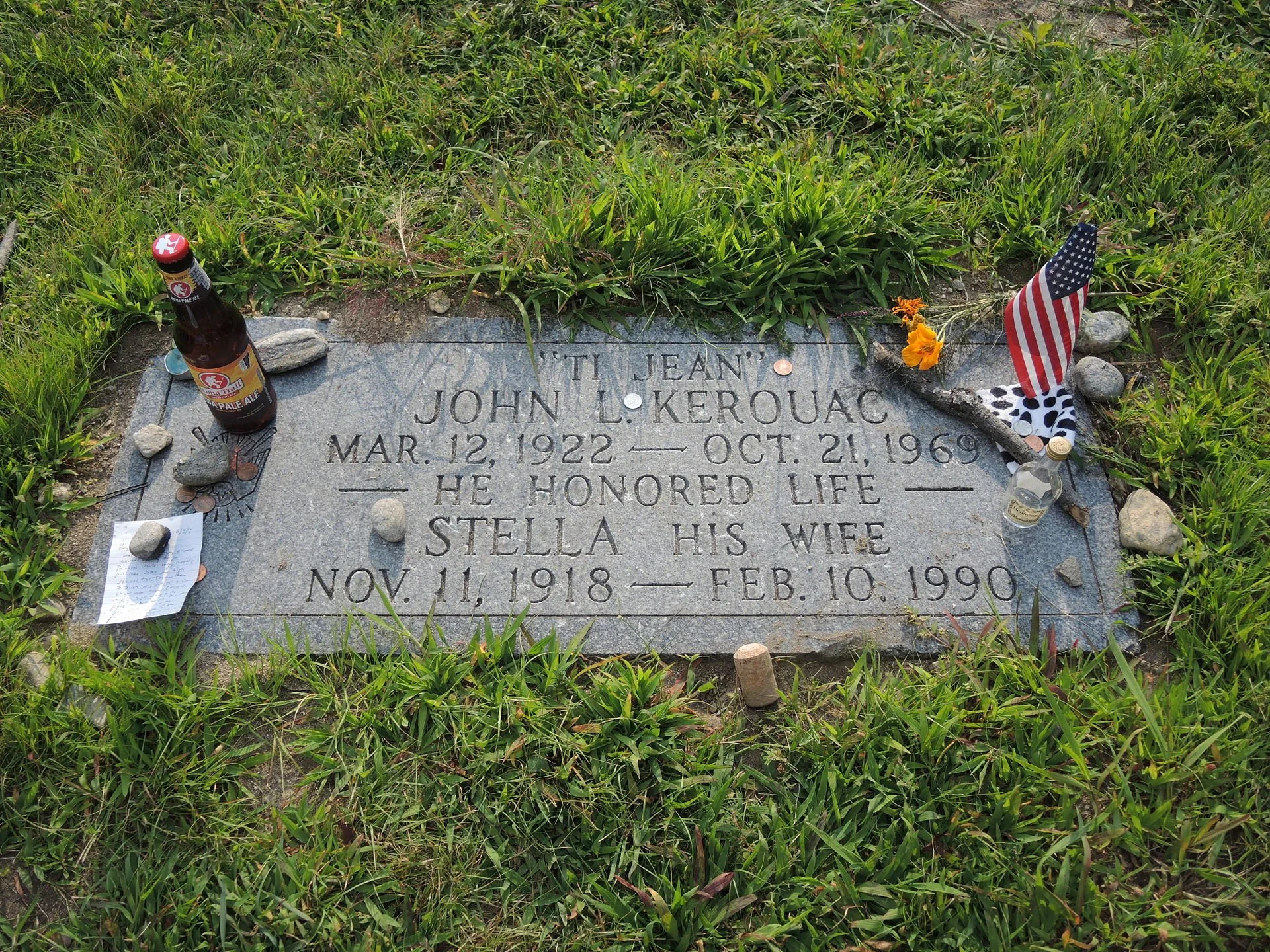
Jack Korouac’s grave in Edson Cemetery, Lowell
— Photo by DanielPenfield
“And what does the rain say at night in a small town, what does the rain have to say? Who walks beneath dripping melancholy branches listening to the rain? Who is there in the rain’s million-needled blurring splash, listening to the grave music of the rain at night, September rain, September rain, so dark and soft? Who is there listening to steady level roaring rain all around, brooding and listening and waiting, in the rain-washed, rain-twinkled dark of night?”
― Jack Kerouac (1922-1969), American novelist and poet, in his novel The Town and the City, The novel is set in the early Beat Generation circle of New York in the late 1940s and on Galloway, Mass., based on Lowell. The experiences of the young "Peter Martin" struggling for success on the high school football team are largely those of Jack Kerouac (he returns to the subject again in his last work, Vanity of Duluoz, published in 1968).
David Warsh: Blame Harvard
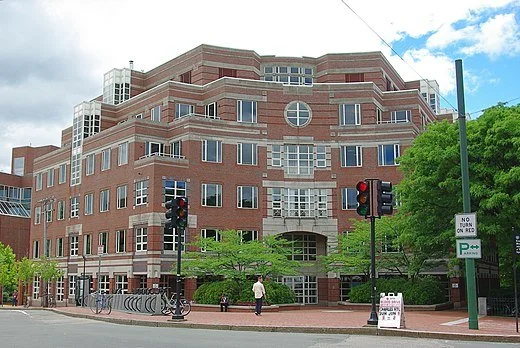
The Taubman Building at Harvard’s Kennedy School.
SOMERVILLE, Mass.
A “Freudian slip,” according to Wikipedia, is “an error in speech, memory, or physical action that occurs due to the interference of an unconscious subdued wish or internal train of thought.” Slips of the tongue are classic examples, but other manifestations include “misreadings, mishearings, mis-typings, temporary forgetting, and the mislaying and losing of objects.” The insight is a vivid reminder of what was learned from the 20th Century discipline known as psychoanalysis: some, definitely, but perhaps not as much as they thought.
I committed an act of misstatement that requires more explanation than mere correction when I recently wrote that “[Boris] Yeltsin…presided over a decade of ‘shock therapy,’ a massive helter-skelter privatization of government-owned Russian assets based largely on ideas propounded in College Park, Md., and Cambridge, Mass.”
College Park had nothing to do with what happened next.
Its IRIS Center, an economic strategy and development advisory service based at the Beltway campus of the University of Maryland, was founded in 1990. Even the source of its acronym, if there was one, is now lost to history. IRIS was the loser to Harvard University in a brief, bitter contest for State Department patronage at the end of the Cold War and the collapse of the Soviet Union.
Among IRIS founders were Mancur Olson, who might have been recognized with a Nobel Prize had he lived long enough, and Thomas Schelling, who lived long enough to collect one. The director was Charles Cadwell, a lawyer with plenty of experience with deregulation. Mostly involved in articulating proposals for Russia was theorist Peter Murrell, who advocated a considerably more cautious approach to industrial privatization and nation-building than the so-called “shock therapy” approach that carried the day.
Murrell’s 1990 book, The Nature of Socialist Economies: Lessons from Eastern European Foreign Trade (Princeton), had the advantage of being closely related to ideas espoused by Hungarian economist Janos Kornai, another member of the Nobel nomination league who died without recognition. Murrell is more than ever worth reading today.
What might have happened if independent businessman H. Ross Perot had stayed out of the 1992 presidential race? Perot won 19 percent of the popular vote, enough to tip victory to the Democratic candidate, Bill Clinton. Had George H. W. Bush been re-elected, former Secretaries of State George Shultz and James Baker and National Security adviser Brent Scowcroft and their team would have directed U.S. policy towards Russia for the next four years. Talk about NATO expansion “not one inch east” might have become carefully qualified. Russia’s proposed “big bang” transition might have taken a different path. But Clinton won the presidency. He and his advisers had ideas of their own.
I followed Murrell for a time but became swept up in the excitement surrounding the incoming Clinton administration, among other matters. Would-be Harvard advisers to Russia seemed to be everywhere in those days. They included Kennedy School Dean Graham Allison and economists Marin Feldstein, Jeffrey Sachs and Andrei Shleifer. But it turned out that a 1989 conference in Moscow of the Soviet Academy of Sciences and the tripartite National Bureau of Economic Research from the U.S. had formed relationships that led to the deal. In 1992, Harvard’s Institute for International Development obtained a State Department contact to advise Yeltsin’s government.
Five years later the U.S. Department of Justice sued HIID, after Shleifer, a Russian expatriate, and his wife, hedge-fund manager Nancy Zimmerman, were caught trying to enter the Russian mutual-fund industry on their own. The government got its money back, and HIID was extinguished, just as was IRIS. A few years later I began Because They Could: The Harvard-Russia Scandal (and NATO Expansion) after Twenty-Five Years (2018, Create Space).
Next week, back to the grim present day.
David Warsh, a veteran columnist and an economic historian, is proprietor of Somerville-based economicprincipals.com, where this essay first ran.
From order to chaos

“My Cup Runneth Over “(oil on aluminum panel), by West Newton, Mass.-based artist Marian Dioguardi, in her show “At the Edge of Seeing,’’ at Galatea Fine Art, Boston, through Oct. 7
She says: "When does ‘looking’ become ‘seeing’? In this series of observational paintings, I am asking ‘Where is that edge of observational order and where does it dissolve into visual chaos?’’’
Overwrought fears of a Providence bike trail

Adapted from Robert Whitcomb’s “Digital Diary,’’ in GoLocal24.com
The controversy over setting up a bike and walking lane (sometimes called an “urban trail”) in a commercially successful and charming stretch of Hope Street on Providence’s East Side has raised the inevitable issue of parking, which upsets some merchants and shoppers alike.
See:
The proposal would replace some of the street-side space now allocated to parked cars. Big parts of the fight come both from too many Americans’ unwillingness to walk more than a few feet from their cars to shop (and you can see the results in their physiques) and residential neighbors not wanting cars crowding nearby streets.
This gets me to think that the strip needs some sort of attractive (faced with brick or wood?) parking garage to take off some of the pressure.
Meanwhile, a big problem with bike lanes in some places is the failure of bicyclists to learn and obey basic traffic rules, e.g., signaling, and of police to enforce them. Time for Providence Police and other officials to work on that, including with signs and hefty fines!
Some of the local merchants want the city to call off a trial of the trail set for Oct. 1-8. No, the experiment should go forward! Let’s see how it unfolds and then either drop the idea or, if the project is to become permanent, adjust as needed. Of course, any change like this brings out Nimbyism and anxiety in people who have operated in a setting that has changed relatively little over the years.
But read what’s happened elsewhere.
https://thesource.metro.net/2017/11/20/biking-is-good-for-business/
https://www.cbc.ca/news/business/biking-lanes-business-health-1.5165954
https://medium.com/sidewalk-talk/the-latest-evidence-that-bike-lanes-are-good-for-business-f3a99cda9b80

Bicycle parking at the Alewife subway station, in Cambridge, Mass., at the intersection of three cycle paths.
— Photo by Arnold Reinhold

‘Not so awful as that elsewhere’

Factory scene in Fall River in 1920.
“I cannot praise some aspects of the Yankee city. Such ulcerous growths of industrial New England as Lowell, Lawrence, Lynn, Pawtucket, Woonsocket, and Chelsea seem the products of nightmare. To spend a day in Fall River is to realize how limited were the imaginations of poets who have described hell. It is only when one remembers Newark, Syracuse, Pittsburgh, West Philadelphia, Gary, Hammond, Akron, and South Bend that this leprosy seems tolerable. The refuse of industrialism knows no sectional boundaries and is common to all America. It could be soundly argued that the New England debris is not so awful as that elsewhere – not so hideous as upper New Jersey or so terrifying as the New South. It could be shown that the feeble efforts of society to cope with this disease are not so feeble here as elsewhere. But realism has a sounder knowledge: industrial leadership has passed from New England, and its disease will wane. Lowell will slide into the Merrimack, and the salt marsh will once more cover Lynn — or nearly so. They will recede; the unpolluted sea air will blow over them, and the Yankee nature will reclaim its own.’’
— From “New England: There She Stands,’’ by historian, essayist and editor Bernard De Voto (1897-1955) in the March 1932 Harper’s Magazine. The article, written during the Great Depression is a fair and very resonant paean to the region. It’s still well worth reading.
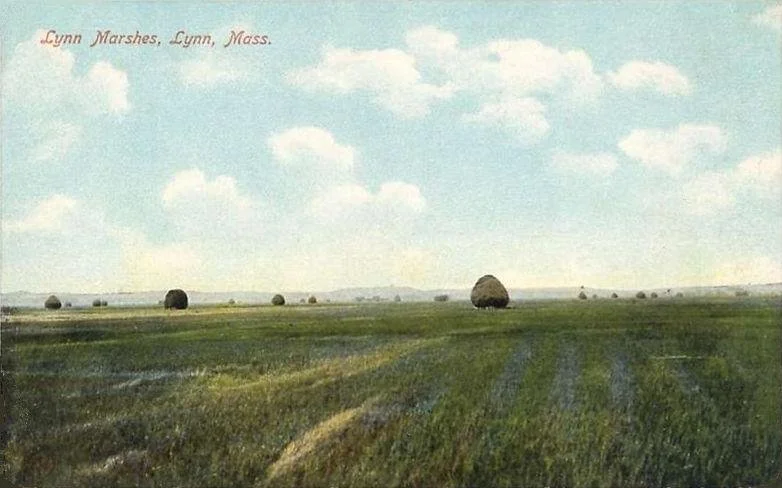
1905 postcard
Same places, different scenes

Harry Adler travels every morning as dark yields to dawn. He’s always on foot, running through Pawtuxet Village (straddling Cranston and Warwick, R.I.), where he lives. Along the way, he photographs that day’s magnificence.
Deep blue cove water melding into powder-blue sky. Snow frosting feathered reeds. Geese with orange feet waddling up a boat ramp. Trees mirror-imaged in the silvery Pawtuxet River. Historic houses in silhouette.
Adler began posting his village photos on Facebook and Instagram three years ago, and more so since the COVID pandemic erupted. Legions of admirers recognize his talent.
“The eye of the morning is winking at you,” writes one Facebook friend of a sunrise photo. “Your eye sees things that most don’t,” writes another. Many thank Adler for brightening their mornings and sparing them from waking up when he does – at 4:13 a.m. (in time to feed the five cats and run three to five miles).
Adler’s photographs will be displayed at “Traveling in Place,” an exhibit at the Aspray Boat House, 2 East View St., Warwick, R.I., in partnership with The Edgewood Village. Friends, including artist Bert Crenca, suggested that Adler exhibit his work: Adler agreed so long as part of the proceeds go to The Village Common of Rhode Island.
The exhibit’s title stems from Adler’s observation: “When I started running in the Pawtuxet Village area, I was noticing that every day was dramatically different. And that became the thought behind ‘Traveling in Place.’ I’m still in the same place, but feel like I’m traveling because I’m not seeing the same things all the time. Each day is brand new.’’
Adler, co-owner of Adler’s Design Center & Hardware, on Wickenden Street in Providence, is familiar to many Rhode Islanders. Customers know him as the pleasant font-of-knowledge guy behind the paint counter.
Adler sets out just after 6 a.m. from the 1857 Greek Revival house he owns with his partner, Suzy Box. He runs while searching the skies and scoping out the light. If the light is right, he clicks the shutter on his IPhone 12 Pro.
He shoots his images from the same spots at the Pawtuxet Cove Marina, Stillhouse Cove and the Rhode Island Yacht Club -- same locales but ever-changing beauty.
Opening reception and “Meet the Artist” on Saturday, Sept. 17, at 5 to 8 p.m. Show continues Sunday, Sept. 18, at 12-3 p.m. Refreshments, live music and free parking. For more information, please contact Sorrel Devine at eirehead1@gmail.com
‘Doctor of the dead’
“Sidney Farber was a pathologist. He was called a doctor of the dead. He was a pathologist who sort of lived in the basement of the children's hospital in Boston, and he became very interested in childhood leukemia. And Farber began to inject this drug, aminopterin, into young kids, in order to see if he could get a remission.’’
Siddhartha Mukherjee, M.D., Indian-American physician, biologist and writer
‘The life of objects’

“Picking the Bones” (assemblage and painting), by Boston-based Eben Haines, in his show “In the House of Empire Everything’s Fine,’’ at Corey Daniels Gallery, Wells, Maine, through Sept. 11.
“His work investigates the life of objects through works that emphasize the constructed nature of history. Haines’s paintings, drawings, sculptures, and installations employ various techniques and materials to suggest the passage of time and volatility. Many works explore the conventions of portraiture, through figures and objects pictured against cinematic backdrops or in otherworldly scenes.’’
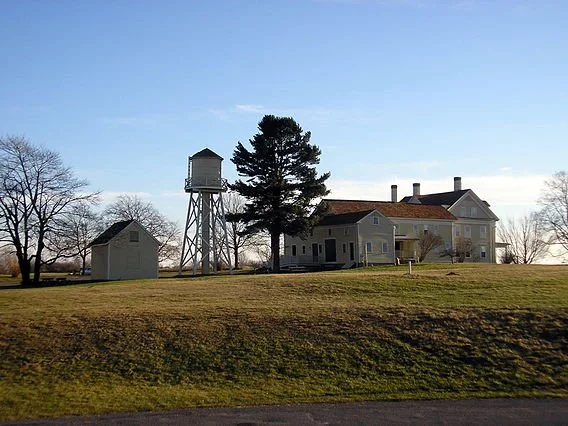
At the Wells National Estuarine Research Reserve, in Wells, 2,250 acres of protected land based at a restored saltwater farm called Laudholm. As a National Estuarine Research Reserve, the staff at the reserve works to expand knowledge of coasts and estuaries, engage people in environmental learning, and involve communities in conservation, all with a goal of protecting and restoring coastal ecosystems around the Gulf of Maine.

Chris Powell: Racism? Get specific; pass Larson’s Social Security bill

The village of Thompsonville, in Enfield, Conn. Thompsonville was established in the 19th Century as a carpet-manufacturing center. Orrin Thompson, for whom the community is named, built a dam across Freshwater Brook in 1828 and opened the first carpet mill in 1829. Thompson's first mill employed skilled weavers brought from Scotland.
Carpeting continued to be manufactured in Thompsonville until 1971, by which time most production had shifted to the southern United States.
— Photo by Mirandalovely (talk)
MANCHESTER, Conn.
How racist is Enfield, Conn.? Town government's overreaction to a recent disgraceful but trivial incident is giving the impression that the town has become the northern headquarters of the Ku Klux Klan, even though the incident could have happened anywhere.
It occurred as members of the Enfield High School football team were knocking on doors throughout town soliciting financial donations. At one door a Black player was scorned and sent away with a racial epithet from the resident. Police investigated but determined that, abhorrent as the resident's conduct was, there was no cause for arrest.
Whereupon town government convened another of those "community conversations on race," as if the whole town needed to be lectured on decent behavior.
Maybe Enfield really is that hateful. But if so, specific evidence of anything seriously wrong in town regarding race has not been reported and was not produced at the first "community conversation," which drew about 200 people to Enfield High School. Instead the moderator urged people to examine their own consciences about race, as if some might be obliged to make confession.
In the absence of evidence apart from a single small incident, summoning a "community conversation" was presumptuous, if also politically correct.
Enfield and other towns should have a "community conversation" on race, but of a different sort — that is, regular hearings to air specific complaints about racism in town and to investigate them.
The perpetrator of the insult to the high-school football player is known to police, the player and others and should be invited to the first such hearing along with the insulted player for questioning and discussion. Other witnesses to what they consider racism in town should come forward too and their complaints should be followed up at future hearings, with the accused people and institutions invited. Town officials and residents then could discuss what if anything should be done.
Such procedure would generate real and relevant conversations, not the pious and irrelevant handwringing of the first "community conversation." Far more than such handwringing, a hearing on specifics might deter racists, warning them that they might be held accountable in public for their hatefulness.
More likely, of course, such a procedure would generate few if any complaints of racism in Enfield. Maybe then the town could begin to get its good name back and, along with Connecticut generally, might pay less attention to the occasional, and trivial misconduct of jerks on their own doorsteps and more attention to the state's longstanding racial disparities.
Those disparities include the racial-performance gap in education, zoning's obstruction of racial and economic integration, and welfare policy's destruction of the family and creation of a racial underclass.
Obsessing about occasional racist epithets uttered by nobodies is a pathetic copout.
xxx
As they campaign for re-election, Democrats on the national and state level are touting lots of new programs created in the name of alleviating poverty, even as soaring inflation, caused in part by the explosion of those programs and other government spending, erases the programs' benefits.
Meanwhile, the nation's most comprehensive anti-poverty program, Social Security, is eroding under that inflation even as Connecticut's own U.S. Rep. John B. Larson bravely keeps pressing legislation to improve the system's benefits and finances.
But according to a recent report in Politico, Larson's Social Security bill is being blocked not by the usual retrograde Republicans in Congress but by the Democratic leader in the House, Speaker Nancy Pelosi.
Larson's bill isn't another giveaway to be financed by debt and inflation. It would be financed largely by eliminating the limit on Social Security taxes paid by high earners, whose Social Security taxes now are capped at the first $400,000 of annual income.
Pelosi and her husband have gotten rich trading stocks whose values are heavily affected by the federal legislation she steers and votes on. Her party should push her out of the way and pass Larson's Social Security bill while the Democrats still have a majority in Congress and a president who would sign it.
Chris Powell is a columnist for the Journal Inquirer, in Manchester. He can be reached at CPowell@JournalInquirer.com.
‘Partners in this land’

An Eastern Garter Snake, New England’s most common snake.
“I put out my hand and stroke
the fine, dry grit of their skins.
After all,
we are partners in this land,
co-signers of a covenant.
At my touch the wild
braid of creation
trembles.’’
— From “The Snakes of September,’’ by Stanley Kunitz (1905-2006). A U.S. poet laureate, Mr Kunitz, who grew up in Worcester, divided much of his time between New York City and Provincetown, where he had a famous garden.
‘Arise and dissolve’

From Boston-based artist Ilona Anderson’s show ‘‘The Union of the Sun and the Moon,’’ at Kingston Gallery, Boston, through Oct. 2.
The gallery says:
“Ilona Anderson’s animations for her show are full of the familiar, the distant, unknown, imagined, and everyday. Bright lyrical vignettes of animals and people dance before us in a metaphysical picture plane, spilling across the space into ever-building expanses. Every layer of each animation must be composed perfectly. As the creator she must see it second by second. Building the animations by changing one mark at a time to create a sense of movement is like adding one brick to a wall, one layer at a time. She weaves the images into both linear and non-linear spaces, forming spatial contradictions that emphasize the vastness of space and the immediacy of our experience. The impermanence of these expressions for Anderson shows how things arise and dissolve every day in the natural world around us. The artist loves the act of creativity, the discovery of what manifests from her imagination. Anderson states that ‘you must listen to the work and it will tell you where to go.”’

Rae Ellen Bichell: The failure to track culturally competent care

— Image by Edward Boatman
“This was pretty universal across races. So Black beneficiaries; Asian American, Native Hawaiian, and Pacific Islander beneficiaries; and Hispanic or Latino or Latinx/Latine beneficiaries reported worse experiences across the four measures.’’
—- Kevin Nguyen, a health-services researcher at the Brown University School of Public Health, in Providence
Each day, thousands of patients get a call or letter after being discharged from U.S. hospitals. How did their stay go? How clean and quiet was the room? How often did nurses and doctors treat them with courtesy and respect? The questions focus on what might be termed the standard customer-satisfaction aspects of a medical stay, as hospitals increasingly view patients as consumers who can take their business elsewhere.
But other crucial questions are absent from these ubiquitous surveys, whose results influence how much hospitals get paid by insurers: They do not poll patients on whether they’ve experienced discrimination during their treatment, a common complaint of diverse patient populations. Likewise, they fail to ask diverse groups of patients whether they’ve received culturally competent care.
And some researchers say that’s a major oversight.
Kevin Nguyen, a health-services researcher at Brown University School of Public Health, who parsed data collected from the government-mandated national surveys in new ways, found that — underneath the surface — they spoke to racial and ethnic inequities in care.
Digging deep, Nguyen studied whether patients in one Medicaid managed-care plan from ethnic minority groups received the same care as their white peers. He examined four areas: access to needed care, access to a personal doctor, timely access to a checkup or routine care, and timely access to specialty care.
“This was pretty universal across races. So Black beneficiaries; Asian American, Native Hawaiian, and Pacific Islander beneficiaries; and Hispanic or Latino or Latinx/Latine beneficiaries reported worse experiences across the four measures,” he said.
Nguyen said that the Consumer Assessment of Healthcare Providers and Systems surveys commonly used by hospitals could be far more useful if they were able to go one layer deeper — for example, asking why it was more difficult to get timely care, or why they don’t have a personal doctor — and if the Centers for Medicare & Medicaid Services publicly posted not just the aggregate patient experience scores, but also showed how those scores varied by respondents’ race, ethnicity, and preferred language. Such data can help discover whether a hospital or health insurance plan is meeting the needs of all versus only some patients.
Nguyen did not study responses of LGBTQ+ individuals or, for example, whether people received worse care because they were obese.
The CAHPS survey is required by the federal government for many health-care facilities, and the hospital version of it is required for most acute care hospitals. Low scores can induce financial penalties, and hospitals reap financial rewards for improving scores or exceeding those of their peers.
The CAHPS Hospital Survey, known as HCAHPS, has been around for more than 15 years. The results are publicly reported by CMS to give patients a way to compare hospitals, and to give hospitals incentive to improve care and services. Patient experience is just one thing the federal government publicly measures; readmissions and deaths from conditions including heart attacks and treatable surgery complications are among the others.
Dr. Meena Seshamani, director of the Center for Medicare, said that patients in the U.S. seem to be growing more satisfied with their care: “We have seen significant improvements in the HCAHPS scores over time,” she said in a written statement, noting, for example, that the percentage of patients nationally who said their nurses “always” communicated well rose from 74% in 2009 to 81% in 2020.
But for as long as these surveys have been around, doubts about what they really capture have persisted. Patient experience surveys have become big business, with companies marketing methods to boost scores. Researchers have questioned whether the emphasis on patient satisfaction — and the financial carrots and sticks tied to them — have led to better care. And they have long suspected institutions can “teach to the test” by training staff to cue patients to respond in a certain way.
National studies have found the link between patient satisfaction and health outcomes is tenuous at best. Some of the more critical research has concluded that “good ratings depend more on manipulable patient perceptions than on good medicine,” citing evidence that health professionals were motivated to respond to patients’ requests rather than prioritize what was best from a care standpoint, when they were in conflict. Hospitals have also scripted how nurses should speak to patients to boost their satisfaction scores. For example, some were instructed to cue patients to say their room was quiet by making sure to say out loud, “I am closing the door and turning out the lights to keep the hospital quiet at night.”
About a decade ago, Robert Weech-Maldonado, a health-services researcher at the University of Alabama-Birmingham, helped develop a new module to add to the HCAHPS survey “dealing with things like experiences with discrimination, issues of trust.” Specifically, it asked patients how often they’d been treated unfairly due to characteristics like race or ethnicity, the type of health plan they had (or if they lacked insurance), or how well they spoke English. It also asked patients if they felt they could trust the provider with their medical care. The goal, he said, was for that data to be publicly reported, so patients could use it.
Some of the questions made it into an optional bit of the HCAHPS survey — including questions on how often staffers were condescending or rude and how often patients felt the staff cared about them as a person — but CMS doesn’t track how many hospitals use them or how they use the results. And though HCAHPS asks respondents about their race, ethnicity and language spoken at home, CMS does not post that data on its public patient Web site, nor does it show how patients of various identities responded compared with others.
Without wider use of explicit questions about discrimination, Dr. Jose Figueroa, an assistant professor of health policy and management at the Harvard School of Public Health, doubts HCAHPS data alone would “tell you whether or not you have a racist system” — especially given the surveys’ slumping response rates.
One exciting development, he said, lies with the emerging ability to analyze open-ended (rather than multiple-choice) responses through what’s called natural language processing, which uses artificial intelligence to analyze the sentiments people express in written or spoken statements as an addendum to the multiple-choice surveys.
One study analyzing hospital reviews on Yelp identified characteristics patients think are important but aren’t captured by HCAHPS questions — like how caring and comforting staff members were, and the billing experience. And a study out this year in the journal Health Affairs used the method to discover that providers at one medical center were much more likely to use negative words when describing Black patients compared with their white counterparts.
“It’s simple, but if used in the right way can really help health systems and hospitals figure out whether they need to work on issues of racism within them,” said Figueroa.
Press Ganey Associates, a company that a large number of U.S. hospitals pay to administer these surveys, is also exploring this idea. Dr. Tejal Gandhi leads a project there that, among other things, aims to use artificial intelligence to probe patients’ comments for signs of inequities.
“It’s still pretty early days,” Gandhi said. “With what’s gone on with the pandemic, and with social justice issues, and all those things over the last couple of years, there’s just been a much greater interest in this topic area.”
Some hospitals, though, have taken the tried-and-true route to understanding how to better meet patients’ needs: talking to them.
Dr. Monica Federico, a pediatric pulmonologist at the University of Colorado School of Medicine and Children’s Hospital Colorado in Denver, started an asthma program at the hospital several years ago. About a fifth of its appointments proved no-shows. The team needed something more granular than patient satisfaction data to understand why.
“We identified patients who had been in the hospital for asthma, and we called them, and we asked them, you know, ‘Hey, you have an appointment in the asthma clinic coming up. Are there any barriers to you being able to come?’ And we tried to understand what those were,” said Federico. At the time, she was one of the only Spanish-speaking providers in an area where pediatric asthma disproportionately affects Latino residents. (Patients also cited problems with transportation and inconvenient clinic hours.)
After making several changes, including extending the clinic’s hours into the evening, the no-show appointment rate nearly halved.
CAHPS surveys are embedded in American health-care culture and are likely here to stay. But CMS is now making tentative efforts in surveys to address the issues that were previously overlooked: As of this summer, it is testing a question for a subset of patients 65 and older that would explicitly ask if anyone from a clinic, emergency room, or doctor’s office treated them “in an unfair or insensitive way” because of characteristics including race, ethnicity, culture, or sexual orientation.
Rae Ellen Bichell is a Kaiser Health News journalist.

The essential monarch

Queen Elizabeth II at work in 2012 as part of her Diamond Jubilee tour.
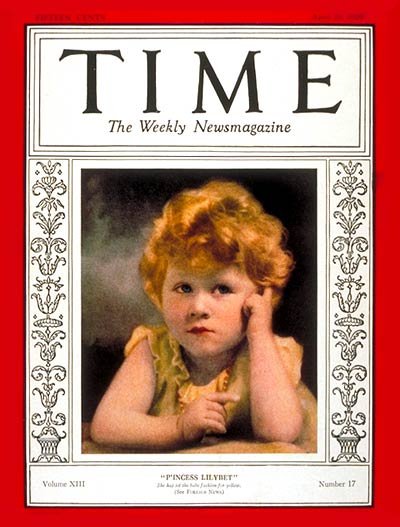
Princess Elizabeth in 1928.
WEST WARWICK, R.I.
“The Queen is dead. Long live the King.”
Some would add to that traditional and ringing appeal, “God save the monarchy.” It may not need saving, but the British monarchy won’t be the same. Queen Elizabeth II was a one off, as they say.
I clearly remember the death of King George VI, and the ascent of the 25-year-old Elizabeth. I was living in a far corner of the British Empire, in Southern Rhodesia (now Zimbabwe).
In the colonies, we were a study in patriotism, and we believed in Britain and the empire itself as nearly a divine intention. We almost believed in the divinity of the monarch.
More, we believed that the new queen, so beautiful and young and hopeful, would usher in a new era of Elizabethan greatness. A new Queen Bess set to restore the fortunes of Britain after the savagery of two world wars.
I wasn’t to be, of course. The winds of change were rustling, if not yet howling, and Britain’s great global manufacturing eminence wasn’t to return. Gradually, we were to learn that our vision of Britain as the great civilizing force, the happy world policeman, was fantasy.
But Elizabeth kept her promise. The promise she made on her 21st birthday, “I declare before you all, that my whole life, whether it be long or short, shall be devoted to your service and the service of that great imperial family to which we all belong.”
She kept to the letter and the spirit of that promise. Through all these decades of convulsive change, Elizabeth has been as constant as the Rock of Gibraltar, one of the remnants of the time when the sun really didn’t set on the British Empire.
Elizabeth wasn’t a great mind, a visionary, or even a woman who understood a great deal of what she saw and was told. Arguably, she wasn’t even a very good mother. But she was, every day of her long, long reign, the embodiment of that word from the days of empire “duty.”
Elizabeth did her duty every day of her life and did it completely. How many thousands of native dances did she endure? How many school choirs did she hear? How many awful heads of state did she break bread with and chat about the weather? A famous cover of the satirical magazine Private Eye had a picture of her greeting Nicolae Ceausescu, the Romanian dictator, and a balloon quote from her said, “Do you have any interesting hobbies?” One from her husband, the late Prince Philip, said, “Yes, he is a mass murderer.”
Her greatest avocation was horses. She was a devoted equestrian who rode, against physicians’ advice, shortly before she died.
Queen Elizabeth II will be remembered for much, and it must include rising above her dysfunctional family.
In England, I covered the marriage of her sister, Margaret ,who, hiding behind the dubious cover of one forbidden love affair, lived the life of a princess about town -- no hint of duty or hard work there. At the time of her marriage to the photographer Anthony Armstrong-Jones, royal mania gripped the country. It was an emotional outpouring not to be equaled in intensity until the death of Princess Diana.
The Queen’s sense of humor shone through when she termed one awful personal year as an “annus horribilis.” Always her sense of being human was entwined with her regal demeanor.
Save for the funeral of the beloved Elizabeth, one can expect a huge loss of stature by the monarchy. Charles, the new king, is an odd duck. He has good intentions, but he does not inspire. His son the future King William has yet to prove that he is more than an average young man with a strong-willed wife, the future Queen Catherine.
The monarchy will survive because Brits like it, not the way they came to love Elizabeth, but because it is a useful institution. And, in a time of wobbly political leadership, institutions are an important shock absorber for democracy’s vagaries.
With a monarch, people can believe there is order beyond the disorder of the political process. When I moved to the United States, in 1963, I was struck by how we, the people, had no place to hang our emotions on, besides on the president – and, at any time, about half the people dislike the president.
Elizabeth wasn’t born to be queen but came into the succession because of the abdication of her uncle Edward VIII.
Never forget the royals provide the greatest show on earth with all that pomp and ceremony, loved by the Brits and the foreign tourists.
Watch the greatest funeral you have ever seen unfold on the television. This great queen will be buried as none other has -- on television.
Llewellyn King is executive producer and host of White House Chronicle, on PBS. His email is llewellynking1@gmail.com. As noted, he’s a native of Southern Rhodesia (now called Zimbabwe) and a former British subject. Mr. King was a journalist in London, among many other postings in the media. He’s now based in Rhode Island and Washington, D.C. and besides his journalism, is an internationally know energy expert and consultant.
--